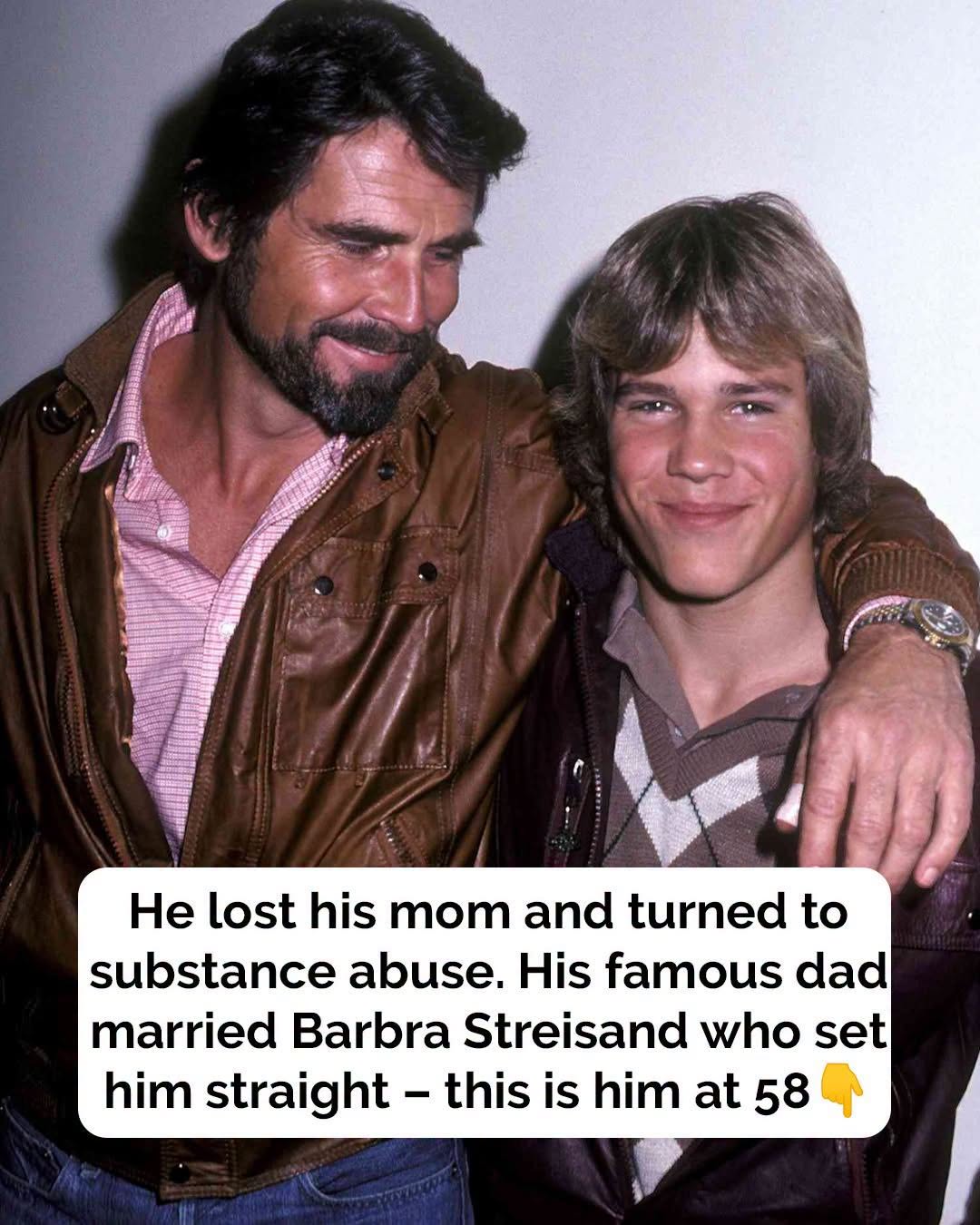
For years, audiences have known Josh Brolin as one of Hollywood’s toughest and most commanding actors. Whether portraying fearless heroes, unforgettable villains, or emotionally complex characters, he has built a career on convincing performances that seem to draw from somewhere deeply personal.
With the release of his memoir, From Under the Truck, fans are finally discovering just how personal those performances truly are.
Behind the confidence, success, and decades of acclaimed acting lies a childhood unlike anything most people could imagine.
It was a world where love and fear often existed side by side.
Where adventure sometimes bordered on danger.
Where affection could feel unpredictable.
And where emotional wounds would follow him well into adulthood.
Rather than presenting the polished story many expect from a Hollywood autobiography, Brolin offers something far more honest.
He strips away the glamour and invites readers into memories that are uncomfortable, heartbreaking, and deeply human.
His book is not simply about becoming a successful actor.
It is about understanding the boy who existed long before the cameras arrived.
Growing up, Josh Brolin’s life was anything but conventional.
His mother possessed an adventurous spirit that fascinated and frightened those around her.
She loved wildlife and believed her children should experience nature in its rawest form.
Many of the stories he shares almost sound unbelievable.
He recalls encounters with wild animals that would terrify most parents.
Cougars.
Coyotes.
Other predators that most families would avoid at all costs.
Instead of shielding her children from danger, she sometimes allowed them to come remarkably close to it.
Brolin remembers moments when wild animals chased him and his brother while their mother watched.
Only at the final moment would she intervene, pulling them back to safety.
Today, he understands why those stories leave readers stunned.
Even he admits they sound shocking when spoken aloud.
Yet childhood rarely exists in simple categories.
Love and fear often become tangled together.
Despite everything, he adored his mother.
Children rarely experience their parents as outsiders do.
They accept contradictions that adults struggle to explain.
Even after frightening experiences, he continued seeking her approval.
He wanted her attention.
He wanted her affection.
He wanted her presence.
That complicated emotional bond remained throughout her life.
Then tragedy struck.
His mother died in a car accident at just fifty-five years old.
The loss devastated him in ways he did not fully understand at the time.
Grief rarely arrives with immediate clarity.
Instead, it settles quietly, influencing thoughts and behaviors for years afterward.
One memory stayed with him.
He once believed fifty-five was a reasonably long life.
Looking back now, he recognizes how deeply that belief reflected his own emotional confusion.
At the time, he could not imagine growing old.
He could barely imagine surviving himself.
Today, having passed that same age, his perspective has changed completely.
Life no longer feels short enough to surrender casually.
Instead, every additional year carries new meaning.
That realization became possible only after confronting another battle that nearly consumed him.
Alcohol.
For years, drinking became an escape.
Fame brought opportunities, success, and recognition.
But none of those achievements erased the unresolved pain he carried from childhood.
Instead, alcohol temporarily numbed memories that never truly disappeared.
The relief never lasted.
Each morning simply restarted the same cycle.
His memoir does not attempt to romanticize addiction.
There are no glamorous stories.
No heroic excess.
Only painful honesty.
He describes waking up after nights he barely remembered.
Finding himself sleeping outdoors.
Feeling physically broken.
Wondering how his life had drifted so far from the person he hoped to become.
One particular memory remains especially painful.
His grandmother lived to ninety-nine years old.
She represented stability, family, and continuity through decades of change.
Yet when he visited her near the end of her life, he arrived intoxicated.
He remembers smelling strongly of alcohol.
Standing beside someone he deeply loved while realizing he could barely be present for the moment.
That memory haunted him.
It forced him to confront an uncomfortable truth.
His addiction was no longer affecting only himself.
It was shaping how the people he loved experienced him.
That realization became one of many turning points.
Change, however, rarely happens because of one dramatic event.
More often, it arrives through a series of difficult conversations.
For Brolin, one important influence came from his stepmother, Barbra Streisand.
Rather than avoiding uncomfortable subjects, she addressed his drinking directly.
She refused to pretend everything was fine.
She challenged him with honesty rather than judgment.
Sometimes the people who care most are willing to say what others avoid.
Those conversations became part of a larger process that eventually led him toward sobriety.
Recovery was not immediate.
It required humility.
Patience.
Daily commitment.
More than a decade later, sobriety has transformed not only his health but also his understanding of himself.
He no longer describes it as deprivation.
Instead, he speaks about freedom.
Freedom from constant chaos.
Freedom from waking each day trapped inside the same destructive patterns.
Freedom to experience life without needing to escape it.
Perhaps most importantly, freedom to grow older.
That idea once frightened him.
Now it brings gratitude.
Aging has become something he welcomes rather than fears.
It represents opportunities his younger self never expected to have.
Time with family.
Meaningful friendships.
Creative work.
Quiet mornings.
Ordinary happiness.
The ability to slow down.
For someone who once believed fifty-five represented the natural endpoint of life, reaching his late fifties carries extraordinary significance.
His career has also evolved alongside his personal growth.
Audiences continue celebrating performances that reveal tremendous emotional depth.
Looking back, it becomes easier to understand why.
Great acting often requires vulnerability.
The willingness to access complicated emotions.
The courage to explore pain honestly.
Brolin spent much of his life learning exactly how to do that.
The difference now is that those emotions no longer control him.
Instead, they inform his work while allowing him to remain grounded outside the camera’s view.
His memoir also challenges common assumptions about celebrity.
From the outside, success appears capable of solving almost everything.
Awards.
Money.
Recognition.
Prestige.
Yet none of those accomplishments automatically heal childhood trauma.
Personal history follows people regardless of professional achievement.
The emotional work still has to be done.
That truth makes his story surprisingly universal.
Most readers will never become famous actors.
But many understand complicated family relationships.
Many understand grief.
Many know what it feels like to search for peace after years of emotional struggle.
Brolin’s honesty creates connection because he refuses to pretend life has been simple.
Today, he views his journey differently.
He no longer measures success only through films or accolades.
Instead, success means showing up fully for the people he loves.
Remaining present.
Staying sober.
Continuing to grow.
Learning from the past without allowing it to dictate the future.
Perhaps that is the greatest lesson his memoir offers.
Our childhood may shape us, but it does not have to imprison us.
Pain may explain our choices, but it does not excuse remaining trapped forever.
Healing is rarely dramatic.
It happens one decision at a time.
One honest conversation.
One sober morning.
One act of forgiveness.
One day lived differently from the last.
Josh Brolin’s story is not about becoming a Hollywood star despite unimaginable hardship.
It is about becoming someone capable of facing himself with honesty.
In doing so, he discovered something far more valuable than fame.
He discovered that the greatest role he would ever play was simply learning how to live.