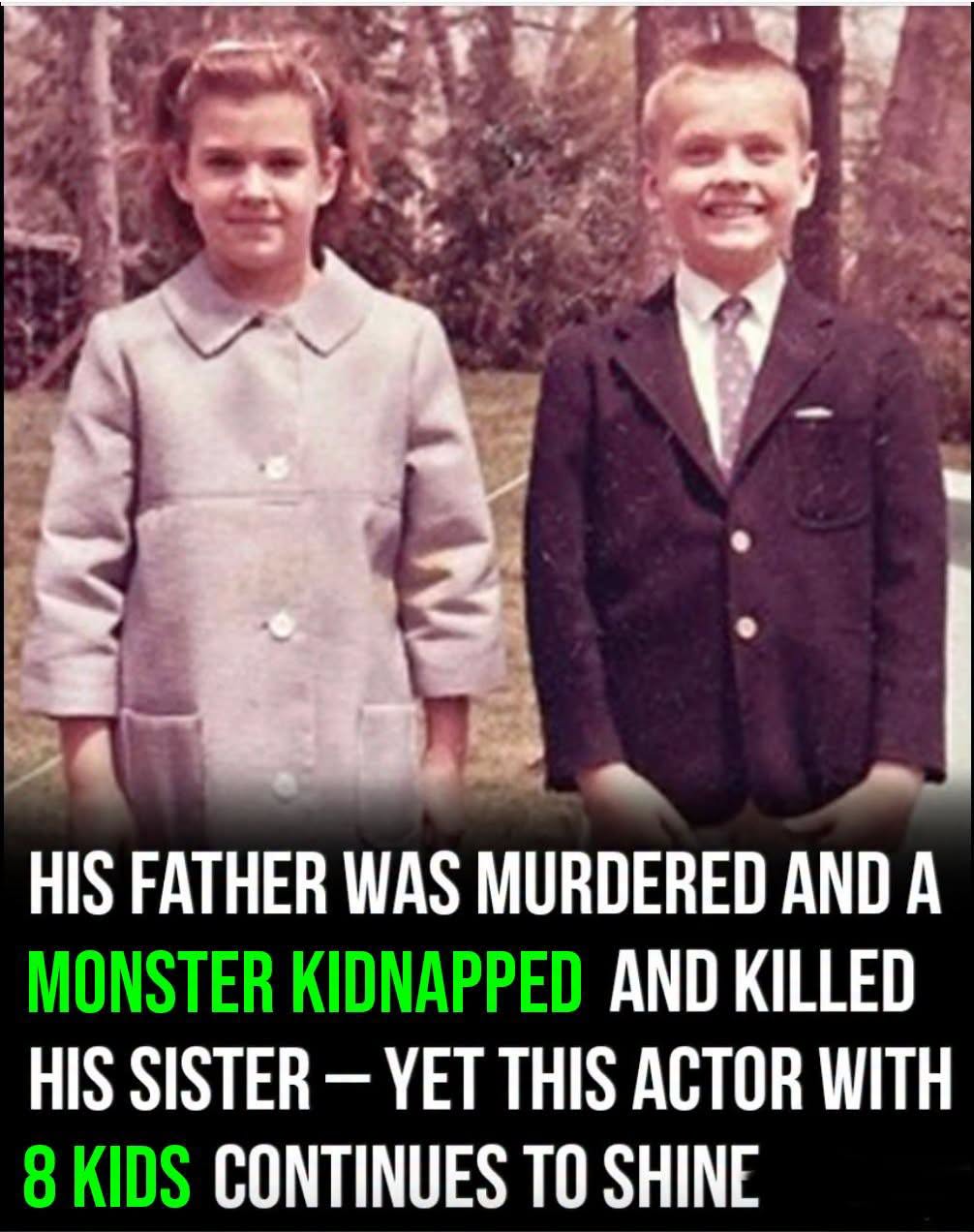
To millions of television viewers, Kelsey Grammer will always be remembered as the witty, sophisticated Dr. Frasier Crane—a character whose intelligence, humor, and unmistakable voice became one of the most beloved figures in television history. For decades, audiences laughed with him, admired his performances, and watched him become one of the most successful actors of his generation.
What very few people realized, however, was that behind every smile, every award, and every standing ovation stood a man carrying unimaginable grief.
Long before fame found him, tragedy had already become an unwelcome companion.
His life was marked by loss so profound that it would have broken many people completely.
Yet somehow, despite the heartbreak, addiction, and years of emotional struggle, he continued moving forward.
His story is not one of escaping pain.
It is the story of learning to live alongside it.
Kelsey Grammer’s childhood was far from ordinary.
When he was still a young boy, his parents separated, dramatically changing the course of his early life.
Not long afterward, another devastating event arrived.
His grandfather, who had become an important source of stability, passed away.
For many children, one major loss would have been enough to reshape an entire childhood.
For Grammer, it was only the beginning.
The next tragedy proved even more devastating.
His father was murdered.
The shocking act of violence left wounds that would remain with him for decades.
A child who should have been worrying about school, friendships, and dreams instead found himself trying to understand grief that no young person should ever have to carry.
As he grew older, life offered brief moments of hope.
He discovered acting.
Performing became more than a hobby.
It became a place where emotions could be transformed into something meaningful.
On stage, pain could become performance.
Confusion could become creativity.
For the first time, he found a language capable of expressing feelings too complicated for ordinary conversation.
But before adulthood truly began, another unimaginable tragedy struck.
His younger sister, Karen, was kidnapped, assaulted, and murdered in a crime that horrified the nation.
The brutality of her death shattered him.
For years, he struggled with overwhelming guilt.
He questioned whether he could have protected her.
He replayed endless “what if” scenarios inside his mind.
Although he understood intellectually that he was not responsible, emotionally he found it nearly impossible to let go of the feeling that he had somehow failed someone he loved.
The loss changed him forever.
No family ever fully recovers from such violence.
It simply learns to carry the absence.
As if fate had not already demanded enough, tragedy returned once again.
Years later, two of his half-brothers died in a scuba diving accident.
The sea claimed both of them, adding yet another chapter to an already overwhelming history of loss.
By that point, death had touched nearly every branch of his family tree.
Friends often wondered how one person could survive so much heartbreak.
The answer, unfortunately, was that surviving did not mean healing.
Behind the scenes, Grammer battled profound emotional pain.
Alcohol became a temporary refuge.
Substance abuse offered short moments of escape from memories that never seemed to loosen their grip.
Success in Hollywood did little to erase the trauma.
Awards could not silence grief.
Fame could not replace family.
Applause faded quickly once the cameras stopped rolling.
The emotional wounds remained.
As his career flourished, audiences saw confidence.
Those closest to him often saw someone fighting private battles every single day.
The contrast between public success and personal suffering became one of the defining themes of his life.
Many people assume fame protects individuals from pain.
Grammer’s story demonstrates exactly the opposite.
Achievement does not erase trauma.
Money cannot purchase peace.
Professional success cannot automatically heal childhood loss.
Despite everything, his remarkable talent continued opening doors.
His portrayal of Frasier Crane became one of television’s greatest success stories.
Originally introduced as a supporting character, Frasier eventually became the center of an enormously successful series that ran for years and earned countless awards.
The character’s intelligence, warmth, and humor resonated with audiences around the world.
Ironically, viewers often associated Frasier with emotional wisdom.
Behind the scenes, the actor portraying him was still searching for his own.
As the years passed, Grammer gradually began confronting the pain he had spent so long trying to outrun.
Recovery was not immediate.
There were setbacks.
There were difficult periods.
There were moments when old habits threatened to return.
But little by little, he committed himself to a different path.
Sobriety became not simply the absence of alcohol but the beginning of genuine healing.
He also found himself returning to faith.
There had been years when anger dominated his relationship with God.
After losing so many people he loved, believing became extraordinarily difficult.
Questions remained unanswered.
Why had so much suffering fallen upon one family?
Why had so many lives ended so violently?
No simple explanation could satisfy those questions.
Yet over time, his relationship with faith slowly evolved.
Not because every mystery had been solved, but because carrying endless anger proved even heavier than carrying grief.
Forgiveness became less about forgetting the past and more about allowing himself to continue living.
Family also took on new meaning.
Having experienced repeated loss, he became increasingly determined to be present for the people still around him.
Fatherhood carried enormous significance.
He understood how fragile life could be.
Every birthday.
Every family dinner.
Every ordinary conversation became something worth appreciating.
Instead of assuming tomorrow would always come, he learned to value today.
That perspective changed everything.
His journey continues to inspire many people facing their own struggles.
Not because he presents himself as someone who conquered pain forever.
Rather, because he openly demonstrates that healing is an ongoing process.
Some days are easier than others.
Grief never disappears completely.
Certain memories never stop hurting.
But they no longer define every moment.
Perhaps that is the most powerful lesson his life offers.
Strength is not pretending tragedy never happened.
Strength is choosing to love despite knowing loss is possible.
Strength is continuing to trust after heartbreak.
Strength is showing up for family even when your own heart has been broken repeatedly.
Today, Kelsey Grammer’s legacy extends far beyond television.
Yes, audiences will always remember the unforgettable performances.
They will remember the humor.
They will remember the iconic voice.
But perhaps his greatest achievement exists away from the cameras.
It is the quiet decision, made again and again over many years, to keep moving forward.
To keep believing.
To keep loving.
His story does not promise that life will spare us from suffering.
Instead, it reminds us that even after unimaginable loss, hope can slowly return.
Not all at once.
Not dramatically.
But through small daily choices.
Through forgiveness.
Through family.
Through purpose.
Through refusing to let tragedy write the final chapter.
In the end, Kelsey Grammer’s life is not simply the story of a gifted actor who endured extraordinary heartbreak.
It is the story of a man who discovered that while pain may shape us, it does not have to define us.
Even the most wounded heart can still create laughter.
Even the deepest grief can exist beside gratitude.
And even after life’s darkest chapters, there remains the possibility of building something beautiful from the pieces that survive.