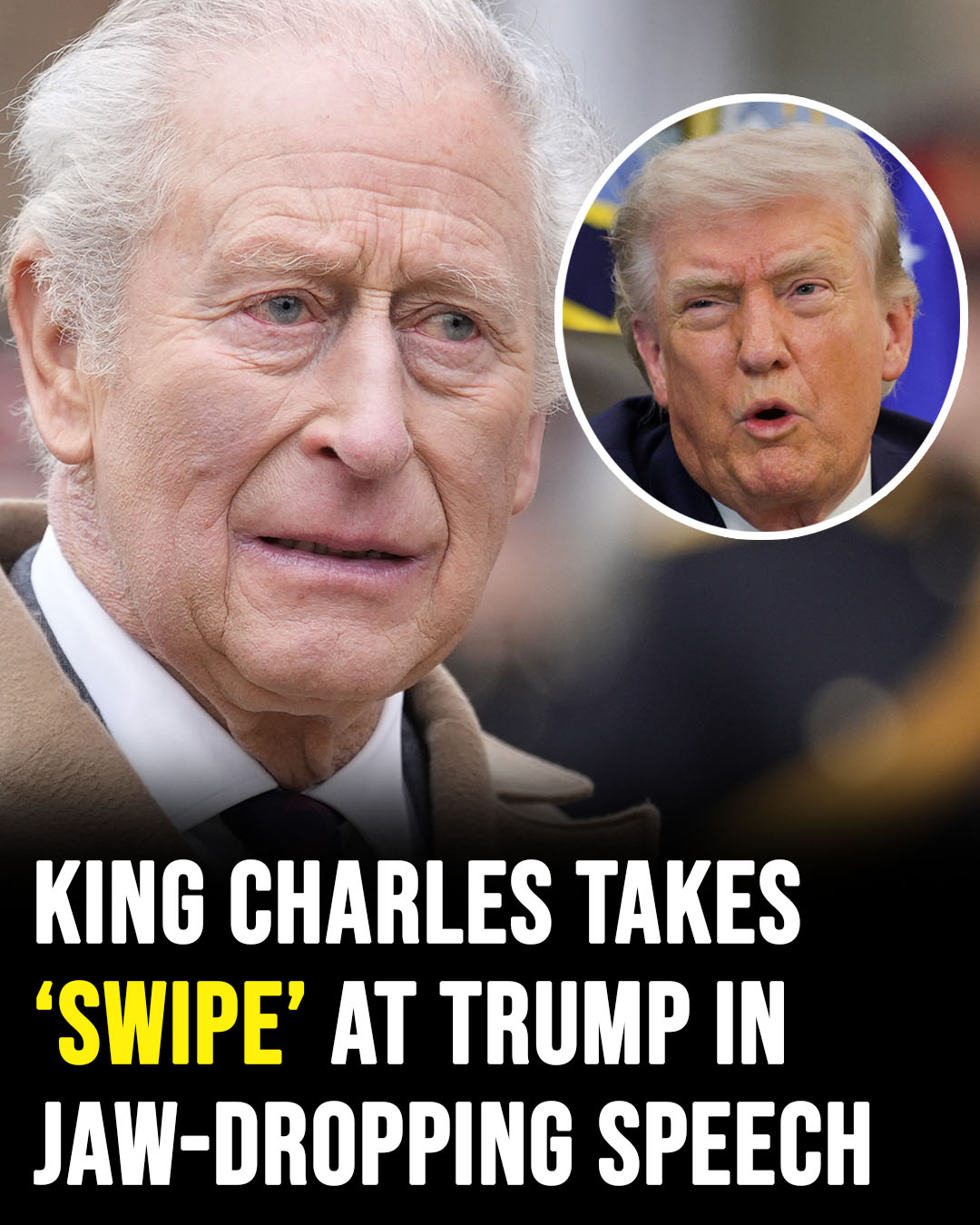
King Charles carefully worded tribute to his late mother was meant to honor a monarch who embodied stability.
Yet his reference to times we now live in that might have troubled her deeply landed just as tensions flared over Donald Trump s Iran policy and only weeks before the king s scheduled state visit to the White House. That timing has fueled speculation that the monarch was sending a subtle message about the direction of American power and global leadership, wrapped in the safety of a eulogy. Whether intentional or not, the words carried weight far beyond the usual diplomatic pleasantries.
The speech was delivered in a grand hall, filled with dignitaries and journalists. The king stood at a podium that had been used by his mother for decades. His voice was steady, but there was an edge to it that some in the room noticed. He spoke of the queen s unwavering commitment to duty, her belief in the Commonwealth, her hope that the world would grow kinder, not colder. Then he pivoted. He mentioned the challenges of the present moment, the rise of instability, the erosion of trust between nations. He did not name anyone. He did not need to. The implication hung in the air like smoke.
The timing was deliberate, whether Charles admits it or not. Iran policy was at a boiling point. Military options were being discussed. The White House had been sending mixed signals, some days threatening force, other days talking about peace. European allies were anxious, unsure which America they were dealing with. The king s words seemed to echo their concerns. He spoke of the importance of diplomacy, of restraint, of remembering that wars are not won by rhetoric alone. It was not a speech about Donald Trump. But it was impossible not to hear it as a critique of his approach.
The scheduled state visit to the White House added another layer of intrigue. The king was to be hosted by Trump, a man who had openly questioned the relevance of traditional alliances, who had withdrawn from agreements, who had praised strongmen and dismissed critics. The optics were awkward. The king had met Trump before, and those meetings had been polite but cool. There was no warmth between them. Now, with the speech, the temperature dropped further. Some saw it as a calculated risk, a way for Charles to assert his values before stepping onto American soil. Others saw it as a mistake, a breach of protocol that would make the visit even more uncomfortable.
Whether Charles intended a political rebuke or not, the interpretation reveals something deeper. The public s fear that even the most traditional institutions can no longer stand apart from chaos. The monarchy has always been careful to avoid partisan politics. The queen was a master of neutrality, never revealing her opinions, always staying above the fray. Charles is different. He has opinions. He has always had opinions. And now, as king, he must navigate a world where silence can be seen as complicity and speech as provocation. His tribute to his mother was genuine, but it was also a vehicle. A way to say what needed to be said without saying it directly.
His closing plea for belief in goodness and a brighter dawn sounded less like royal nostalgia and more like a quiet warning. The world his mother left behind is slipping, and everyone is being asked to choose what comes next. The speech was not a declaration of war. It was not a call to arms. It was a lament. A recognition that the post war order, the alliances, the norms, the shared understanding that had kept the world relatively stable for decades, was fraying. And that those who believed in it could no longer take it for granted.
The reaction was swift. British tabloids ran with the story, some praising the king for speaking truth to power, others accusing him of overstepping. American commentators were divided. Some saw it as a welcome intervention, a reminder that the United States is not the only country with values worth defending. Others dismissed it as European elitism, a relic of an age when kings and queens mattered. Trump himself has not responded directly. His staff has downplayed the speech, calling it typical royal rhetoric, nothing personal. But the silence is noticeable. Trump usually responds to criticism with a tweet, a speech, a counterpunch. His restraint suggests that even he understands that attacking a British monarch on the eve of a state visit is not a good look.
The upcoming visit will be closely watched. Every handshake, every toast, every shared smile will be analyzed for hidden meaning. The king will be polite. He has no choice. But the words of his speech will linger, a quiet reminder that the relationship between the United States and its oldest ally is not as simple as it once was. Trust has eroded. Respect is conditional. And the monarchy, long seen as a symbol of continuity, is now being drawn into the same turbulent currents that are reshaping everything else.
In the end, the speech may be remembered not as a swipe, but as a symptom. Of a world where nothing is neutral anymore. Where even a eulogy can become a political statement. Where a king, bound by tradition, must find new ways to say what he means without saying it directly. The world is watching. The world is waiting. And the king, whether he intended it or not, has added his voice to the conversation. It is not a loud voice. It is not a confrontational voice. But it is a voice that matters. Because when the leader of a nation, even a constitutional monarch, speaks about goodness and darkness, people listen. And they wonder. What comes next. And whether the brighter dawn he invoked is still possible, or whether it is already fading, lost to the chaos of the age. That is the question his speech left hanging. That is the question the world is now asking. And that is the question that will not be answered by a single speech, or a single visit, or a single election. It will be answered by all of us, in the choices we make every day. The king has spoken. Now it is our turn. To listen. To decide. To act. Because the world his mother left behind is slipping. And only we can decide whether to let it go, or to fight to keep it. That is the message. That is the warning. That is the hope. And it is worth hearing. Whether you are a king, a president, or just a citizen trying to make sense of it all. That is the truth. And it is not going anywhere. Neither is the question. What comes next. The answer, as always, is up to us. So choose wisely. Choose kindly. Choose the brighter dawn. Because that is the only choice that leads anywhere worth going. And that is the choice that honors the world his mother left behind. That is the legacy. That is the gift. That is the challenge. And it is ours to meet. Together, or not at all. That is the promise. That is the possibility. That is the future. Let us make it one worth having. For her. For him. For us. For everyone. That is the hope. That is the prayer. That is the work. And it begins now. With a speech. With a visit. With a choice. The choice is ours. Let us not waste it.