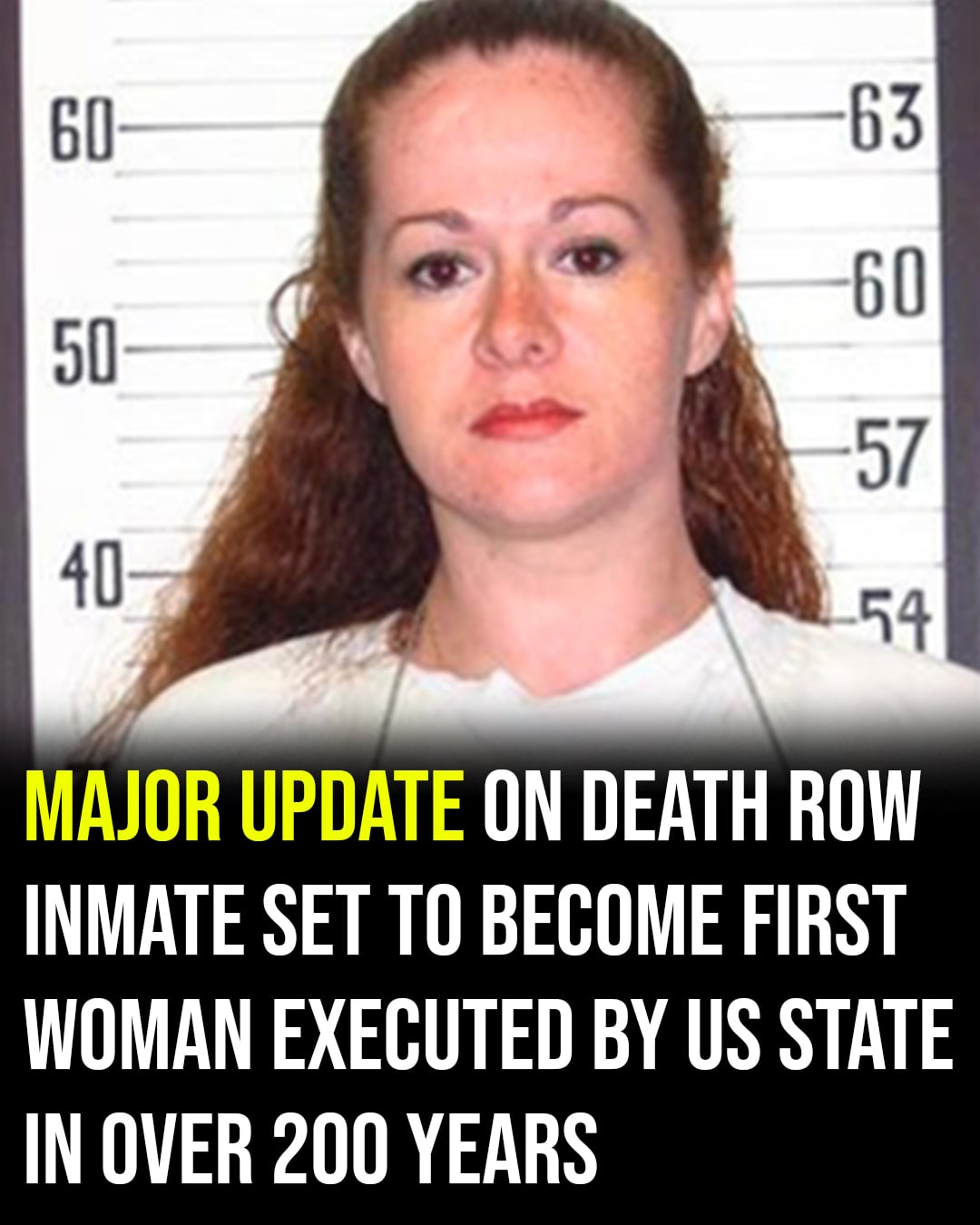
In 1995, the torture and death of nineteen year old Colleen Slemmer stunned Tennessee and the nation, and the horrifying details ensured that Christa Pike s name would be forever linked to cruelty.
The crime was brutal, carried out by a group of young people who seemed detached from any sense of morality. Colleen was lured to a secluded area, beaten, tortured, and ultimately killed. Her body was left near a railroad track, discovered by workers who would never forget what they saw. The case became a media sensation, not just because of the violence, but because of the ages involved. The perpetrators were teenagers. And at the center of it all was Christa Pike, just twenty years old when she was sentenced to die.
At twenty, she became the youngest woman on death row in modern American history. Now, thirty years older, she sits in a cell facing a date with death she insists should never come. Through her lawyers, Pike argues that her age at the time, her bipolar disorder, PTSD, and years of isolation have reshaped her into someone fundamentally different from the teenager who committed that terrible act. She is not the same person, they claim. The brain science supports them. The psychological trauma of decades in solitary confinement has changed her. She has found religion. She has expressed remorse. She has become a different person. The question is whether that matters.
The state disagrees, stressing that the Constitution does not promise a painless death, and that her sentence reflects the gravity of her crime. Prosecutors argue that the brutality of the murder, the planning, the enjoyment Colleen s killers appeared to take in her suffering, demands the ultimate punishment. They point to the facts of the case, which have not changed. Colleen is still dead. Her family is still grieving. And Christa Pike is still the woman who helped make that happen. The state has waited decades for this execution. They are not inclined to wait any longer.
As courts weigh her Buddhist beliefs, medical risks, and mental health against the savagery of Colleen s final hours, another voice refuses to fade. Colleen s mother, May Martinez, who has spent decades begging for the one thing she believes might finally let her daughter rest. She has attended hearings. She has given interviews. She has watched every legal maneuver, every appeal, every delay. She is tired. She is angry. She is grieving in a way that will never fully end. For her, the execution is not about revenge. It is about closure. It is about knowing that the person who took her daughter s life has faced the consequences. It is about being able to finally, after thirty years, let go.
The case has become a flashpoint for larger debates about the death penalty, juvenile justice, and mental health. Christa Pike was a teenager when she committed her crime. The Supreme Court has ruled that executing juveniles is unconstitutional, but Pike was twenty, just barely an adult. Her lawyers argue that she was still developing, still immature, still influenced by the same factors that the Court found compelling in juvenile cases. The state argues that a line has to be drawn somewhere, and that twenty years old is old enough to know right from wrong, old enough to face the consequences.
Pike s mental health has also been a major issue. She has been diagnosed with bipolar disorder and PTSD, conditions that were not properly treated at the time of the crime. Her lawyers argue that she was in the midst of a psychotic episode, that she was not in control of her actions. The state has presented experts who disagree, who argue that she knew what she was doing, that she planned the murder, that she enjoyed it. The competing narratives have been debated for decades, and neither side has been able to definitively prove its case.
The role of her Buddhist faith has also been raised. Pike has become a practicing Buddhist in prison, and her lawyers argue that executing her would violate her religious beliefs. The state has countered that her conversion is convenient, that it is a tactic designed to win sympathy, not a genuine expression of faith. The courts have not been convinced either way, leaving the question unresolved.
The medical risks of execution have also been a concern. Pike has health issues that could complicate the process. Her lawyers argue that executing her would be cruel and unusual punishment, given the risk of a botched procedure. The state argues that no execution is without risk, and that the Constitution does not guarantee a painless death. The courts have generally sided with the state on this issue, though the debate continues.
As the execution date approaches, the tension is palpable. Protests are planned. Media attention is intensifying. The families on both sides are bracing themselves. May Martinez has said she will attend the execution, that she needs to see it happen. Christa Pike has said she is at peace, that she has accepted her fate, that she is ready to meet her maker. Whether she truly believes that or is simply trying to project strength is unclear.
The case has dragged on for thirty years. It has exhausted everyone involved. It has raised questions that have no easy answers. And now, finally, it may be coming to an end. Not a happy end. Not a satisfying end. Just an end. The only kind that is possible in a case like this. Colleen Slemmer died in 1995. She was nineteen years old. She had her whole life ahead of her. She never got to grow up. She never got to fall in love, to have children, to build a career, to grow old. Christa Pike has had thirty years to do all of those things, at least in the limited way that prison allows. She has been able to read, to write, to find faith, to make friends, to reflect. Colleen has had none of that. She has only had her mother, fighting for her, remembering her, refusing to let her be forgotten.
That is the tragedy at the heart of this case. Not the legal arguments. Not the mental health debates. Not the religious questions. The simple, brutal fact that a nineteen year old girl was tortured and killed by people she might have called friends. And that thirty years later, her mother is still waiting for justice. Still waiting for closure. Still waiting for the only thing that might let her rest. The execution, if it happens, will not bring Colleen back. But it might allow May Martinez to finally, after three decades, begin to heal. That is not justice. That is not revenge. That is just a mother, doing the only thing she can do. Holding on. Waiting. Hoping that the end, when it comes, will bring some measure of peace. Not for Christa Pike. For her daughter. For Colleen. For the girl who never got to grow up. That is what this is about. That is what has always been about. And that is why the world is watching. And waiting. And wondering. What comes next. And whether, after all these years, there can finally be an end. Not a happy end. Just an end. The only kind that is possible. The kind that lets a mother sleep. The kind that lets a daughter rest. The kind that says, justice has been served. Even if it took thirty years to get there. Even if it cost everyone involved more than they ever imagined. Even if the questions will never fully be answered. That is the hope. That is the prayer. That is the end. And it is coming. Soon. One way or another. The world waits. The world watches. And the world wonders. What happens next. And whether, when it is over, anyone will feel any better. Probably not. But that is not the point. The point is that it is finished. That the waiting is over. That May Martinez can finally, after thirty years, say goodbye. That is the only justice that matters. That is the only justice that is possible. And that is the only justice that Colleen Slemmer, who never got to grow up, would have wanted. Not revenge. Not anger. Just peace. For her mother. For herself. For everyone who loved her. That is the legacy of this case. Not the execution. The love. The memory. The refusal to forget. That is what matters. That is what lasts. That is what will outlive us all. That is the truth. That is the end. That is the beginning. Of the rest of their lives. May Martinez and Christa Pike. Two women, linked by tragedy, waiting for the same moment. One hoping for closure. The other hoping for mercy. Neither will get what they want. But one will get what she needs. And that is enough. That has to be enough. Because it is all there is. And it is all there will ever be. The end. Finally. After thirty years. The end.