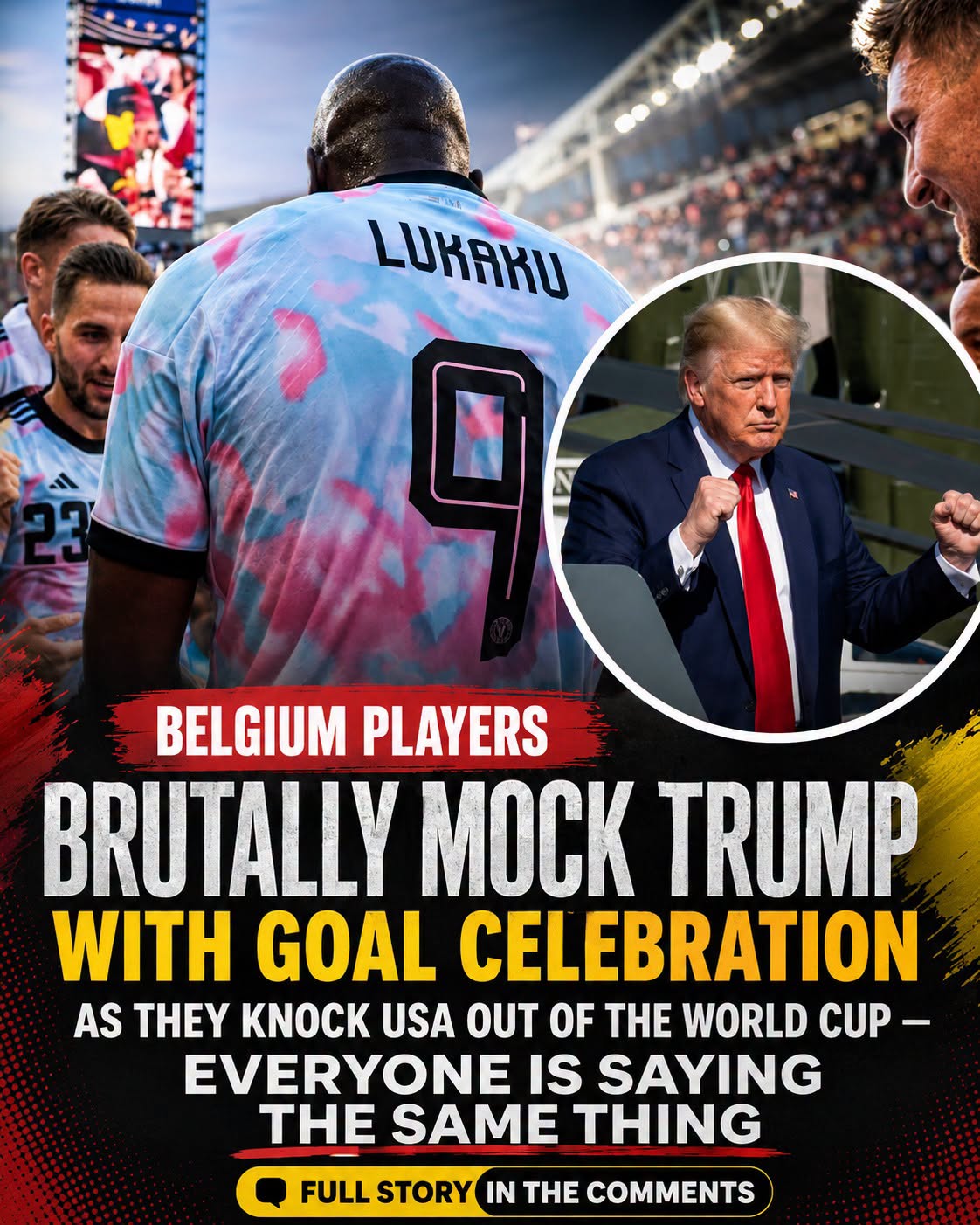
Belgium’s emphatic victory over the United States at the FIFA World Cup was memorable for far more than the scoreline.
Long before the opening whistle, the knockout clash had become one of the tournament’s most talked-about matches. Conversations extended well beyond tactics, lineups, and predictions, as controversy surrounding the availability of American striker Folarin Balogun dominated headlines in the days leading up to kickoff.
By the time both teams walked onto the field in Seattle, emotions were already running high.
Belgium arrived believing they had something to prove.
The United States carried the enormous expectations that come with hosting football’s biggest tournament.
What followed was a performance that left little doubt about which side deserved to advance.
Belgium controlled large portions of the match, eventually securing a convincing 4-1 victory that eliminated the American team from the competition and booked their place in the quarterfinals.
Yet even after the final whistle, the story was only beginning.
The celebration that followed Belgium’s fourth goal quickly spread across social media, becoming one of the most replayed moments of the World Cup.
Many fans immediately recognized the gesture.
Several Belgian players appeared to imitate the dance move closely associated with Donald Trump during his recent political rallies and public appearances.
Within minutes, clips circulated across the internet, generating millions of views and sparking heated debate.
Some viewers described the celebration as playful humor.
Others believed it carried a much deeper message connected to everything that had happened before the match.
The controversy centered on Folarin Balogun.
The American forward had previously been shown a red card during an earlier international fixture, resulting in what initially appeared to be a suspension that would prevent him from participating against Belgium.
However, the suspension was later lifted, allowing Balogun to return to the starting lineup for one of the United States’ biggest matches of the tournament.
The reversal immediately became a major talking point.
Supporters, commentators, and football analysts questioned both the timing and reasoning behind the decision.
Rumors and speculation spread rapidly, with discussions extending far beyond football itself.
Although no official evidence suggested outside influence affected the final ruling, the situation created an atmosphere of tension that surrounded both teams throughout the buildup.
Belgium’s camp made little effort to hide its frustration.
Players and officials focused publicly on preparing for the match, but reports indicated that many within the squad viewed the situation as another motivation to deliver their response where it mattered most.
On the pitch.
From the opening minutes, Belgium demonstrated complete focus.
Rather than becoming distracted by outside narratives, they allowed their football to take center stage.
Their passing was sharp.
Their movement was intelligent.
Every attack appeared carefully constructed.
The United States struggled to match Belgium’s composure.
Playing before home supporters naturally brought excitement and expectation, but Belgium consistently disrupted any rhythm the hosts attempted to establish.
The European side pressed aggressively without sacrificing defensive organization.
Whenever possession changed hands, Belgium quickly transitioned into dangerous attacking positions.
Their confidence grew with every successful move.
Eventually, the pressure produced results.
Belgium opened the scoring, shifting momentum firmly in its favor.
Although the United States fought to remain competitive and managed to score once during the contest, Belgium continued controlling the flow of play.
Additional goals followed.
Each one made the challenge facing the Americans increasingly difficult.
By the closing stages, Belgium had complete command of the match.
Then came the moment everyone would remember.
Deep into stoppage time, Romelu Lukaku calmly finished Belgium’s fourth goal, putting the result beyond all doubt.
As teammates gathered around him to celebrate, several players suddenly began performing dance movements that resembled Donald Trump’s familiar rally dance.
The routine featured exaggerated arm movements and rhythmic body motions that many viewers immediately recognized.
Television cameras captured every angle.
Commentators reacted with surprise.
Within moments, the clips appeared across social media platforms worldwide.
The internet quickly divided.
Some fans viewed the dance as nothing more than harmless football banter.
Celebrations often include jokes, cultural references, or playful gestures directed at opponents or previous criticism.
Others believed the timing suggested something more deliberate.
Because the celebration came after a match already surrounded by discussions involving Balogun’s suspension, many interpreted it as Belgium’s subtle way of expressing satisfaction following their convincing victory.
Neither Belgium’s players nor coaching staff offered an official explanation immediately after the match.
That silence only fueled additional speculation.
Without confirmation, fans continued debating the celebration’s meaning.
Some praised Belgium’s confidence.
Others argued political symbolism has no place in international sport.
Regardless of where opinions landed, one fact remained impossible to dispute.
Belgium had earned its victory through football.
Across ninety minutes, they outplayed the United States in nearly every aspect of the game.
Their midfield controlled possession.
Their defense remained disciplined.
Their finishing proved clinical.
For the American squad, the defeat marked a disappointing end to a tournament filled with optimism.
Hosting the World Cup had created hopes of a deep run through the knockout rounds.
Instead, the journey ended earlier than many supporters expected.
Players acknowledged the disappointment while thanking fans who had supported them throughout the competition.
Attention now turns toward rebuilding and preparing for future international tournaments.
Belgium, meanwhile, advances with growing confidence.
The performance reinforced their reputation as one of the strongest remaining teams in the competition.
Experienced leaders combined with emerging stars to produce a display that sent a clear message to every potential opponent.
Their next challenge awaits in the quarterfinals, where expectations continue to rise.
Still, as impressive as Belgium’s football proved to be, many people will remember something else first.
Not the possession statistics.
Not the tactical adjustments.
Not even the four goals.
Instead, they will remember the unexpected celebration that instantly became one of the tournament’s defining viral moments.
Whether interpreted as humor, confidence, or a carefully timed response to the controversy surrounding the match, the dance guaranteed Belgium’s victory would remain part of football conversations long after the final whistle.
Sometimes a scoreline tells only part of the story.
On this occasion, one celebration ensured the entire world kept talking.