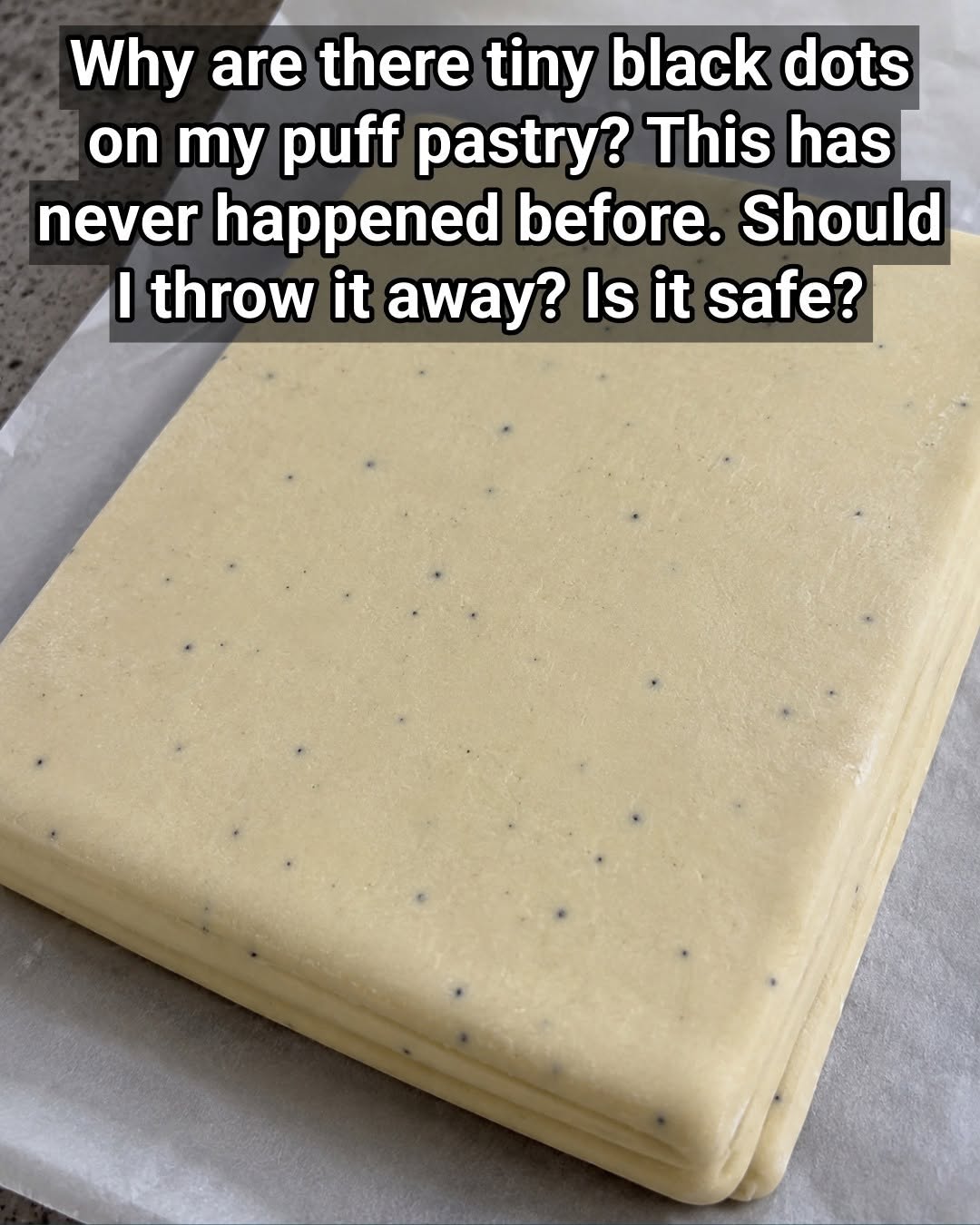
The first time you notice tiny black dots scattered across a sheet of puff pastry, your reaction is probably immediate.
Is it burned?
Is it spoiled?
Is it mold?
Many people hesitate before putting the pastry in the oven, wondering whether those dark specks are a warning sign or simply a harmless part of the food. The strange marks can look suspicious, especially when they appear on something that is supposed to be smooth, golden, and perfectly baked.
But in many cases, those little black spots are nothing to fear.
In fact, they may be a sign that the pastry was made with more traditional ingredients and fewer artificial additives.
Puff pastry is a delicate creation built from a simple combination of flour, butter, water, and salt. Its famous flaky layers come from carefully folded sheets of dough and butter, creating hundreds of thin layers that expand during baking. Because of the natural ingredients involved, small variations in color and texture are normal.
Those unexpected dark flecks can appear for several harmless reasons.
One common explanation is tiny pieces of bran from the flour.
Flour is not always perfectly uniform. When less-refined flour or certain types of wheat are used, small fragments of the outer grain layer can remain in the mixture. These natural particles may appear as tiny dark dots throughout the pastry.
They do not spread.
They do not grow.
They do not change texture.
Instead, they simply remain part of the dough and become darker during baking, blending into the golden crust.
Another possible cause is butter.
Real butter contains milk solids, which are natural components left behind during butter production. When exposed to heat, these milk solids can brown or caramelize, creating small darker marks throughout the pastry.
This is similar to the process that gives baked goods their rich golden color and deeper flavor. In some cases, those browned pieces become tiny dark spots that are completely safe to eat.
For many bakers, these natural variations are even considered a positive sign. They can indicate that the pastry contains real ingredients rather than being made with highly processed substitutes designed to create a perfectly uniform appearance.
Food rarely looks exactly identical when natural ingredients are involved.
A homemade loaf of bread may have uneven coloring.
A fresh vegetable may have small imperfections.
A handmade pastry may have tiny differences from one batch to another.
These details are often signs of real food rather than something wrong.
However, not every dark mark should automatically be ignored.
There are situations where black or unusual spots can indicate that a pastry has gone bad. Knowing the difference between harmless discoloration and possible spoilage is important.
The biggest warning sign is not just the color—it is the overall appearance and condition of the pastry.
If the dark areas appear fuzzy, raised, or have a texture that looks like growth, caution is needed. Mold can appear in several colors, including black, green, blue, white, or pink. Unlike natural flecks inside the dough, mold often has a spreading or uneven appearance.
A second warning sign is smell.
Fresh puff pastry usually has a mild buttery or flour-like aroma. If it smells sour, musty, rotten, or unusually unpleasant, it may no longer be safe to use.
Texture can also reveal problems.
If the pastry feels unusually slimy, sticky, or has developed moisture spots that were not there before, it may have been exposed to conditions that allowed bacteria or mold to grow.
Storage plays a major role in keeping puff pastry safe.
Because puff pastry contains butter and moisture, proper handling is essential. Frozen puff pastry should remain frozen until you are ready to use it. Repeated thawing and refreezing can affect both quality and safety.
Keeping it tightly sealed helps prevent freezer burn, contamination, and unwanted odors from surrounding foods.
When preparing puff pastry, clean surfaces also matter. Baking trays, countertops, and utensils should be properly cleaned before use. Sometimes people mistake old food residue from a baking sheet or leftover crumbs for mysterious spots appearing in the pastry itself.
A clean preparation area removes one more source of confusion.
Another helpful habit is checking the packaging before using the product. Look for signs of damage, unusual moisture inside the package, or expiration dates that have passed. While dates are not always a perfect indicator of safety, they can help you make better decisions.
The reality is that food does not always look exactly like the pictures on the box.
Perfectly smooth, identical pastry sheets are often the result of industrial processing and strict appearance standards. Natural foods can have small differences, and those differences do not always mean something is wrong.
Those mysterious black dots are a perfect example.
For many people, the first instinct is to throw the pastry away because the spots look strange. But understanding what you are seeing can prevent unnecessary waste and help you recognize the difference between natural variation and genuine spoilage.
The next time you find dark specks in puff pastry, take a closer look.
Do they look like tiny flat marks within the dough?
Do they stay in place?
Do they smell normal?
If the answer is yes, they are most likely harmless traces of natural ingredients or baking reactions.
But if the spots are fuzzy, spreading, colorful in unusual ways, or accompanied by a bad smell, it is better to be cautious and discard the pastry.
In the end, those little black dots tell an interesting story about food. They remind us that not every imperfection is a problem. Sometimes, the smallest details reveal how something was made, what ingredients were used, and why real food is rarely as perfectly uniform as we expect.
A suspicious-looking pastry may not be a sign of danger at all.
It may simply be a reminder that nature does not always bake in perfect patterns.