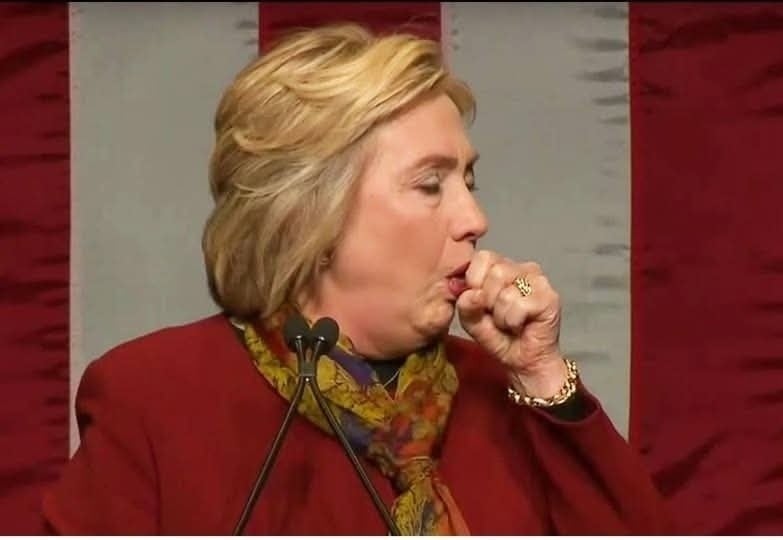
Rumors surrounding Hillary Clinton’s reported hospitalization spread across the internet with astonishing speed, sending shockwaves through political circles and sparking a flood of concern, speculation, and emotional reactions from people across the country.
Within hours, social media platforms became overwhelmed with posts claiming the former Secretary of State and presidential candidate was in critical condition, though verified details remained scarce. The uncertainty created a rare moment in modern American politics: a pause in the constant noise of outrage and division as millions waited for clarity about one of the most recognizable political figures of the last half-century.
For many Americans, the sudden headlines felt surreal. Hillary Clinton has spent decades at the center of political life, surviving scandals, brutal campaigns, public investigations, and relentless scrutiny that transformed her into one of the most polarizing women in modern history. Yet rumors of a serious health emergency instantly cut through the political identities attached to her name. Beneath the arguments, accusations, and endless commentary stood something much more fragile and universal: a human being facing questions about health, vulnerability, and mortality.
As speculation intensified online, supporters rushed to express concern and prayers for Clinton and her family. Others shared memories of her long public career, reflecting on the historic milestones she achieved as First Lady, senator, Secretary of State, and the first woman nominated for president by a major American political party. Even some longtime critics acknowledged the gravity of the moment, temporarily setting aside political hostility as uncertainty spread.
The absence of confirmed information only deepened public anxiety. Rumors multiplied faster than facts, with conflicting posts claiming everything from exhaustion to a severe medical emergency. Some accounts insisted she had been admitted quietly under tight security, while others suggested officials were deliberately withholding details. In the digital age, uncertainty itself becomes fuel, and the lack of immediate confirmation allowed speculation to spiral uncontrollably.
This reaction revealed something profound about modern public life. Americans often appear hopelessly divided politically, but moments involving illness or mortality can suddenly expose a quieter emotional truth beneath the hostility. For all the bitterness surrounding public figures, people still recognize the deeply human fear attached to health crises. Political labels lose some of their power when confronted with the possibility of loss.
Hillary Clinton’s life has unfolded almost entirely in public view for more than three decades. Few modern political figures have experienced such intense and sustained scrutiny. From her years in Arkansas alongside Bill Clinton to the White House, the Senate, the State Department, and two presidential campaigns, nearly every aspect of her career has been debated, analyzed, criticized, and dissected endlessly.
To supporters, Clinton represents resilience, intelligence, and determination in the face of extraordinary pressure. Many see her as a trailblazer who endured levels of public hostility rarely directed toward male politicians. To critics, she became a symbol of establishment politics, secrecy, and elite power structures. Those competing narratives have followed her for decades, shaping nearly every public discussion surrounding her name.
But health scares have a way of interrupting political mythology. Suddenly, conversations shift away from ideology and toward mortality itself. The strongest public figures begin to look vulnerable. The machinery of politics slows just enough for people to remember that behind the headlines exists an aging person carrying the physical weight of decades lived under extraordinary pressure.
The emotional response online reflected that tension. Some users posted heartfelt messages describing how Clinton inspired them personally, especially women who viewed her political rise as groundbreaking despite her defeats. Others recalled key moments from American history tied to her public life: healthcare reform battles in the 1990s, the aftermath of 9/11 during her Senate years, tense diplomatic negotiations as Secretary of State, and the unforgettable 2016 presidential election that reshaped modern American politics.
Even among critics, there was visible discomfort with the speed at which rumors and conspiracy theories spread. Some urged caution, reminding others that false medical claims involving public figures often circulate online without evidence. Others criticized the internet’s tendency to transform serious health concerns into entertainment or political ammunition before facts are confirmed.
The episode also highlighted how uniquely exhausting life in politics can become. Public figures like Clinton live under constant scrutiny that rarely ends even after leaving office. Every appearance, speech, stumble, cough, or expression becomes analyzed in microscopic detail. For aging politicians especially, health concerns often become intertwined with questions about power, competence, and legacy.
That broader conversation has intensified across American politics in recent years as voters grapple with the advanced age of many national leaders. Concerns surrounding physical stamina, cognitive sharpness, and medical transparency now dominate public debate in ways that would once have seemed invasive or taboo. Clinton herself has faced years of speculation regarding her health, especially during the 2016 campaign when even brief moments of physical exhaustion triggered nationwide controversy.
Yet moments like this also reveal the emotional complexity of legacy. Hillary Clinton is not merely a politician to many Americans; she is a symbol onto which people project hopes, frustrations, fears, and cultural battles stretching back decades. Her supporters see endurance and historic progress. Her detractors see institutional power and political ambition. The emotional intensity surrounding her has never been solely about policy. It has always been personal for millions of people on both sides.
As rumors continued spreading, political leaders and commentators grew increasingly cautious, avoiding definitive statements until verified information emerged. That restraint reflected the seriousness of the situation but also the awareness that misinformation spreads faster than corrections in the modern media environment.
The internet’s reaction also exposed another uncomfortable truth: people have become conditioned to experience public crises collectively through screens. Instead of waiting patiently for official announcements, millions refresh timelines, analyze fragments of information, and absorb emotional reactions in real time. Public anxiety becomes amplified through algorithms that reward fear, urgency, and speculation.
Still, beneath the chaos, something more sincere emerged. Messages from ordinary people often sounded strikingly human rather than political. Some wrote about surviving illness themselves and empathizing with the fear surrounding hospitalization. Others spoke about aging parents, personal losses, or memories connected to Clinton’s long career. In moments involving health and mortality, even fierce political cultures briefly rediscover empathy.
Whether the rumors ultimately prove exaggerated or serious, the reaction itself says something powerful about the country. Americans may disagree bitterly about politics, but certain moments still cut through ideology and force people to confront deeper realities about vulnerability, aging, and the fragile nature of human life.
For now, the uncertainty surrounding Hillary Clinton’s reported condition continues to hold public attention in a tense and emotional pause. Until verified information fully emerges, speculation will likely continue racing ahead of facts. But the overwhelming reaction already reveals something larger than politics itself: even after decades of division, controversy, and conflict, the sight of a powerful figure suddenly appearing fragile can still stop an entire nation in its tracks.