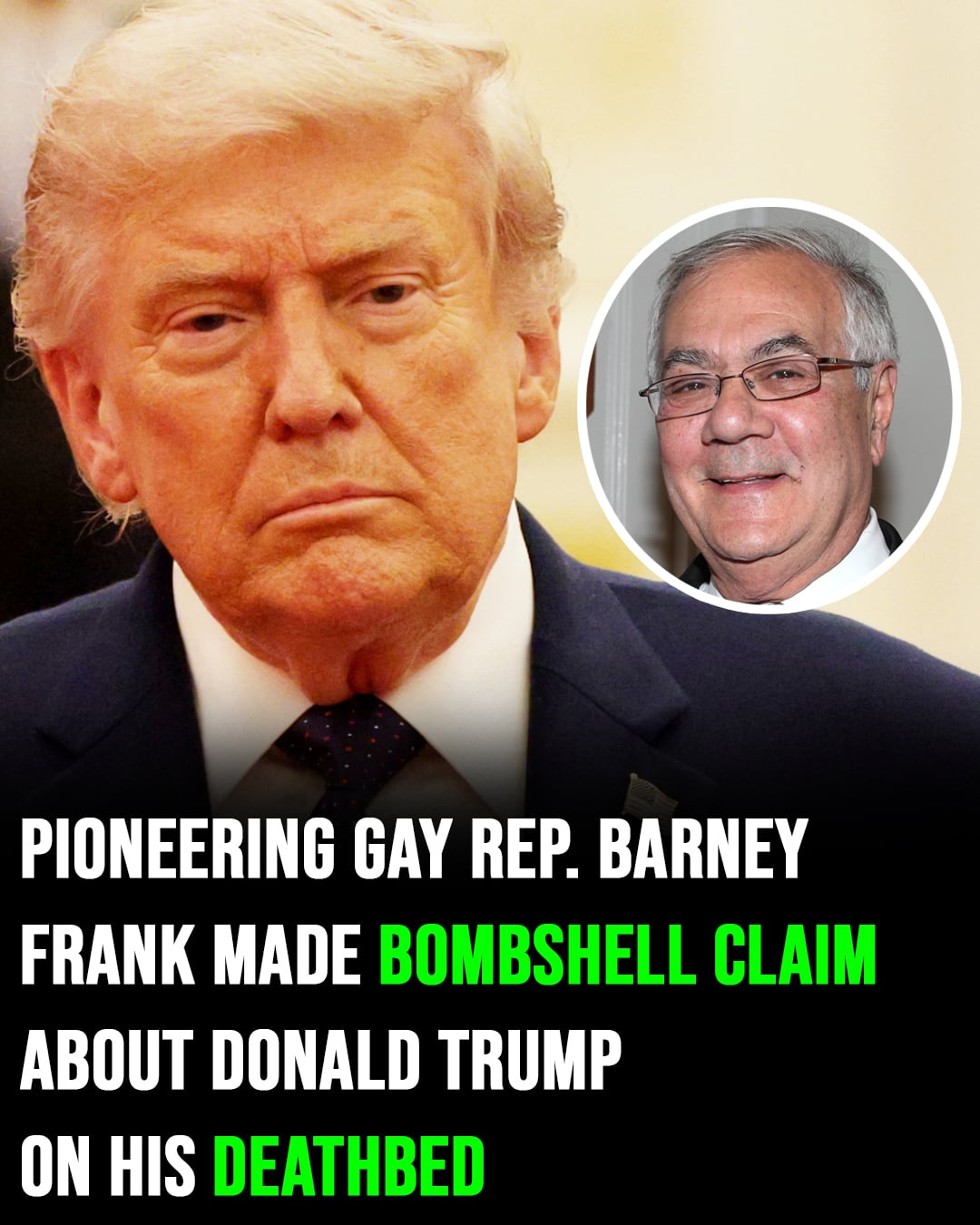
As the end of his life approached, former congressman Barney Frank reportedly remained exactly who he had always been: sharp-tongued, deeply political, unapologetically blunt, and unwilling to soften his beliefs for the sake of comfort or legacy.
Even in hospice care, with decades of political warfare behind him and his health fading, Frank continued speaking openly about the state of America and the man he believed represented one of its greatest modern dangers: Donald Trump.
For supporters and critics alike, it was a final chapter entirely consistent with the life Frank had lived. Throughout his career, the pioneering Massachusetts congressman built a reputation as one of the most outspoken and intellectually combative figures in American politics. He did not avoid confrontation; he often seemed energized by it. Whether debating economic policy, defending LGBTQ+ rights, or dismantling opponents during congressional hearings, Frank became known for combining policy expertise with biting sarcasm and fearless honesty.
But according to those close to him during his final days, one subject continued to dominate his reflections more than any other: the future of American democracy under Donald Trump and the political movement surrounding him.
Frank reportedly believed that Trump’s political rise was fueled less by ideology than by emotional manipulation. In conversations near the end of his life, he described Trump as someone uniquely skilled at channeling public anger while offering little substance beneath the outrage. Calling him an “idiot savant,” Frank argued that Trump possessed an instinctive ability to exploit fear, resentment, and cultural division even if he lacked the discipline or vision required for meaningful leadership.
To Frank, that talent made Trump dangerous.
He reportedly feared that modern politics had become increasingly driven by grievance rather than governance, emotion rather than policy, and spectacle rather than competence. Trump, in Frank’s view, did not create that environment entirely, but he mastered it in ways few politicians ever had. The former president’s rallies, online messaging, and constant conflict with institutions all reflected what Frank saw as a politics built not around solving problems, but around sustaining outrage itself.
Those concerns were deeply personal for Frank because his own political life had been shaped by entirely different battles. Long before LGBTQ+ rights gained mainstream political acceptance, Barney Frank stood as one of the few openly gay members of Congress at a time when doing so carried enormous political risk. He became a historic figure not simply because of his identity, but because he refused to hide it despite the intense scrutiny and hostility surrounding him.
Over the decades, Frank evolved into one of the Democratic Party’s most influential lawmakers, especially on financial policy. Following the 2008 financial crisis, he played a central role in crafting the Dodd-Frank Wall Street Reform and Consumer Protection Act, landmark legislation designed to impose tighter regulations on banks and reduce systemic financial risks. Supporters praised the law as a necessary correction after reckless corporate behavior nearly collapsed the economy. Critics accused it of government overreach.
Regardless of political opinion, few doubted Frank’s intelligence or command of policy. Even opponents often acknowledged his remarkable debating ability and encyclopedic understanding of financial systems. He approached politics as both intellectual combat and moral struggle, believing deeply that government should actively protect vulnerable people from economic exploitation and discrimination.
That worldview shaped his understanding of Trump as well.
Frank reportedly believed Trump represented a rejection of seriousness itself in politics. To him, the former president’s appeal rested largely on emotional performance rather than governing philosophy. He saw Trump as someone who excelled at identifying public frustrations without offering coherent long-term solutions to the underlying problems.
Immigration, foreign policy, economic nationalism, and media warfare all became examples Frank pointed to when discussing Trump’s leadership style. He believed Trump thrived politically by amplifying conflict and division because anger created loyalty more effectively than policy details ever could.
Yet Frank’s criticism reportedly extended beyond Trump alone. He worried about what the broader political climate revealed about the country itself. The rise of conspiracy theories, distrust in democratic institutions, and constant hostility between Americans disturbed him deeply. In his view, Trump was not merely a disruptive individual but a symptom of a much larger national fracture.
That fracture, Frank feared, would not disappear quickly even if Trump eventually lost political power.
People close to Frank described him as frustrated not only by Trump’s continued influence but by the exhaustion he believed had overtaken public discourse altogether. Politics had become less about persuasion and more about permanent tribal warfare. Facts increasingly mattered less than emotional allegiance. Compromise became treated as weakness. Institutions once trusted by broad segments of society were now viewed suspiciously by millions.
Despite his harsh criticism, Frank reportedly did not view Trump purely through the lens of personal hatred. Instead, he saw him as part of a dangerous historical pattern: leaders who rise by channeling public rage eventually struggle to govern constructively because outrage itself becomes the product they are selling.
In Frank’s mind, movements built primarily around anger may achieve power temporarily, but they often leave behind damaged institutions, deeper polarization, and public distrust that outlasts any single administration.
That belief appeared to shape his reflections near the end of his life. Rather than focusing heavily on his own accomplishments, Frank reportedly spoke more about unfinished battles and lingering fears for the country’s future. He had spent decades fighting for inclusion, institutional reform, and democratic stability. Watching politics drift toward extremism and mutual contempt left him deeply unsettled.
Yet even amid frustration, Frank remained characteristically unsentimental. He did not romanticize politics or pretend democracy was ever easy. Throughout his career, he often argued that progress in America rarely arrives through idealism alone. It emerges through conflict, pressure, negotiation, and persistence.
Friends and colleagues who reflected on Frank’s legacy after his passing described him as one of the last great political brawlers of an older era: intensely partisan but intellectually grounded, confrontational but policy-driven, deeply ideological yet still capable of serious legislative work. Whether admired or disliked, he was rarely accused of being performative or intellectually shallow.
That contrast partly explains why Trump troubled him so much. Frank belonged to a generation of politicians who believed policy expertise and governance mattered fundamentally. Trump represented a radically different political style centered around branding, emotional connection, and relentless media domination.
The tension between those two visions of leadership continues defining American politics today.
Frank’s final public reflections now resonate because they capture a broader anxiety extending far beyond one politician or one election. Many Americans increasingly fear that political life has become emotionally unsustainable, driven more by outrage than solutions and more by spectacle than substance.
For supporters of Trump, Frank’s comments may sound like yet another example of establishment fear and elitist contempt toward a populist movement. For critics of Trump, they sound like a warning from someone who spent decades studying power and recognized dangerous patterns unfolding in real time.
Either way, Barney Frank’s final political message carried the same qualities that defined his life: sharp conviction, intellectual aggression, and an unwillingness to retreat from controversy even in his final days.
And as America continues wrestling with the forces he warned about, his last words now feel less like a personal attack and more like a grim reflection on the unstable political era he believed the country had entered.