
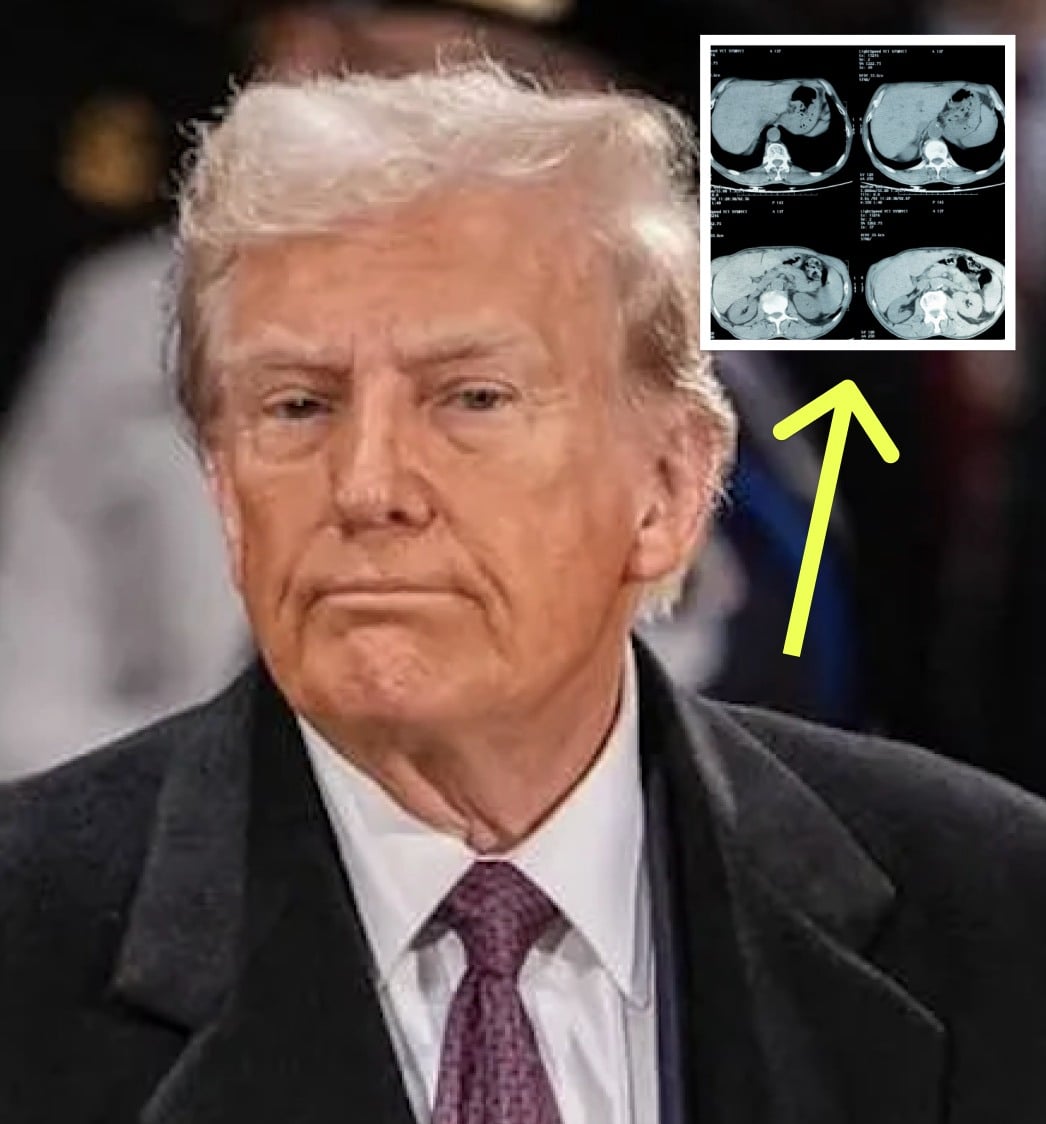
A brief exchange aboard Air Force One has ignited a fresh wave of speculation, debate, and curiosity after Donald Trump disclosed that he recently underwent an MRI scan but offered few details about what exactly doctors were examining.
What might have been a routine medical update quickly evolved into a national conversation, with supporters defending the former president’s remarks and critics demanding greater transparency. Within hours, social media platforms were flooded with questions, theories, jokes, and endless discussions about the scan, its purpose, and what information may still be unknown.
The controversy began when reporters asked Trump about his recent medical evaluation.
The setting was familiar. Journalists gathered aboard Air Force One, seeking clarification on reports that Trump had undergone additional testing as part of a broader health assessment. Given ongoing public interest in the health of political leaders, the questions were hardly surprising.
What followed, however, only intensified interest.
Rather than providing specific details about the MRI, Trump responded with broad praise for the results. He described them using words such as “excellent,” “outstanding,” and “the strongest they’ve ever seen.”
The comments immediately captured attention.
Reporters pressed for more information.
What part of the body had been scanned?
Was the MRI related to the brain?
The heart?
A previous medical concern?
A routine screening?
Trump offered little clarification.
Instead, he continued emphasizing that doctors had been highly impressed with the results and that everything appeared to be in excellent condition.
For some observers, that answer was enough.
Supporters argued that routine medical procedures are common, particularly for public figures who undergo frequent examinations. They viewed the exchange as another example of the media searching for controversy where none existed.
To them, the message was simple.
The results were positive.
Doctors were satisfied.
End of story.
Others disagreed.
Critics argued that the lack of specifics only invited additional scrutiny. If the MRI was completely routine, they asked, why not simply explain what had been examined?
That question became the center of the debate.
The MRI itself was no longer the story.
The absence of detailed information was.
As clips of the exchange spread online, commentators began analyzing every word. Political analysts debated whether the remarks reflected strategic communication or unnecessary secrecy. Medical experts appeared on television programs to discuss the many reasons someone might undergo an MRI during a comprehensive health evaluation.
Meanwhile, social media users did what social media users often do.
They speculated.
Some theories were serious.
Others were humorous.
Many fell somewhere in between.
Memes appeared almost immediately. Late-night comedians referenced the mysterious scan in monologues. Online commentators from around the world joined the discussion, turning a brief exchange into one of the most talked-about political stories of the week.
The White House sought to calm concerns by characterizing the examination as part of an expanded wellness evaluation.
Officials emphasized that regular health monitoring is standard practice, particularly for individuals with demanding schedules and extensive travel commitments.
According to those explanations, there was no indication of a medical crisis or hidden emergency.
Yet questions persisted.
Part of the reason lies in the unique position occupied by presidents and former presidents.
The health of national leaders has always attracted public attention. Citizens often view medical information differently when it involves individuals responsible for major political decisions and national leadership.
Questions about age, stamina, and physical fitness become especially prominent during election seasons.
Every public appearance is scrutinized.
Every stumble is analyzed.
Every medical visit becomes news.
Trump is hardly the first political figure to face such attention.
Throughout modern history, presidents and presidential candidates have encountered intense interest regarding their health. Medical reports, physical examinations, and physician statements frequently become subjects of public discussion.
In many cases, debates about health evolve into broader conversations about transparency and trust.
That dynamic appears to be unfolding once again.
What makes this situation unusual is not the existence of the MRI itself.
Medical imaging is common.
What has generated interest is the uncertainty surrounding its purpose.
Without specific details, people naturally fill information gaps with assumptions.
Some assume the scan was entirely routine.
Others suspect there may be more to the story.
Neither side possesses complete information.
As a result, speculation continues to thrive.
Medical professionals have largely urged caution.
Experts note that MRI scans can be used for a wide variety of reasons, many of which have nothing to do with serious illness. They may be ordered as precautionary measures, as part of comprehensive physical examinations, or to investigate minor symptoms that ultimately prove harmless.
In many cases, undergoing an MRI does not indicate a significant health problem at all.
Yet public curiosity remains difficult to contain.
Particularly when the patient is one of the most recognizable political figures in the world.
Trump’s comments also arrive during a period when age and fitness have become central themes in political discussions. Voters have increasingly focused on the physical and mental demands associated with leadership at the highest levels of government.
Questions about endurance, decision-making capacity, and long-term health frequently appear in campaign coverage.
Against that backdrop, even routine medical procedures can take on outsized significance.
Supporters argue that Trump’s willingness to discuss the MRI at all demonstrates confidence.
Critics counter that true transparency requires more than positive adjectives.
The divide reflects broader disagreements that have characterized political discourse for years.
One group sees reassurance.
Another sees unanswered questions.
Both interpret the same information through different lenses.
Meanwhile, the absence of a detailed medical report has continued fueling discussion.
While public officials often release summaries of physical examinations, no comprehensive imaging report was immediately made available. That decision left commentators with little concrete information to analyze.
As a result, attention shifted toward the communication itself.
Why describe the results in such glowing terms?
Why avoid specifics?
Why not simply identify the area examined?
These questions became recurring themes across television panels, podcasts, opinion columns, and social media conversations.
For critics, the situation reinforced concerns about transparency.
For supporters, it demonstrated how even positive health updates can be transformed into controversy.
The truth may ultimately prove far less dramatic than either side expects.
Many routine medical evaluations involve imaging, monitoring, and preventative testing that generate little interest outside healthcare settings. If the patient were not a globally recognized political figure, the MRI might never have attracted attention at all.
But presidents and presidential candidates operate under different expectations.
Every detail carries political implications.
Every statement is dissected.
Every omission becomes part of the conversation.
As the debate continues, one fact remains clear.
The MRI itself may not be the most significant aspect of the story.
Instead, the controversy highlights a larger issue that emerges repeatedly in modern politics: the relationship between public trust and personal privacy.
Voters want reassurance.
Leaders often seek discretion.
Finding the balance between those competing interests is rarely simple.
For now, Trump maintains that the results were exceptional and that there is no cause for concern. The White House continues to describe the evaluation as routine and precautionary.
Yet because few specifics have been provided, curiosity remains alive.
Supporters see confirmation that everything is fine.
Critics see unanswered questions.
Observers in the middle continue waiting for additional information.
Until more details emerge, the mysterious MRI remains less a medical story than a political one a reminder that in an era of constant scrutiny, even a routine health test can become a national obsession.
And sometimes, the questions people ask afterward attract far more attention than the test itself.