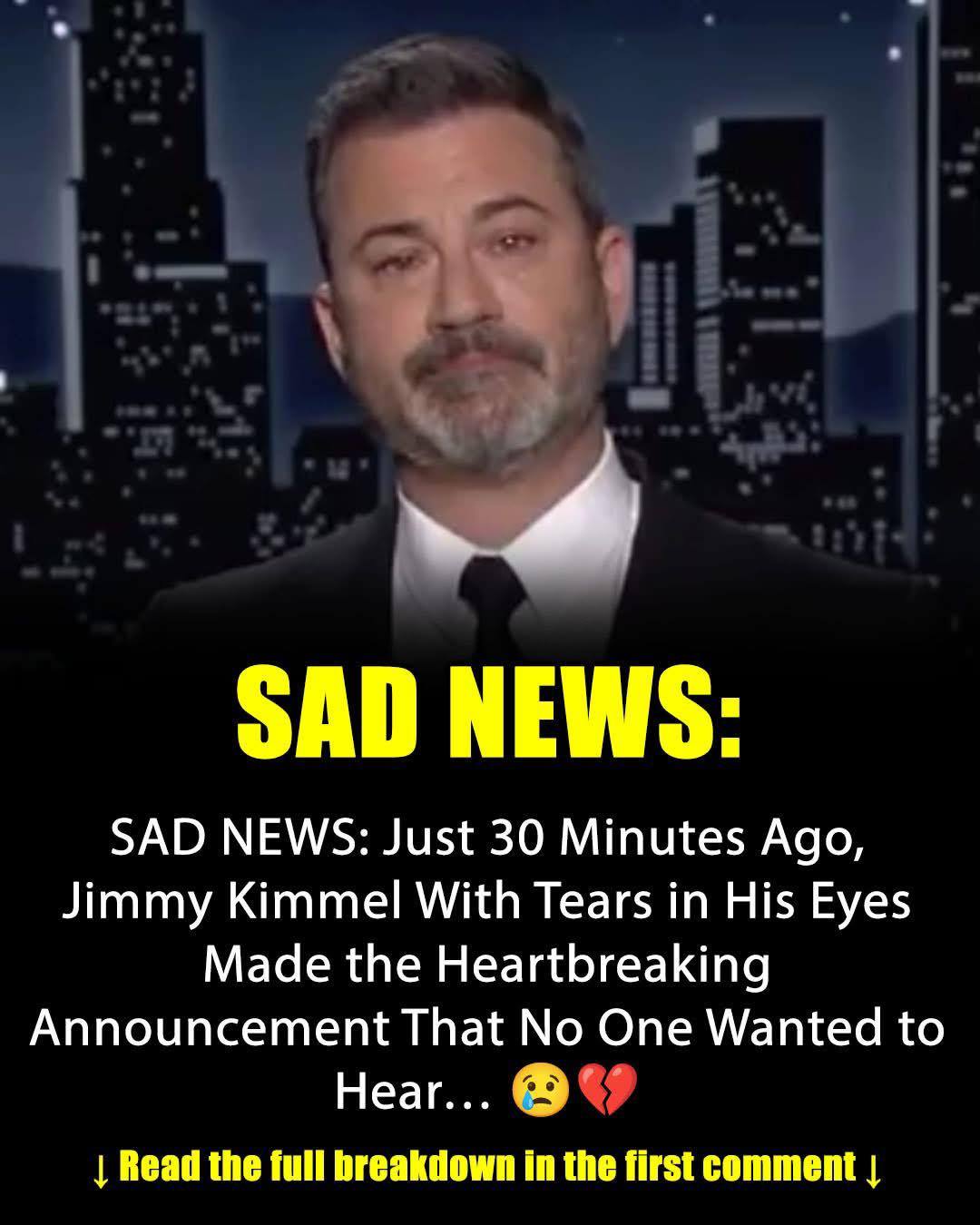
When Jimmy Kimmel looked into the camera that night, he was not just a late night host reacting to an event. He was a father terrified for his children s future.
A citizen questioning what kind of country they would inherit. Listing women, immigrants, the poor, seniors, journalists, and even allies abroad, he gave shape to a dread many were struggling to name. His trembling voice and wet eyes cut through the usual television polish, revealing the cost of pretending everything was normal. The monologue was not funny. There were no jokes. No segues to a musical guest. No lighthearted banter with the sidekick. Just a man, alone behind a desk, speaking from a place of raw, unfiltered emotion.
The broadcast had been planned as a standard post election episode. But plans changed. The results came in. The studio audience, usually primed for laughter, sat in stunned silence. Kimmel took a long pause before he began. He looked down at his notes, then pushed them aside. What followed was not scripted. Or if it was, it felt like something deeper. He spoke about his son, about the world his children will grow up in, about the values he thought were settled but now seem fragile. He mentioned specific communities by name, groups that he said had reason to be afraid. His voice cracked. He wiped his eyes. The camera held on him, unflinching.
The backlash was swift. Within hours, critics accused him of being out of touch, of fearmongering, of using his platform to spread panic. Some called for boycotts. Others dismissed him as just another celebrity who does not understand ordinary Americans. Conservative commentators pounced, framing his tears as performative, as evidence of a liberal elite melting down in real time. But the outpouring of gratitude was equally swift. Thousands of viewers took to social media to thank him for saying what they were feeling. For giving voice to a fear that had no place in polite conversation. For refusing to pretend that everything was fine when it clearly was not.
To some, he was another celebrity lecturing America. To others, he was the first person on a major stage to say, without a punchline, this hurts. The distinction is important. Late night television has long been a space for political commentary, but usually wrapped in satire, softened by laughter. Kimmel stripped away the wrapping. He did not make a joke about the situation. He did not invite a guest to lighten the mood. He simply sat there, tears streaming, and told his audience that he was scared. That vulnerability, so rare in public figures, is what made the moment unforgettable.
That monologue now lives on as more than a reaction to a single event. It captures the exact second politics stopped being abstract and became heartbreak. The moment when the numbers on a screen translated into something personal. When the distant became immediate. When the theoretical became a knot in the stomach. Kimmel did not analyze polling data or break down electoral maps. He talked about his children. About their future. About the country he fears they are inheriting. It was not a political speech. It was a father s lament.
His decision to speak so openly was a gamble. Late night hosts are expected to be funny, not somber. They are expected to entertain, not to grieve. Kimmel has always walked a line between comedy and commentary, but this was different. This was raw. This was real. And it resonated because so many viewers felt the same way but lacked the platform to say so. He gave them a voice. He gave them permission to admit that they were not okay. That they were scared. That they did not know what comes next.
The reaction from his peers was telling. Other late night hosts addressed the same events, but with more distance, more irony, more protective layers. Kimmel stripped those layers away. He was not performing. He was confessing. And that confession, broadcast into millions of homes, became a touchstone for a particular kind of grief. The grief of watching something you love change in ways you cannot control. The grief of realizing that the world you promised your children may not be the one they get.
In the days that followed, the clip was shared endlessly. It was dissected by pundits, praised by fans, mocked by critics. But for those who needed to hear it, it was a lifeline. A reminder that they were not alone. That their fear was not irrational. That there was nothing wrong with being heartbroken. Kimmel returned to his usual format eventually. The jokes came back. The band played. The guests smiled. But that night, for those few minutes, he showed something that cannot be faked. A genuine, human response to a moment that felt, to many, like a loss. He did not fix anything. He could not. But he bore witness. And sometimes, in the darkest moments, that is enough. Just to know that someone else sees it too. That someone else is afraid. That someone else is crying. And that they are crying not because they are weak, but because they care. That is the legacy of that monologue. Not a solution, but a shared acknowledgment of a problem. Not a plan, but a prayer. Not a call to action, but a call to feel. And in a world that often demands we suppress our emotions, that call is revolutionary. That call is brave. That call is why, thirty minutes ago, millions of people sat in silence, watching a man cry, and cried right along with him. Because sometimes, the only appropriate response to tragedy is tears. And there is no shame in that. There is only truth.