The clash between Donald Trump and Pope Leo has become something far bigger than a war of words. On one side stands a president who frames strength through military action and border crackdowns.
On the other, a pope insisting that moral authority means rejecting violence, even when it comes from his own homeland. When Leo condemns the war and the suffering it unleashes, he is not merely criticizing policy. He is challenging the very story America tells itself about power and justice. The pope has been unflinching in his remarks, calling for ceasefires, condemning the loss of innocent life, and urging world leaders to remember their humanity before their strategic interests.
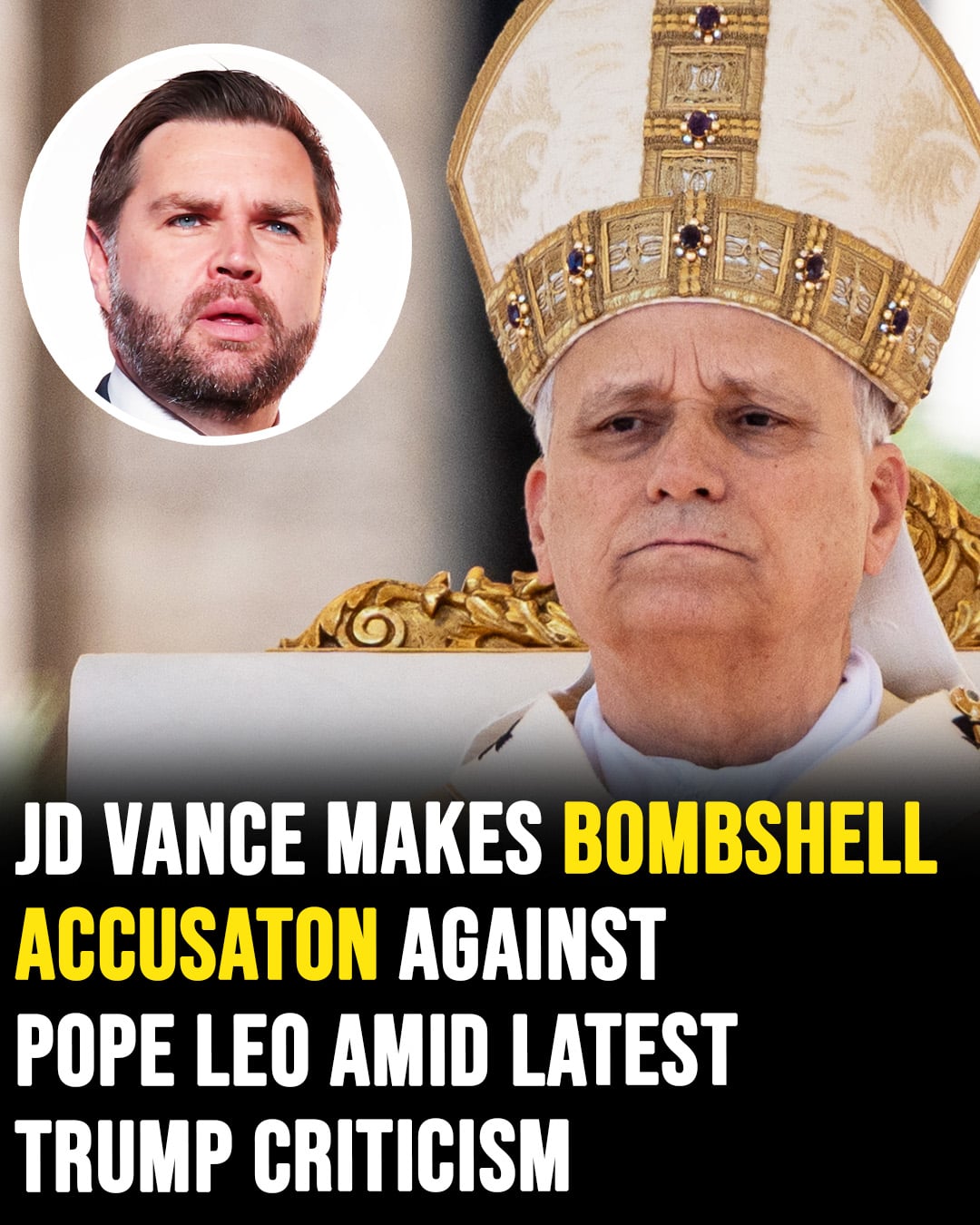
JD Vance s rebuke cuts even deeper, because it comes from a man who chose the Church as an adult and now tells it to stick to morality while Washington handles policy. Vance, a convert to Catholicism, has positioned himself as a defender of the faith in political circles. His accusation against the pope was striking not just for its content but for its source. This was not a secular critic dismissing religious authority. This was a believer publicly challenging the leader of his own church. He argued that the pope should focus on spiritual matters and leave geopolitical strategy to elected officials. The implication was clear. The pope, in Vance s view, was overstepping.
Yet Leo s point is that morality cannot be neatly separated from public decisions that kill or spare the innocent. The pope has repeatedly emphasized that war is not a video game. It is not a abstraction discussed in think tank reports. It is blood. It is orphans. It is cities reduced to rubble. From his perspective, to remain silent while bombs fall is not neutrality. It is complicity. He has used the full weight of his office to demand that leaders, including those from his own country of origin, consider the human cost of their actions. That message has resonated with many Catholics who feel that their faith demands more than empty prayers for peace.
The response from the White House has been sharp. Trump has called the pope naive and weak. He has dismissed the Vatican s concerns as irrelevant to the hard realities of national security. His allies have echoed that sentiment, arguing that the pope does not understand the threats facing the United States and its allies. They point to the aggressive actions of adversarial nations, the need for deterrence, and the responsibility of the president to protect American lives. From this perspective, the pope s moral appeals are admirable but impractical. They belong in a seminary, not in a situation room.
Vance s accusation added a new layer to the conflict. He suggested that the pope was being manipulated, that his advisors were feeding him a skewed version of events, that his statements were being weaponized by opponents of the administration. It was a remarkable claim, one that questioned not just the pope s judgment but his independence. The Vatican has not responded directly to Vance, but papal allies have dismissed the accusation as baseless. They argue that the pope is fully capable of forming his own opinions and that his statements are consistent with decades of Church teaching on war and peace.
The timing of the feud is significant. The conflict has entered a critical phase. Casualty reports are rising. Humanitarian groups warn of a looming catastrophe. The pope has called for a global day of prayer and fasting. The White House has dismissed that as a publicity stunt. The divide between the two sides seems unbridgeable. One sees a moral imperative to stop the killing. The other sees a strategic necessity to achieve military objectives. Caught in the middle are the faithful, many of whom are struggling to reconcile their political allegiances with their religious convictions.
In the end, this confrontation forces Americans to ask a difficult question. When faith and flag collide, which do we follow. For some, the answer is clear. Country comes first. For others, faith demands that they speak out, even against their own government. The pope has made his position clear. He will not be silent. Vance and Trump have made theirs equally clear. They will not be swayed. The clash is not just about policy. It is about identity. About what it means to be a Catholic in a nation that often puts patriotism above principle. About whether the Church has a right to speak into the public square or whether it should stay in the sanctuary.
The coming weeks will determine whether this feud escalates or fades. The pope has shown no sign of backing down. Trump has shown no sign of softening. Vance has inserted himself into the middle of the conflict, positioning himself as a defender of the administration against religious overreach. The faithful are watching. The world is watching. And the question at the heart of the conflict, whether morality can be separated from governance, remains unanswered. For now, the clash continues. And both sides seem prepared to see it through, no matter the cost to their relationship or to the souls of those caught in between. The only certainty is that this debate is far from over. It will echo through churches, through campaign rallies, and through the consciences of those who must choose where their ultimate loyalty lies.