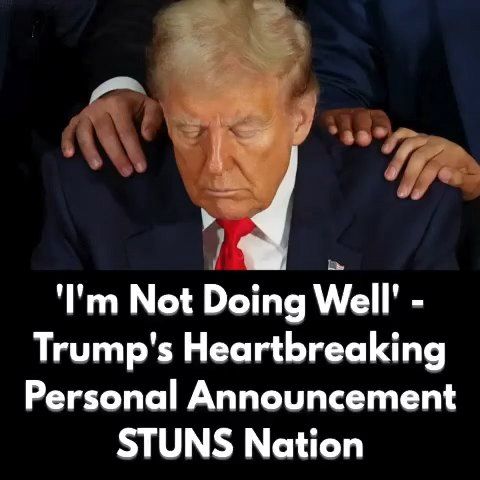
Trump s rare admission of spiritual doubt peeled back a layer usually hidden from public view. Linking his eternal fate to stopping war, he cast his diplomacy not just as strategy, but as penance.
Around that television studio, it was not the usual bombast. It was a man wondering if a lifetime of conflict, controversy, and power plays could be redeemed by one monumental act of peace. The moment was brief, barely a few minutes of airtime, but it lingered. For a figure who has built his public identity on certainty, on never backing down, on projecting strength at all costs, the admission of fear was jarring. He spoke of heaven not as a distant concept but as a destination he was not entirely sure he was prepared for.
The setting was familiar. A comfortable couch. Friendly hosts. An audience of millions who have watched him for decades. But the tone was different. There was no rally cry. No attack on opponents. No threat of retaliation. Instead, there was reflection. He talked about the weight of decisions, the lives lost in conflicts he had overseen, and the hope that somehow, someway, those choices could be balanced by a peace that outlasts him. It was not a confession of sin, but it was close. For a man who rarely admits to any flaw, the acknowledgment that he thinks about judgment, both public and divine, was striking.
Yet his confession also sharpened the political stakes. For supporters, it framed him as a flawed, searching figure willing to confront heaven and history at once. They saw humility. They saw growth. They saw a man who, despite his rough edges, was trying to do something meaningful with the power he had been given. For critics, it sounded like calculated theater aimed at religious voters and foreign leaders alike. They saw manipulation. They saw a performance designed to soften his image ahead of another campaign. They saw the same man who had mocked his opponents, questioned the faith of others, and rarely shown any interest in spiritual matters until it became politically convenient.
Either way, the image lingers. Trump, alone with the thought that a cease fire in a major conflict, a deal with a longtime adversary, a road map to peace, might be less about legacy and more about saving his own soul. It is a heavy thought for a man who has spent most of his life focused on earthly rewards. Money. Fame. Power. Adoration. But now, at an age when mortality becomes harder to ignore, the questions shift. What does it all mean. What will be remembered. What, if anything, comes next.
His peace efforts have been a central theme of his post presidency messaging. He claims credit for agreements that others negotiated. He promises to end wars that have raged for years. He projects confidence that only he can bring hostile parties to the table. But beneath the bravado, there is now something else. A sense of urgency. A recognition that time is running out. Not just for his political ambitions, but for his chance to shape how he will be remembered. And perhaps, if he believes what he says, for his chance to shape where he will spend eternity.
The reaction to his comments has been predictably divided. Religious conservatives who have sometimes been uneasy with his personal conduct welcomed the admission. They see it as evidence of a conscience, a sign that even the most hardened figure can experience a reckoning. Evangelical leaders who have stood by him through scandals and controversies interpreted his words as sincere. They pointed to his actions, the policies he enacted that aligned with their priorities, as proof that his faith, however imperfect, is real. Skeptics remain unconvinced. They note that he has spoken about God and religion before, often in ways that seemed transactional. They recall his inability to name a favorite Bible verse. They remember his comments about forgiveness and communion that suggested a shallow understanding of the faith he claims to embrace.
What is undeniable is the political utility of the message. In a close election, every voting bloc matters. Religious voters, particularly white evangelicals, remain a critical part of his coalition. Speaking their language, acknowledging their concerns, and positioning himself as a figure seeking redemption could help solidify support. But it is also possible that the admission was genuine. That after years of public life, after legal battles, after a pandemic, after an insurrection, after everything, he is simply tired. And in that tiredness, he is asking the same questions that everyone asks when the noise fades and the silence sets in. Did I do enough. Was I good. Will anyone remember me the way I want to be remembered.
The answer to those questions is not yet written. Peace in Ukraine remains elusive. A deal with other adversarial nations is far from certain. His political future is uncertain. But the moment on that couch, the admission of fear, the linking of diplomacy to destiny, will be replayed and debated. For some, it will be a turning point. For others, just another scene in a long running drama. But for Trump himself, it may have been something rarer. A moment of honesty. Unfiltered. Unscripted. Uncomfortable. And in that discomfort, perhaps, a glimpse of something he rarely shows. Himself. Not the character. Not the brand. Just a man, wondering what comes next, and hoping that what he does now might be enough to tip the scales. Whether that hope is political, spiritual, or both, only he knows. The rest of us can only watch, and wonder, and wait to see what he does next. Because with Trump, there is always a next act. The only question is whether it will be written for history or for heaven. Or, as he seems to hope, for both.