It takes only a moment to notice someone’s hands.
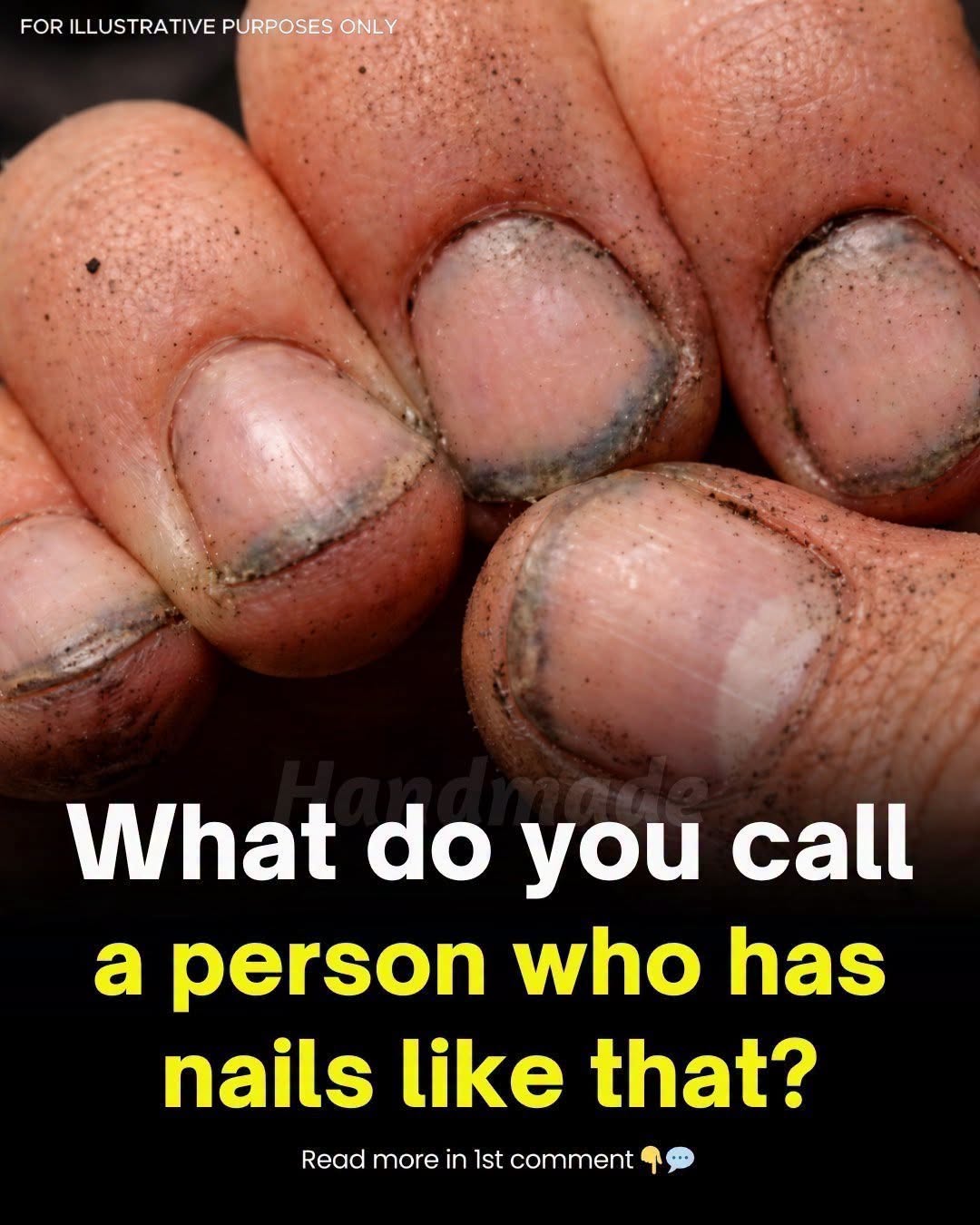
A handshake. A cashier handing back your change. A mechanic returning your car keys. A parent tying a child’s shoe. In those brief moments, many people glance at fingernails without even realizing it. If they spot dirt beneath them, assumptions often follow almost instantly.
Some see laziness.
Others imagine poor hygiene.
A few quietly question the person’s character.
But the truth is usually far more complicated.
Dirty fingernails rarely tell a complete story. More often than not, they reveal something entirely different from what many people assume. They may speak of hard work, sacrifice, demanding responsibilities, or circumstances that few outsiders ever witness.
Our hands accompany us through every task we perform.
They dig.
They lift.
They repair.
They comfort.
They create.
Every scratch, callus, stain, and rough patch reflects experiences that cannot be summarized by appearance alone.
For millions of people, clean, perfectly manicured hands simply are not realistic every hour of every day.
Think about the auto mechanic who spends hours replacing engines, changing oil, and repairing brakes.
Even after washing thoroughly, tiny traces of grease often remain trapped beneath the nails. Modern automotive lubricants are designed to cling to metal under extreme conditions. Unsurprisingly, they cling just as stubbornly to skin.
No amount of scrubbing completely removes every mark immediately.
Yet those same hands may have just prevented a family’s vehicle from breaking down on the highway or repaired the brakes that keep strangers safe every single day.
The dirt tells one story.
The work tells another.
Farmers know this reality better than almost anyone.
Before sunrise, they are already outside.
Planting.
Harvesting.
Feeding livestock.
Repairing fences.
Handling soil from morning until evening.
Their fingernails often carry traces of the earth because the earth is their workplace.
The food that appears neatly packaged in grocery stores begins with hands that spend entire days buried in soil.
Without those hands, supermarket shelves would remain empty.
Construction workers face similar challenges.
Concrete dust.
Paint.
Wood stains.
Metal shavings.
Adhesives.
Insulation.
Every material they use leaves its own signature behind.
Even after showering, small remnants often remain hidden beneath the nails or inside tiny cracks in the skin.
These workers build homes.
Schools.
Hospitals.
Roads.
Bridges.
Entire communities stand because their hands endured countless hours of demanding labor.
Healthcare workers may also experience damaged or rough hands, although for different reasons.
Frequent handwashing and disinfectants dry the skin repeatedly throughout every shift.
Cracks develop.
Skin peels.
Nails weaken.
The appearance may not always resemble the polished images seen in advertisements, but those hands may have spent twelve straight hours caring for frightened patients, comforting families, and saving lives.
Parents know another version of hardworking hands.
Especially those raising young children.
Changing diapers.
Preparing meals.
Cleaning spills.
Doing laundry.
Helping with homework.
Bathing toddlers.
Packing lunches.
Many parents barely have enough time to sit down, much less schedule elaborate self-care routines.
By bedtime, exhaustion often wins over perfection.
Their nails may show traces of gardening, cooking, finger paints, crayons, or household chores.
Not because they do not care.
Because someone else needed their attention first.
Many jobs simply make spotless hands impossible.
Gardeners.
Electricians.
Painters.
Plumbers.
Landscapers.
Factory workers.
Miners.
Chefs.
Artists.
Each profession leaves its own marks.
Some stains disappear overnight.
Others require days.
Some never completely fade before new work begins.
Our society often forgets how much of modern life depends on people whose work is physically demanding.
The roads we drive.
The buildings we enter.
The electricity powering our homes.
The food filling our plates.
The packages arriving at our doors.
Behind nearly every convenience stands someone whose hands became dirty making it possible.
Sometimes, dirty fingernails reflect something entirely different.
Limited access.
Not everyone enjoys unlimited clean water.
Not everyone has stable housing.
Not everyone has access to quality hygiene products.
Some people live in shelters.
Others sleep in vehicles.
Some spend long days caring for sick relatives before thinking about themselves.
Others work multiple jobs simply to keep food on the table.
In these situations, personal appearance often becomes secondary to survival.
It is easy to judge from a distance.
Much harder to understand the invisible struggles someone may carry.
Even mental health can quietly influence personal grooming.
Depression.
Chronic stress.
Grief.
Anxiety.
Burnout.
These conditions can drain motivation and energy in ways outsiders rarely recognize.
Simple daily routines become overwhelming.
Tasks that once took minutes begin feeling impossible.
Someone’s appearance may reflect invisible emotional battles rather than carelessness.
None of this means hygiene should be ignored.
Clean hands remain extremely important.
Especially before eating.
Preparing food.
Treating wounds.
Caring for children.
Proper hygiene reduces infections and protects both personal and public health.
Regular handwashing with soap, careful nail cleaning, trimming nails, and moisturizing damaged skin remain valuable habits.
Healthcare professionals consistently recommend keeping nails reasonably short because dirt and bacteria accumulate more easily under long nails.
People working with food or in healthcare often follow even stricter hygiene standards to protect others.
Good hygiene matters.
Compassion matters too.
The two ideas can exist together.
One does not cancel the other.
The problem begins when appearance alone becomes a measure of character.
History offers countless reminders that first impressions often mislead us.
Someone wearing expensive clothing may struggle financially.
Someone driving an old vehicle may be quietly wealthy.
Someone with perfectly polished nails may treat others poorly.
Someone with grease beneath their fingernails may spend weekends volunteering at shelters or helping neighbors repair broken homes without asking for payment.
Character cannot be measured by appearance.
Neither can kindness.
Or generosity.
Or integrity.
There is another fascinating detail about our hands.
Scientists often describe them as records of our daily lives.
Tiny cuts reveal recent work.
Calluses develop where pressure repeats itself.
Paint stains hint at renovations.
Ink marks suggest writing.
Flour dust may point toward baking.
Garden soil suggests time spent growing something.
Our hands preserve evidence of experiences long after the moment has passed.
In many ways, they become small biographies.
Not polished biographies.
Honest ones.
Perhaps that is why older generations sometimes viewed rough hands with admiration rather than embarrassment.
They represented effort.
Responsibility.
Persistence.
A willingness to work.
Children often notice this naturally.
They rarely criticize dirty fingernails.
Instead, they ask curious questions.
“What were you building?”
“What were you fixing?”
“What were you planting?”
Adults sometimes lose that curiosity.
Judgment replaces questions.
Assumptions replace understanding.
Yet one simple conversation often reveals a far richer story than appearance ever could.
The next time you notice someone’s fingernails, pause before deciding what they mean.
They might belong to someone who has spent the day repairing engines.
Harvesting crops.
Building homes.
Changing hospital bandages.
Caring for children.
Working double shifts.
Helping neighbors.
Supporting an aging parent.
Or simply doing everything possible to survive another difficult week.
Hands reveal pieces of a person’s journey.
But they never reveal the entire path.
Every stain has a story.
Every scratch has context.
Every rough edge reflects experiences invisible to strangers.
The dirt beneath someone’s fingernails may wash away tomorrow.
The effort those hands represent often lasts a lifetime.
Before judging what you see, remember everything you cannot.
Sometimes the strongest, kindest, hardest-working people carry the least polished hands.
And sometimes those hands deserve admiration far more than criticism.
Because dignity is never measured by spotless fingernails.
It is measured by the humanity, resilience, and compassion behind the hands themselves.