Few modern figures have experienced the kind of rise, fall, and resurgence that Donald Trump has. His story is one that continues to divide opinion, spark debate, and capture global attention.
For some, it represents determination and resilience. For others, it reflects controversy and unpredictability. But regardless of perspective, it is a journey that has proven impossible to ignore.
Long before entering politics, Donald Trump was already a well-known name in business circles. Growing up in a competitive environment, he was introduced early to the idea that success was something to be pursued aggressively. His father, a real estate developer, influenced his outlook, instilling in him a mindset that viewed business not just as a profession, but as a constant contest where only the most persistent would come out ahead.
As he began building his own career, Trump quickly understood the importance of visibility. In a city like New York, where competition is relentless and attention is a valuable currency, he worked to establish not just projects, but a personal brand. His name became a symbol placed prominently on buildings, hotels, and developments, reinforcing an image of ambition, confidence, and success.
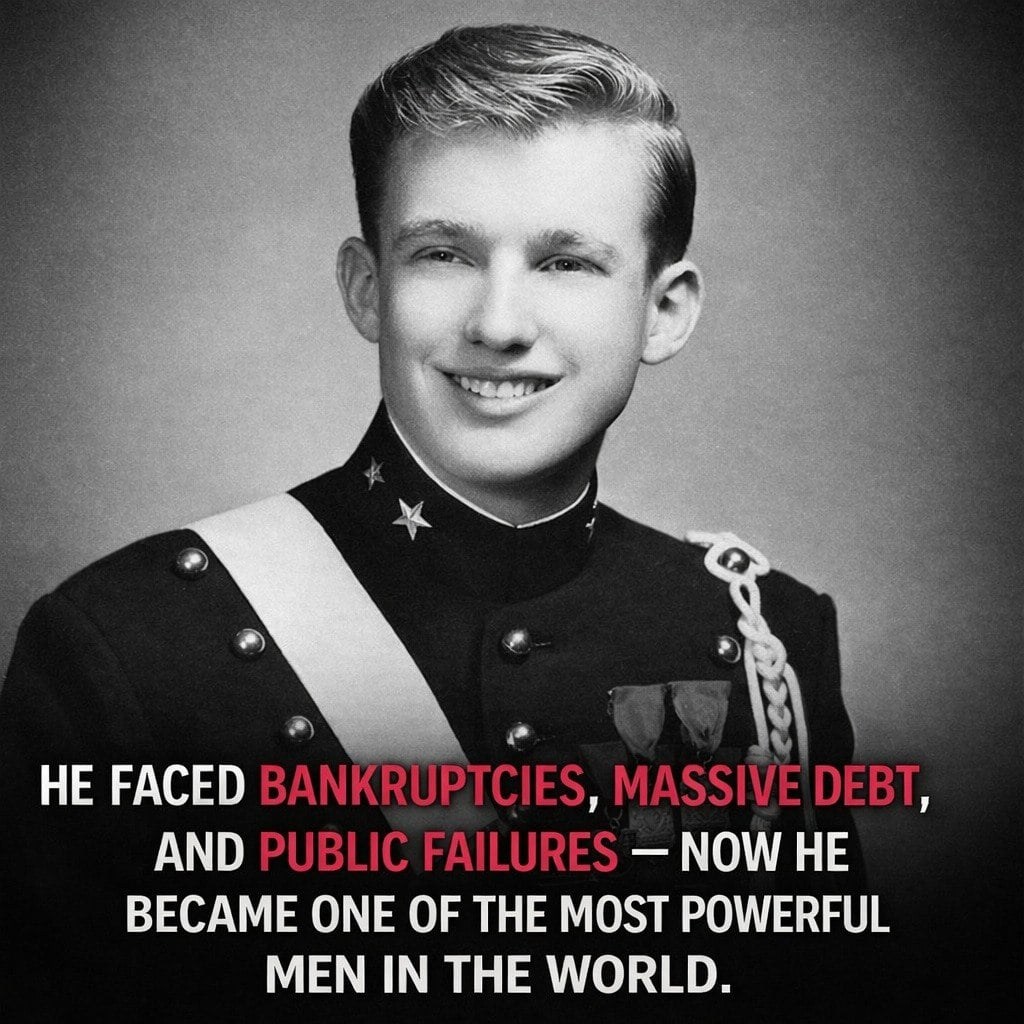
But behind that image, the reality was far more complicated. His business career included significant highs, but also dramatic setbacks. At various points, he faced enormous financial pressure, including billions of dollars in debt tied to real estate ventures and casinos. There were moments when analysts, critics, and media outlets openly questioned whether he would be able to recover. To many observers, it appeared that his business empire was on the brink of collapse.
What set him apart during these periods was not just his financial maneuvering, but his approach to perception. He consistently leaned into negotiation, restructuring deals and working with creditors to manage losses. At the same time, he maintained a public image of confidence. Even when facing serious challenges, he rarely projected defeat. This ability to control the narrative allowed him to remain relevant, even when circumstances suggested otherwise.
Rather than fading from public view, he adapted. One of the most notable turning points in his career came through television. His role on the reality show The Apprentice introduced him to a new and much broader audience. The show presented him as a decisive leader, someone who evaluated performance, made tough calls, and rewarded success. This portrayal reinforced a persona that extended far beyond business.
For many viewers, this became their primary image of Donald Trump. He was no longer just a real estate figure; he had become a recognizable personality in households across the country. The exposure helped reshape public perception, turning him into a cultural figure whose influence reached into entertainment, media, and beyond.
This transformation would later play a critical role when he made a move that surprised many. Entering politics, he stepped into a space where he had no traditional background, yet he approached it with the same unconventional style that had defined his career. His campaign challenged established norms, using direct messaging and media engagement to connect with voters in a way that differed from typical political strategies.
During the election cycle, he positioned himself as an outsider, someone willing to disrupt existing systems. This message resonated with a significant portion of the public, particularly those who felt disconnected from traditional political institutions. His ability to dominate media coverage and maintain visibility gave him an advantage in shaping the national conversation.
When he ultimately became President of the United States, it marked one of the most unexpected political outcomes in recent history. His victory was seen by supporters as proof that persistence and a willingness to challenge convention could lead to success, even in the most competitive arenas. For critics, it raised concerns about experience, leadership style, and the long-term impact of his approach.
His presidency itself was marked by strong and often polarized reactions. Supporters viewed him as bold, decisive, and unafraid to take actions that others might avoid. They saw his leadership as a break from traditional politics, emphasizing direct communication and a focus on certain economic and national priorities.
On the other hand, critics described his time in office as controversial and divisive. They pointed to his communication style, policy decisions, and approach to governance as sources of tension both domestically and internationally. The contrast in these perspectives only added to the intensity of public debate surrounding his leadership.
Throughout it all, one constant remained: he stayed at the center of attention. Whether through policy announcements, public appearances, or media coverage, he maintained a level of visibility that few political figures achieve. This ability to remain in focus, regardless of the circumstances, has been a defining characteristic of his career.
Looking at the broader picture, his journey reflects more than just personal ambition. It highlights the power of reinvention and the role that perception can play in shaping outcomes. Time and again, he faced moments where it seemed his influence might fade, only to reemerge in a different form, adapting to new opportunities and challenges.
His story also underscores the evolving relationship between media, public image, and leadership. In an era where visibility can influence public opinion as much as policy, his career demonstrates how effectively managing attention can impact both business and politics.
Whether viewed as a symbol of persistence or a figure of controversy, his path from business setbacks to the presidency remains one of the most talked-about transformations in modern history. It is a narrative defined by risk, resilience, and the ability to navigate both success and failure on a very public stage.
In the end, his story continues to provoke strong reactions, but it also serves as a reminder that in today’s world, influence is shaped not only by results, but by the ability to stay relevant, adapt, and continually redefine one’s place in the spotlight.