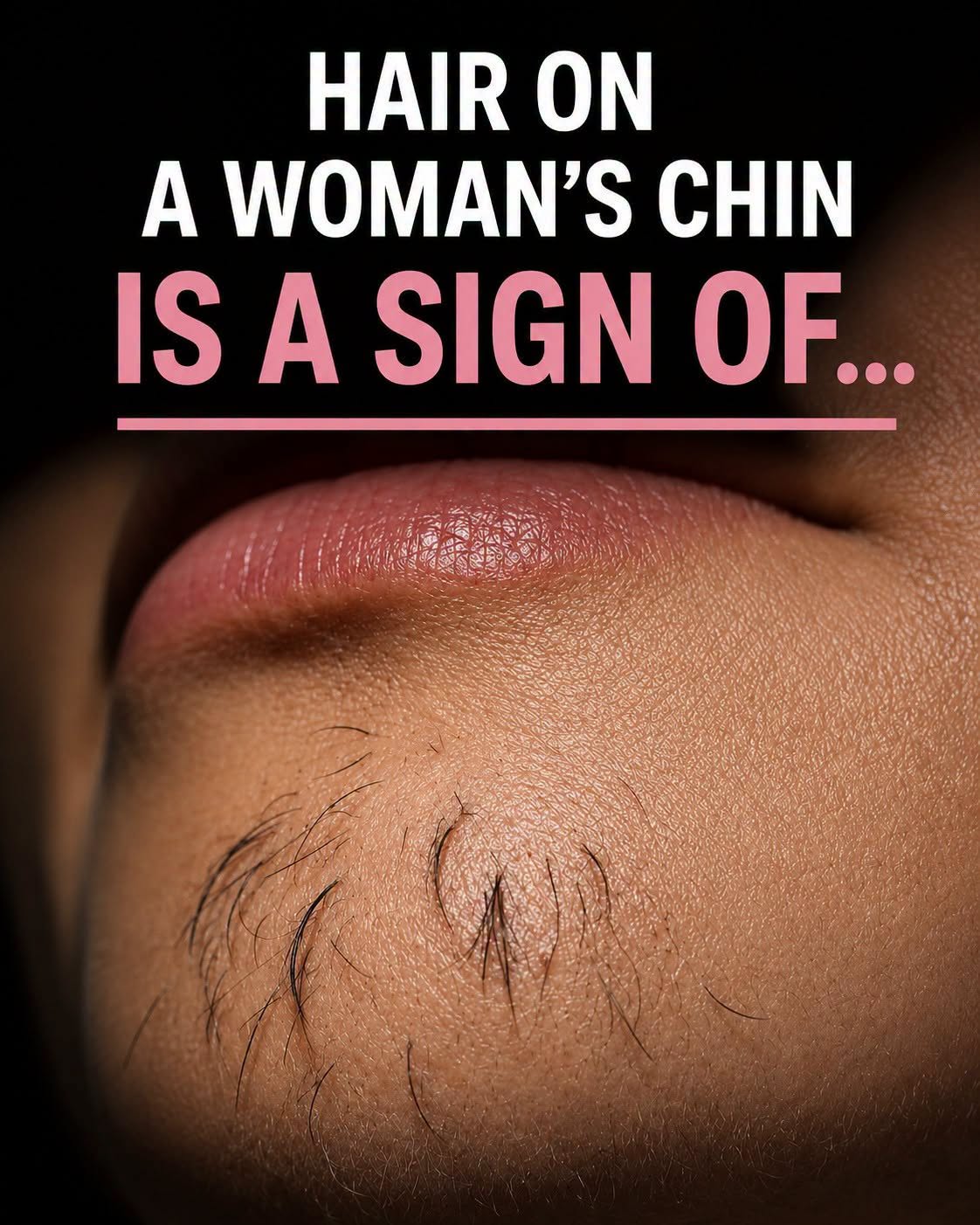
Finding a dark, coarse hair appearing on your chin can feel like a surprising discovery.
For many women, the first reaction is confusion.
Why is this happening?
Did something change?
Is it a sign that something is wrong?
While facial hair growth is often associated with men, the reality is that women naturally have androgens, the group of hormones commonly linked with male characteristics. These hormones exist in everyone, and even small changes in their levels or activity can influence where and how hair grows.
A few unexpected chin hairs are much more common than many people realize.
In many cases, they are simply a normal part of aging, genetics, and the natural changes that happen inside the body over time.
Hair growth patterns are controlled by a combination of hormones, genetics, and the sensitivity of individual hair follicles. Two women can have similar hormone levels but experience completely different amounts of facial hair because their bodies respond differently.
Some follicles are naturally more sensitive to androgens such as testosterone. When these hormones interact with sensitive follicles, fine hairs that were barely noticeable can gradually become thicker, darker, and more visible.
This process can happen slowly, which is why many women notice the change almost unexpectedly.
One day, a person may look in the mirror and discover a single stubborn hair that seems to have appeared overnight.
In reality, the process may have been developing for months or even years.
Age is one of the biggest factors influencing facial hair changes.
As women move through different stages of life, hormone levels naturally shift. Estrogen levels, in particular, tend to decline during and after menopause. Because estrogen helps balance the effects of androgens, lower estrogen levels can make androgen activity more noticeable.
The result can be changes such as increased facial hair, thinner scalp hair, or changes in skin texture.
These changes are not signs that the body is breaking down.
They are simply part of the complex hormonal transitions that occur throughout life.
Genetics also plays a major role.
Some families naturally have more noticeable facial hair growth, while others rarely experience it. If a woman’s mother, grandmother, or close relatives developed chin or upper-lip hair, she may be more likely to experience similar changes.
The timing and amount of growth can vary greatly.
Some women may notice a few isolated hairs around their 30s or 40s, while others may not see changes until later decades.
For many, removing these hairs becomes nothing more than another small grooming routine.
Tweezing, trimming, waxing, threading, and other cosmetic methods are common ways women manage unwanted facial hair.
However, sometimes increased facial hair growth can be connected to underlying hormonal conditions.
One of the most common conditions associated with excessive facial hair growth is polycystic ovary syndrome, often called PCOS.
PCOS is a hormonal condition that affects many women and can influence ovulation, metabolism, and hormone balance.
Women with PCOS may experience increased androgen activity, which can contribute to thicker hair growth on areas such as the chin, upper lip, chest, or abdomen.
However, facial hair alone does not automatically mean someone has PCOS.
Doctors typically look at the complete picture, including other symptoms.
Signs that may suggest a hormonal imbalance include irregular or missed periods, persistent acne, unexplained weight changes, difficulty losing weight, thinning hair on the scalp, or challenges with fertility.
When several of these symptoms appear together, it may be worth discussing them with a healthcare professional.
Another factor that can influence facial hair growth is medication.
Certain medications can affect hormone activity or change how the body responds to hormones. Some treatments involving hormones, steroids, or specific medical conditions may contribute to increased hair growth.
Stress can also influence the body in complicated ways.
Although everyday stress does not usually cause significant facial hair growth by itself, prolonged stress can affect hormone regulation and overall health. In some people, major changes in the body caused by illness, lifestyle changes, or emotional strain may contribute to noticeable differences.
Rarely, sudden and dramatic facial hair growth can signal a more serious hormonal issue.
This is uncommon, but rapid changes deserve attention.
A healthcare provider may evaluate hormone levels, medical history, and other symptoms to determine whether additional testing is needed.
The important thing is recognizing the difference between a few normal hairs and a sudden, unexplained change.
Many women feel embarrassed when they notice chin hair because society often portrays smooth, hairless skin as the standard of beauty.
But the reality is much more complicated.
Women naturally have body hair.
Hormones naturally fluctuate.
Bodies naturally change.
A small amount of facial hair does not mean someone is unhealthy, unattractive, or losing control of their body.
In fact, many women quietly experience the same thing.
They simply do not talk about it.
The pressure to hide normal body changes can make a common experience feel unusual or shameful.
Understanding the science behind it can help remove some of that anxiety.
The appearance of chin hair is not a reflection of femininity or personal care.
It is a biological response influenced by thousands of factors working together inside the body.
For those who prefer to remove it, there are many safe and effective options.
For those who choose to leave it alone, that is equally valid.
The decision is personal.
What matters most is understanding what is happening and recognizing when a change might deserve medical attention.
A few occasional chin hairs are usually nothing to fear.
They are often simply a reminder that the human body is constantly changing and adapting.
Hormones shift.
Hair patterns evolve.
Life stages leave their mark.
Rather than viewing these changes as something alarming, many experts encourage women to see them as part of normal biology.
The body is not failing.
It is communicating.
And sometimes, that tiny hair on the chin is simply evidence of the remarkable, ongoing changes happening beneath the surface.