Most shoppers make hundreds of choices every week without giving them much thought.
They walk through grocery aisles, reach for familiar products, recognize familiar colors, and place items into their carts almost automatically. A package they have seen dozens of times creates a sense of trust. The design feels familiar. The size feels familiar. The product appears unchanged.
But sometimes, the most noticeable changes are the ones that are easiest to miss.
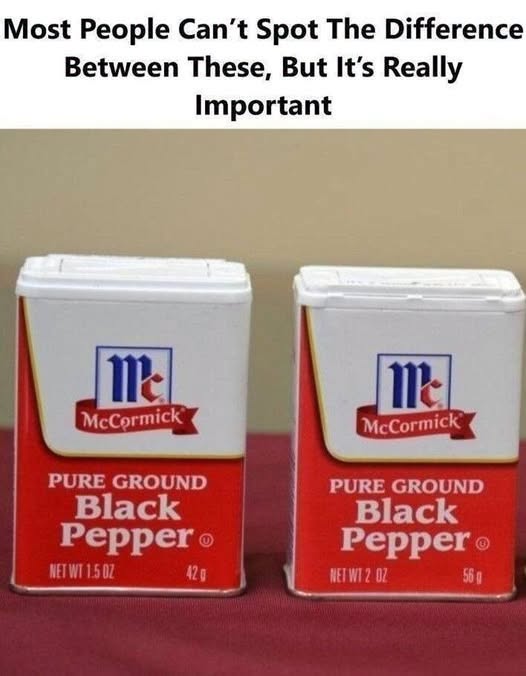
Many consumers have recently started paying closer attention to a growing debate surrounding product packaging and what some call “shrinkflation” the practice of reducing the amount of product inside a package while keeping the outside appearance nearly identical.
One example that has sparked conversation involves popular spice containers, where shoppers have questioned whether the packaging tells the whole story.
For years, many people have reached for the same spice bottles without thinking twice. They recognize the shape, the label, and the familiar presence on store shelves. But when the amount inside changes while the container remains almost exactly the same, some shoppers feel that something important has been taken away.
The issue is not only about the quantity of pepper or seasoning.
It is about perception.
It is about the relationship between a customer and a brand.
When someone buys a product they have trusted for years, they often assume that the package represents what is inside. A large container creates an expectation of value. A familiar design creates a sense of consistency.
That is why changes hidden behind unchanged packaging can feel frustrating.
Imagine picking up two spice containers from different brands.
One package looks large and substantial, but the amount inside has been reduced.
Another uses a clear container that allows customers to immediately see exactly how much product they are getting.
The difference may seem small, but psychologically it creates a powerful contrast.
One package asks shoppers to trust the label.
The other allows shoppers to see the reality for themselves.
This is where the discussion becomes bigger than a single product.
Modern grocery shopping depends heavily on visual cues.
Consumers often do not stop to compare every ounce, gram, or milliliter listed on a package. They rely on experience. They remember what a product looked like before. They assume that if the box or bottle has not changed, the value has not changed either.
Companies understand this behavior.
Packaging is carefully designed to catch attention, communicate quality, and encourage purchasing decisions. The size, shape, colors, and placement of information all influence how customers perceive a product.
That does not necessarily mean every design decision is misleading.
Businesses have legitimate reasons for changing package sizes. Rising costs, supply chain issues, ingredient prices, and manufacturing expenses can all influence how companies manage products.
However, consumers often become frustrated when those changes are difficult to notice.
A smaller amount inside a smaller package is usually easy to understand.
A smaller amount inside the same large package can feel very different.
This is why transparency has become such an important part of modern consumer conversations.
Many shoppers say they are not necessarily upset by price increases or smaller portions when companies clearly communicate those changes. What bothers them is feeling surprised after the purchase.
Trust is built through honesty.
A customer may accept paying more for a product if they understand why the price changed.
They may accept a smaller package if the company explains the adjustment.
But when a familiar design creates the impression that nothing has changed, some customers feel like they were not given the full picture.
Legally, companies are generally required to provide accurate information about the net weight or volume of their products. As long as that information is properly displayed, packaging changes may comply with regulations.
But consumer trust is not created by legal requirements alone.
It is created through everyday experiences.
A brand’s reputation is shaped by thousands of small interactions.
The way a company responds to criticism.
The clarity of its labeling.
The honesty of its marketing.
The feeling customers have when they open a package and see what they actually received.
For many people, that feeling matters as much as the product itself.
A spice may seem like a simple household item, but it represents a relationship between a company and the people who buy from it repeatedly.
Families often purchase the same brands for years.
They develop habits.
They recognize the packaging while walking through the store.
They trust that the product they pick up today will provide the same experience it provided yesterday.
When that expectation changes, even slightly, people notice.
This is why comparisons between different styles of packaging have become part of a larger conversation about transparency.
Clear containers, visible measurements, and straightforward labeling can help consumers feel more informed.
Opaque packaging, oversized designs, and subtle quantity reductions can create uncertainty, even when technically allowed.
Ultimately, the debate is not only about pepper.
It is about how businesses communicate with their customers.
In an era where shoppers are becoming increasingly aware of hidden costs and changing product sizes, packaging itself has become part of the conversation.
People want to know what they are paying for.
They want products that match expectations.
They want brands that respect their attention rather than depend on them overlooking details.
A company can win a moment by creating packaging that encourages a quick purchase.
But long-term loyalty requires something more valuable.
Confidence.
Because customers do not only remember what they bought.
They remember how the brand made them feel.
A package can attract someone once.
But trust is what brings them back year after year.
And in the end, the strongest brands are not the ones that simply fit more products onto store shelves.
They are the ones that make customers feel they are being treated honestly every time they reach for an item.