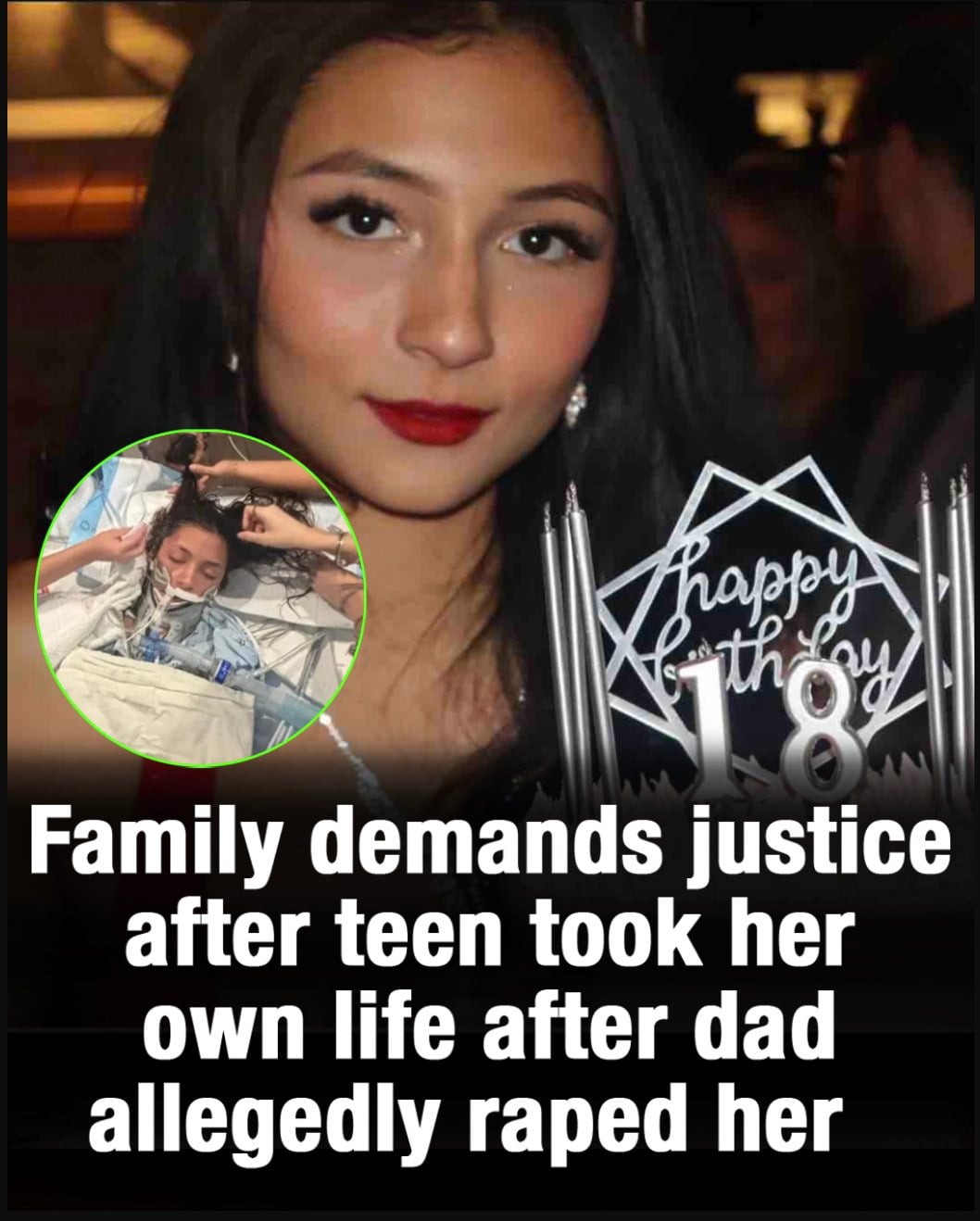
What began as a deeply personal tragedy has grown into something much larger, as a grieving family refuses to let their daughter’s story fade into silence.
Outside a California courthouse, they gather with determination, wearing shirts printed with her face, holding onto memories that feel both painfully vivid and impossibly distant. For them, this is no longer just about loss it is about recognition, truth, and a system they believe must be held to account.
They describe Makayla as more than the headlines will ever capture. To them, she was a bright, thoughtful teenager with a future that once seemed full of possibility. She laughed easily, dreamed openly, and carried a quiet hope that life could offer her something better. That hope is what led her to make a decision that would ultimately change everything. Believing in the possibility of a fresh start, she left behind what was familiar and traveled across the country, trusting that she could rebuild her life in a place that felt safer, more stable, and more supportive.
At the center of that decision was someone she believed she could rely on. According to her family, she placed her trust in a relationship she hoped would provide protection and care. Instead, they say, that trust was shattered in a way that left lasting emotional and psychological wounds. What they describe is not just a betrayal, but a collapse of the very foundation that allows a young person to feel secure in the world.
In the months that followed, those closest to her say they began to notice changes. The energy that once defined her seemed to fade. Her voice grew quieter, her presence more withdrawn. What had once been a sense of openness became something guarded, fragile, and difficult to reach. They believe she was carrying something far heavier than anyone around her fully understood at the time.
Now, standing outside the courthouse, her family is trying to make sense of a loss that feels both deeply personal and profoundly public. They speak not only about what they believe happened, but about what they feel must happen next. For them, justice is not an abstract concept or a distant ideal. It is something concrete, something that requires action, visibility, and accountability.
They want a trial. They want every piece of evidence to be examined, every detail brought into the light, every voice that can still be heard to be given space. Even though Makayla can no longer speak for herself, they believe there is still a story that can be told through what remains through evidence, through records, through the traces of what she experienced. They argue that these elements should not be dismissed or minimized simply because she is no longer here to testify.
There is a sense among them that too often, cases like this risk being reduced to paperwork, quietly processed and eventually forgotten. That is exactly what they are determined to prevent. By showing up, by speaking out, by keeping her name visible, they are pushing back against that possibility. They are insisting that her life had meaning, that her experience mattered, and that what they allege cannot be resolved behind closed doors or treated as something less than it is.
Their call for accountability is also a call for recognition. They want the system to acknowledge not just the legal aspects of the case, but the human reality behind it. They speak about the importance of treating every piece of evidence not as a technical detail, but as part of a larger story one that reflects fear, pain, and a desperate need to be heard. In their view, justice means allowing that story to be fully understood, rather than reduced to fragments.
At the same time, their efforts highlight a broader issue that extends beyond a single case. They are raising questions about how institutions respond when young people come forward with difficult experiences, about how seriously those claims are taken, and about what happens when those individuals are no longer able to continue that fight themselves. Their advocacy is rooted in the belief that systems should be built not only to investigate, but to protect, to listen, and to act with urgency when trust is broken.
There is also an emotional dimension to their fight that cannot be separated from the legal one. Grief, in this context, is not quiet or contained. It is visible, expressed through presence, through persistence, through the refusal to step back. Each appearance outside the courthouse is both a protest and a memorial, a way of saying that she is not gone in the way that matters most. As long as her story is being told, as long as her name is being spoken, she remains part of the conversation.
For those watching from a distance, the case has become a reflection of something larger. It touches on themes of trust, vulnerability, and the responsibilities that come with both. It forces people to confront uncomfortable questions about how easily those responsibilities can be broken, and about what it takes to rebuild a sense of safety once it has been lost.
The family’s message remains consistent. They are not asking for sympathy alone. They are asking for action, for attention, and for a process that they believe must be seen through to its conclusion. They want a system that does not turn away when cases become complicated or emotionally difficult. They want a system that recognizes the weight of what is being presented and responds accordingly.
In the end, what they are fighting for is something both simple and profound. They want acknowledgment that Makayla’s life mattered, that her experiences deserve to be taken seriously, and that what they allege should not disappear into silence. They want a process that honors her, not by words alone, but by ensuring that every possible step is taken to uncover the truth.
Their presence outside the courthouse is a reminder that behind every case file is a person, behind every allegation is a story, and behind every demand for justice is a family trying to make sense of something that cannot be undone. They stand there not because it is easy, but because they believe it is necessary. And as long as they continue to stand there, her story will not be forgotten.