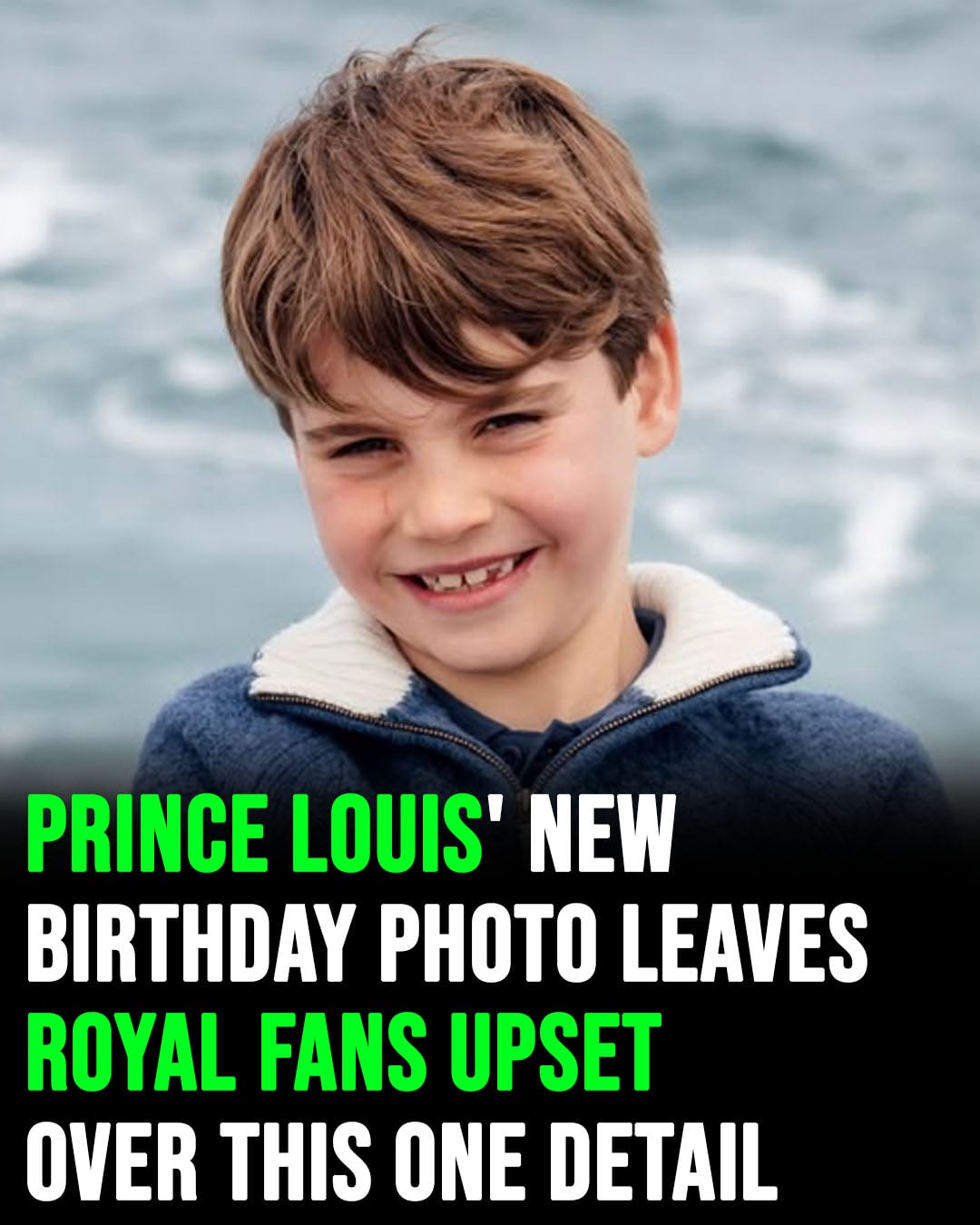
The latest birthday portrait of Prince Louis has done something few royal images manage to do it stopped people in their tracks.
What should have been a simple annual tradition quickly turned into a moment of reflection, nostalgia, and even quiet discomfort for royal watchers around the world. The image, taken during a peaceful family holiday in Cornwall, shows a boy who no longer fits the playful, mischievous image that so many people had grown used to. Instead, it reveals someone older, calmer, and more self-contained, and that subtle shift is exactly what has stirred such a strong reaction.
In the photograph, Louis stands leaning gently against a wooden railing, dressed in a navy jumper that gives him a slightly more grown-up appearance. His posture is relaxed but composed, his expression thoughtful rather than cheeky. There is a stillness in the image that contrasts sharply with the lively, animated child the public has watched over the years. For many, it was not just a picture it was a realization. The youngest child of Prince William and Catherine, Princess of Wales, is no longer the toddler pulling faces on the Buckingham Palace balcony. He is stepping into a new phase, and the world is noticing all at once.
The response online quickly moved beyond simple birthday wishes. While many people shared kind messages celebrating his eighth birthday, others found themselves unexpectedly emotional. Comments filled with phrases about time moving too fast, about how children seem to grow overnight, and about the bittersweet nature of watching that transformation unfold in public. It wasn’t sadness in the traditional sense, but rather a kind of shared awareness that something fleeting had quietly passed.
For years, Prince Louis has been seen as the lighthearted presence within the royal family. His playful expressions during official events, his candid reactions during ceremonies, and his natural energy made him relatable in a way that few royal figures manage to be. He brought a sense of spontaneity to highly structured environments, reminding people that behind the titles and traditions, there are still children growing up in real time. That image became part of how the public connected with him and perhaps even how they understood the modern royal family itself.
This new portrait, however, suggests a shift. It doesn’t erase that past, but it places it firmly in the background. The boy in the image seems more aware, more grounded, and perhaps more conscious of his role within a family that exists under constant observation. That change is subtle, but it carries weight, especially when viewed through the lens of royal history.
There is also a deeper layer to the reaction, one that goes beyond simple nostalgia. In recent years, conversations about royal roles have taken on a new intensity, particularly following the release of Prince Harry’s memoir and the discussions it sparked. The idea of being the “spare” has become more than just a historical concept; it has become a topic of public debate. For some observers, Louis represents that same position within the royal structure, and his growth brings those questions into sharper focus.
People are not just seeing a child growing older they are projecting possibilities, concerns, and hopes onto what his future might look like. Will he be able to carve out his own identity? Will he be defined by tradition, or will he have the freedom to choose a different path? These are questions that cannot be answered now, but they linger in the background of even the simplest public appearances.
At the same time, there is a clear effort by his parents to shape a different kind of upbringing. Prince William and Catherine have consistently emphasized the importance of giving their children as normal a childhood as possible, despite the extraordinary circumstances surrounding them. From school routines to family outings, they have tried to create a sense of stability and privacy that allows their children to develop without constant pressure.
This approach offers a quiet counterpoint to the concerns that often surround royal life. It suggests that while tradition remains important, it does not have to define every aspect of a child’s experience. The portrait of Louis, in this sense, can be seen as part of that balance. It presents him not just as a royal figure, but as a child growing into himself someone who exists both within and beyond the expectations placed upon him.
The setting of the photograph also plays a role in shaping its impact. Cornwall, with its open landscapes and slower pace, provides a backdrop that feels removed from the formalities of royal life. It reinforces the idea of a family moment rather than a staged event, adding to the authenticity that people seem to respond to so strongly. There is no grandeur, no elaborate setting just a quiet scene that captures a moment in time.
And yet, that simplicity is exactly what makes the image so powerful. It allows people to focus on the change itself, without distraction. It invites reflection, not just on Louis as an individual, but on the passage of time more broadly. In a world that often moves too quickly, moments like this create a pause a chance to notice something that might otherwise go unseen.
For many, the reaction to the photo has as much to do with their own experiences as it does with the royal family. Watching a child grow up, even from a distance, can trigger personal memories of how quickly time passes, how moments slip by, and how change often happens without announcement. It becomes a mirror, reflecting something familiar in an unfamiliar context.
In the end, the image of Prince Louis is more than just a birthday portrait. It is a reminder that growth is constant, that change is inevitable, and that even the most public lives are shaped by the same quiet transitions that define everyone else’s. The boy in the photograph may carry a title, but he is also simply a child becoming something new, one year at a time.
What surprised people most was not just how much he had changed, but how suddenly they seemed to notice. One moment he was the playful youngest sibling, the next he appeared as someone stepping into a more defined version of himself. That shift, captured in a single frame, is what continues to resonate.
And perhaps that is why the reaction has been so strong. It is not about a single detail in the photo, but about what that detail represents. It is about time, growth, and the quiet realization that nothing stays the same for long even in a world built on tradition.