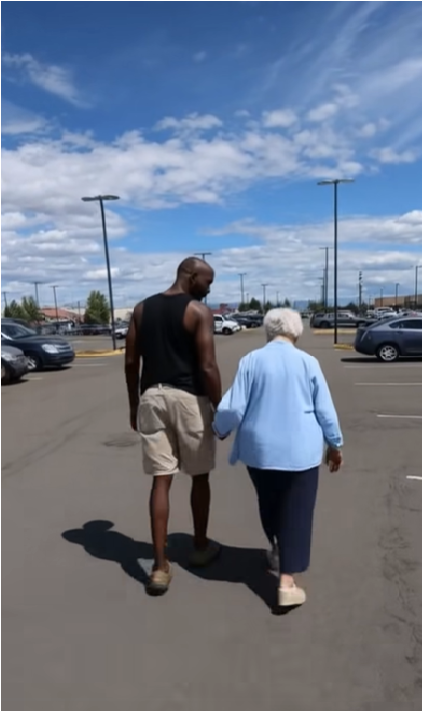
Some treasures are easy to recognize. They sparkle, shine, and attract attention the moment they appear. Others are quieter. They don’t announce their value or demand admiration.
Instead, they reveal their importance over time, through memories, comfort, and the lasting impact they leave on our lives. Grandmothers belong to that second kind of treasure. They may not seek the spotlight, but their influence often becomes one of the most meaningful gifts a child ever receives.
Many people first encounter this reflection while searching for hidden objects in a picture puzzle. The challenge might ask viewers to find a book, a comb, a glass, and a candle concealed within an image. At first glance, the task seems simple enough. Yet as people search, they often become distracted by something far more powerful than the puzzle itself: the warm scene of a grandmother surrounded by family, radiating kindness and love. Suddenly, the hidden objects become secondary to the emotions the image awakens.
That reaction is no accident. Grandmothers have a unique place in family life. Their presence often creates an atmosphere unlike any other. They possess an extraordinary ability to make people feel safe, understood, and valued without needing grand gestures or elaborate words. Their strength lies in small acts of love repeated consistently over many years.
For countless children, a grandmother’s home feels like a sanctuary. The moment they walk through the door, something changes. The pressures of school, friendships, and everyday worries seem to fade. There is often a familiar scent in the air, perhaps fresh bread baking in the oven, a favorite family recipe simmering on the stove, or simply the comforting aroma of a place filled with care.
These sensory memories remain vivid long after childhood ends. Years later, a particular smell or recipe can instantly transport someone back to afternoons spent at their grandmother’s kitchen table. Such memories demonstrate how deeply love becomes woven into ordinary moments.
Grandmothers also serve as living archives of family history. While books can teach facts and dates, grandmothers often provide something far more valuable: stories. Through their memories, children discover where they come from, how previous generations lived, and what challenges their ancestors overcame.
A grandmother may recount tales of her childhood, family traditions, historical events she witnessed, or lessons learned through hardship. These stories connect young people to something larger than themselves. They help children understand that they are part of an ongoing family journey stretching across decades and generations.
In a rapidly changing world, this sense of connection can be incredibly grounding. Knowing one’s roots often provides stability during uncertain times. Grandmothers become bridges between the past and the future, preserving family identity while helping younger generations move forward.
One of the most cherished aspects of many grandmother-grandchild relationships involves food. Across cultures and countries, people frequently associate their grandmothers with favorite meals, desserts, and recipes. Yet the food itself is rarely the whole story.
A grandmother’s cooking often represents devotion expressed through action. Every carefully prepared dish carries a message that words sometimes cannot fully communicate: “You matter to me.”
Whether it is a holiday feast or a simple afternoon snack, the act of preparing food becomes an expression of affection. Grandmothers often remember favorite meals, special preferences, and cherished traditions that make each family gathering feel meaningful.
Many adults later discover that what they miss most is not necessarily the recipe itself but the person who made it. The warmth of those meals came from the love behind them.
Perhaps even more valuable than their cooking is the wisdom grandmothers share throughout life. Unlike formal teachers, grandmothers often educate through example rather than instruction. Their lessons emerge naturally through daily interactions, observations, and conversations.
Children learn patience by watching a grandmother remain calm during difficulties. They learn kindness through her generosity toward others. They learn resilience by hearing stories of challenges she endured and overcame. These lessons often leave a deeper impression than any lecture ever could.
Years later, people frequently find themselves recalling advice their grandmother once offered. A simple phrase spoken decades earlier may suddenly provide clarity during a difficult decision. In this way, a grandmother’s influence continues long after the original conversation has ended.
Another remarkable quality of grandmothers is their capacity for unconditional love. While every family is different, many grandchildren experience their grandmother’s affection as uniquely accepting and reassuring. Grandmothers often celebrate achievements without creating pressure and offer comfort without demanding perfection.
For children, this type of support can become a powerful source of confidence. Knowing there is someone who believes in them regardless of mistakes or setbacks helps build emotional resilience. It creates a secure foundation from which they can explore the world and develop their identity.
Researchers studying family relationships have repeatedly found that strong connections with grandparents can positively influence children’s emotional well-being. Grandparents often provide stability, encouragement, and perspective during periods of change or stress.
The special bond between a grandmother and grandchild frequently extends well beyond childhood. As grandchildren grow into adults, the relationship evolves rather than disappears. Conversations become deeper. Shared experiences become richer. Mutual respect grows stronger.
Adult grandchildren often discover new appreciation for their grandmothers as they gain life experience themselves. Challenges that once seemed distant become more relatable. Sacrifices that went unnoticed during childhood suddenly become visible. The relationship acquires new layers of understanding and gratitude.
Even when a grandmother is no longer physically present, her influence often remains remarkably powerful. Her values continue to shape decisions. Her stories continue to inspire. Her traditions continue to bring families together.
Many people recognize aspects of their grandmother in themselves years later. They may catch themselves repeating familiar phrases, preparing beloved recipes, or offering comfort in ways that mirror the love they once received. In this way, a grandmother’s legacy continues through future generations.
Like the hidden objects in a puzzle image, some of life’s greatest treasures are not immediately obvious. They reveal themselves gradually through reflection and experience. A grandmother’s importance often becomes clearer with time, as memories accumulate and life lessons deepen.
The book, comb, glass, and candle hidden within a picture may challenge your observation skills, but the true treasure is often hiding in plain sight. It is the gentle figure whose kindness shaped childhood memories, whose wisdom guided difficult moments, and whose love left a permanent mark on countless hearts.
Grandmothers are more than family members. They are storytellers, caregivers, teachers, protectors, and friends. They offer comfort during uncertainty, celebrate joy without reservation, and provide a sense of belonging that remains long after childhood fades.
Their gifts cannot be measured in money or possessions. They are measured in memories, values, traditions, and love. Long after specific moments are forgotten, the feeling they created often remains. That is why grandmothers are among life’s rarest treasures not because they seek recognition, but because their impact lasts forever.