J.K. Rowling has long been one of the most influential figures in modern literature, known globally for creating the Harry Potter universe, a franchise that reshaped children’s fiction and became a cultural phenomenon across generations.
Her books have sold in the hundreds of millions, been translated into dozens of languages, and adapted into blockbuster films, theme parks, and global merchandise empires. Yet in recent years, her public identity has become increasingly defined not by her fictional world, but by her outspoken engagement in one of the most sensitive and polarizing social debates of the modern era: sex, gender identity, and rights in law and society.
The discussion surrounding Rowling has grown far beyond literary circles, becoming a focal point in political, legal, and cultural conversations across the United Kingdom and internationally. Supporters describe her as a prominent voice advocating for what she frames as sex-based rights, particularly those of women. Critics, however, argue that her public statements have contributed to tensions and misunderstandings surrounding transgender identities and have had harmful social implications. The result is a long-running and highly charged disagreement that continues to evolve across media platforms, academic discussions, and public policy debates.
Rowling’s involvement in the issue began to intensify through a series of public posts and essays in which she outlined her concerns about evolving gender policies and legislative proposals. She has repeatedly emphasized the importance of biological sex as a legally and socially relevant category, arguing that certain protections, especially those relating to women’s spaces and rights, should be based on sex rather than gender identity. These views quickly gained widespread attention due to her global profile, ensuring that her statements reached audiences far beyond political commentators or policy experts.
As her comments circulated online, reactions became increasingly divided. Some praised her for engaging with topics they felt were being discussed too cautiously in public discourse, viewing her as willing to speak openly on contentious issues. Others strongly disagreed, accusing her of reinforcing exclusionary narratives. What began as a series of opinion-based discussions gradually expanded into a broader cultural conflict, reflecting deeper societal disagreements about identity, rights, and language.
The controversy soon extended into the entertainment industry, where several actors associated with the Harry Potter film franchise publicly expressed disagreement with Rowling’s views. Daniel Radcliffe, Emma Watson, and Rupert Grint all issued statements affirming support for transgender individuals and emphasizing respect for gender identity. Their responses drew significant attention, not only because of their fame, but also due to their longstanding association with Rowling’s work, which had shaped their careers from childhood into adulthood.
Despite widespread criticism from some sectors, Rowling has consistently maintained her position. She has argued that public debate on sex and gender should remain open and that individuals should be free to express differing opinions without fear of professional or social consequences. Her supporters often echo this sentiment, framing her stance as part of a broader conversation about freedom of expression and democratic discourse.
As the debate intensified, it became increasingly intertwined with legal and political developments. Gender recognition laws, equality legislation, workplace policies, and public accommodations for single-sex spaces became recurring subjects in national debates. Courts, policymakers, advocacy groups, and public institutions all found themselves engaged in discussions that reflected the same underlying tensions seen in online discourse.
One particularly high-profile moment in the wider debate involved Algerian Olympic boxer Imane Khelif during the Paris Olympics. Khelif became the subject of intense international scrutiny and online speculation regarding eligibility and gender classification in sport. During this period, Rowling was among several prominent figures who publicly commented on the controversy. The situation escalated rapidly across social media and traditional news outlets, becoming a global talking point and highlighting how sports, identity, and public perception can intersect in highly sensitive ways.
Following the Olympics, Khelif filed a legal complaint in France related to alleged online harassment, with reports indicating that several public figures were referenced in the case. French authorities subsequently opened an investigation, drawing further international attention due to the prominence of those involved. The episode added another layer of complexity to an already deeply contested global debate, illustrating how online commentary can increasingly intersect with legal accountability.
Throughout these developments, Rowling has continued to argue that discussions about sex-based rights remain essential and should be protected within democratic systems. Her supporters view her ongoing participation in the debate as an important contribution to legal and cultural discourse, emphasizing that controversial topics must still be open to discussion and scrutiny within public institutions.
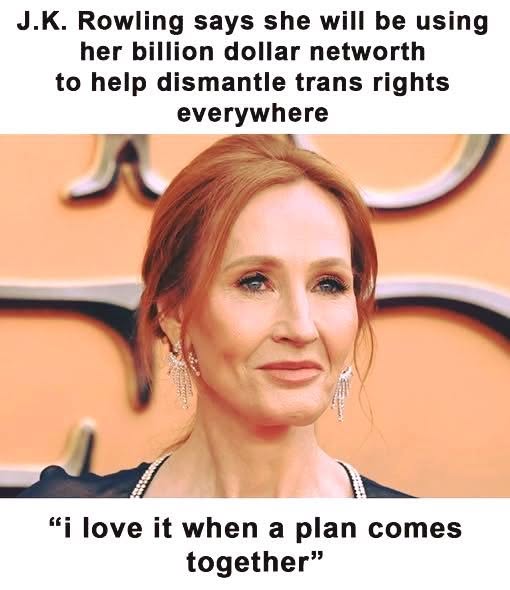
In recent years, her involvement has moved beyond commentary alone. Rowling has increasingly focused on initiatives aimed at supporting legal challenges and advocacy efforts connected to issues she associates with women’s rights and sex-based protections. Reports and public statements indicate that she has committed financial resources toward funding legal cases and organizations involved in disputes over workplace policies, access to single-sex spaces, and related equality legislation.
These initiatives represent a shift from public commentary to more structured forms of advocacy. By supporting legal action and institutional challenges, Rowling has positioned herself not only as a commentator but also as an active participant in shaping how these issues are addressed within legal systems. Supporters see this as a meaningful extension of her principles, arguing that financial backing helps ensure representation for viewpoints they believe might otherwise be underrepresented in courts and policy discussions.
Critics, however, argue that such involvement may intensify existing tensions and contribute to policies they view as exclusionary toward transgender individuals. Advocacy groups focused on transgender rights continue to challenge her positions, emphasizing the need for expanded protections and recognition within law and society. This ongoing disagreement reflects a broader divide in how different groups interpret equality, inclusion, and rights.
The result is a highly complex and emotionally charged public landscape in which the same actions are interpreted in fundamentally different ways depending on perspective. For some, Rowling represents a defender of long-established legal categories and women’s protections. For others, she symbolizes a controversial figure whose influence complicates efforts toward broader inclusion and recognition.
Despite the controversy, Rowling remains one of the most influential cultural figures in the world. Her statements continue to generate headlines, shape debates, and attract commentary from political leaders, journalists, academics, and the general public. At the same time, her literary legacy remains firmly established, with the Harry Potter series continuing to reach new generations through books, films, stage productions, and related media.
As global discussions around gender identity and legal rights continue to evolve, Rowling’s role in the conversation shows no signs of diminishing. Her recent initiatives suggest a continued commitment to both public advocacy and financial support for causes she believes are central to ongoing legal and cultural debates.
The broader issue itself remains one of the most significant and debated topics of contemporary society. Governments, courts, institutions, and communities continue to navigate complex questions about identity, rights, and definitions in law and public life. Within this landscape, J.K. Rowling remains a central and unavoidable figure whose influence ensures that her voice will continue to shape the discussion for years to come.