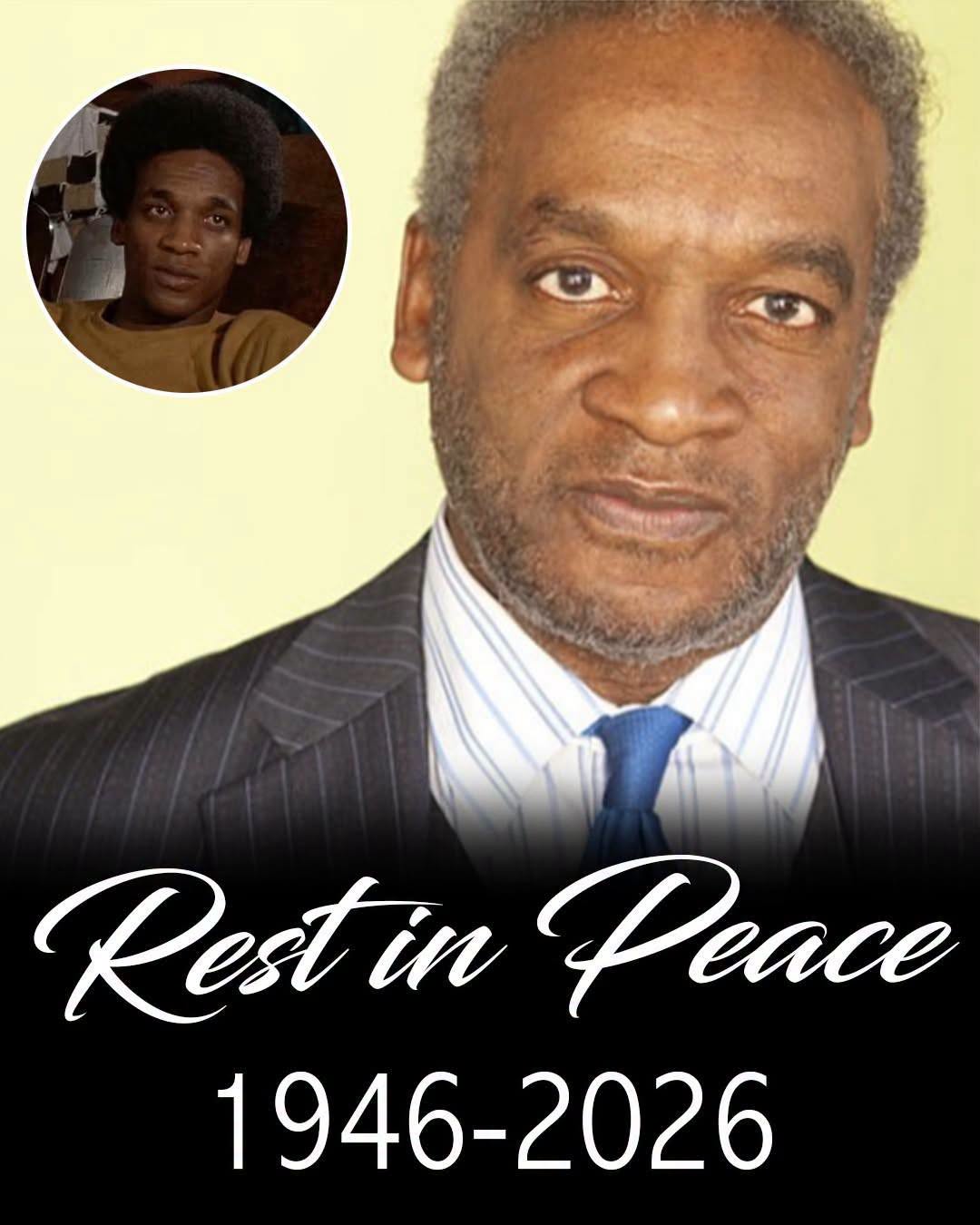
Some actors become famous through leading roles, red carpet appearances, and constant headlines. Others build careers differently, earning the respect of audiences and colleagues one performance at a time. Carl W. Crudup belonged to the second group.
For decades, he appeared on television screens and movie theaters across America, often in supporting roles that left lasting impressions. His face was familiar even when his name was not immediately recognized. Directors trusted him. Fellow actors admired him. Audiences remembered him.
Now, following a long battle with prostate cancer, the veteran actor has passed away, leaving behind a career defined not by celebrity but by consistency, professionalism, and quiet excellence.
His death marks the end of a remarkable journey that began far from Hollywood.
Carl W. Crudup was born in the Mississippi Delta, a region known for its rich cultural history and deep American roots. His early years were shaped by modest surroundings and traditional values, experiences that would later influence the authenticity he brought to his performances.
Eventually, his family relocated to Pittsburg, California, where he spent much of his youth. Those who knew him during those years described him as thoughtful, determined, and curious about the world around him.
Before acting entered his life, service came first.
Crudup joined the United States Army and served in Europe, an experience that broadened his perspective and introduced him to different cultures and experiences. Military service gave him discipline, resilience, and maturity that would later prove valuable in both his personal life and his acting career.
After completing his service, he returned to the United States with a growing desire to pursue something creative.
That dream eventually led him to the American Academy of Dramatic Arts, one of the country’s most respected acting schools.
There, he refined his skills and developed the techniques that would later define his performances. While many actors struggle for years before finding opportunities, Crudup quickly demonstrated a natural ability to bring honesty and depth to every character.
His early success came on the stage.
He appeared on Broadway in The First Breeze of Summer alongside acclaimed actor Moses Gunn. The production gave him an opportunity to showcase his talents before live audiences and established him as a serious performer capable of handling emotionally demanding material.
Theater remained an important foundation throughout his life.
It taught him patience.
It taught him timing.
Most importantly, it taught him how to listen, a quality that became one of his greatest strengths as an actor.
As his career expanded, Hollywood began to take notice.
Throughout the 1970s and 1980s, Crudup appeared in numerous films and television productions, steadily building a reputation as one of the industry’s most reliable character actors.
His performances in films such as The Gambler and J.D.’s Revenge demonstrated his ability to bring complexity to supporting characters. Even when he had limited screen time, he made audiences believe that his characters existed long before the scene began and would continue living after it ended.
That authenticity became his trademark.
Television audiences came to know him through appearances on many popular series.
He appeared in The Rockford Files, where his natural presence fit perfectly within the show’s realistic style. Later, he would continue building an impressive list of television credits that included ER, Criminal Minds, and Shameless.
Each role was different.
Each performance carried its own emotional truth.
Whether playing authority figures, family members, mentors, or troubled individuals, Crudup approached every role with the same commitment.
He never appeared interested in chasing fame.
Instead, he focused on the work itself.
Directors often praised his professionalism.
Younger actors frequently sought his advice.
Crew members remembered his kindness and patience.
Those who worked with him describe a man who brought calm energy to busy film sets. He was known for telling stories between takes, sharing experiences from his years in the military, theater, and television.
Many say that when Carl W. Crudup spoke, people listened.
His wisdom came not from ego but from experience.
As the years passed, he gradually stepped away from the spotlight.
His home in Littlerock, California, became his sanctuary.
Surrounded by animals and open space, he embraced a quieter way of life. Friends say he developed a deep connection with the land and the animals he cared for, treating them as family members rather than possessions.
The ranch offered something Hollywood could not.
Peace.
Privacy.
Stillness.
Away from cameras and industry demands, he found comfort in daily routines and simple pleasures.
When he was diagnosed with prostate cancer, he faced the illness with the same dignity that had defined his life.
Those close to him describe a man who rarely complained.
He continued spending time with family and friends while focusing on the things that mattered most.
Although his health gradually declined, he remained grateful for the life he had lived and the relationships he had built.
Throughout his battle, he largely avoided public attention.
There were no dramatic interviews.
No public campaigns.
No attempts to turn his illness into a spectacle.
Instead, he chose privacy.
That decision reflected the man he had always been.
Even in difficult moments, he valued dignity above recognition.
Following news of his passing, tributes began appearing from actors, directors, and longtime fans.
Many described him as one of Hollywood’s most underrated performers.
Others remembered his generosity toward younger actors and his willingness to mentor those entering the industry.
Several colleagues recalled how he could transform an ordinary scene into something memorable through a single expression, a carefully timed pause, or a few quietly delivered words.
His performances often felt effortless.
In reality, they were the result of decades of experience and dedication.
Carl W. Crudup leaves behind two daughters, family members, friends, and countless people whose lives he touched both personally and professionally.
His legacy extends far beyond film credits and television appearances.
He represents an important kind of actor that Hollywood sometimes overlooks.
The character actor.
The reliable performer.
The artist who never demands attention but earns it through honesty and skill.
Many audiences may not immediately recognize his name.
But they recognize the feeling his performances created.
The comforting presence.
The believable humanity.
The sense that the person on screen was real.
In an industry often focused on fame, Carl W. Crudup built something more lasting.
He built trust.
He built respect.
He built a career that quietly influenced generations of actors and audiences.
As Hollywood says goodbye, many are discovering what colleagues knew for years.
Carl W. Crudup may never have been the loudest voice in the room, but he was often the one people remembered long after the scene ended.
And sometimes, that is the greatest legacy an actor can leave behind.