For a politician known for dominating headlines, commanding rallies, and appearing before cameras at every opportunity, even a few days of silence can spark enormous curiosity.
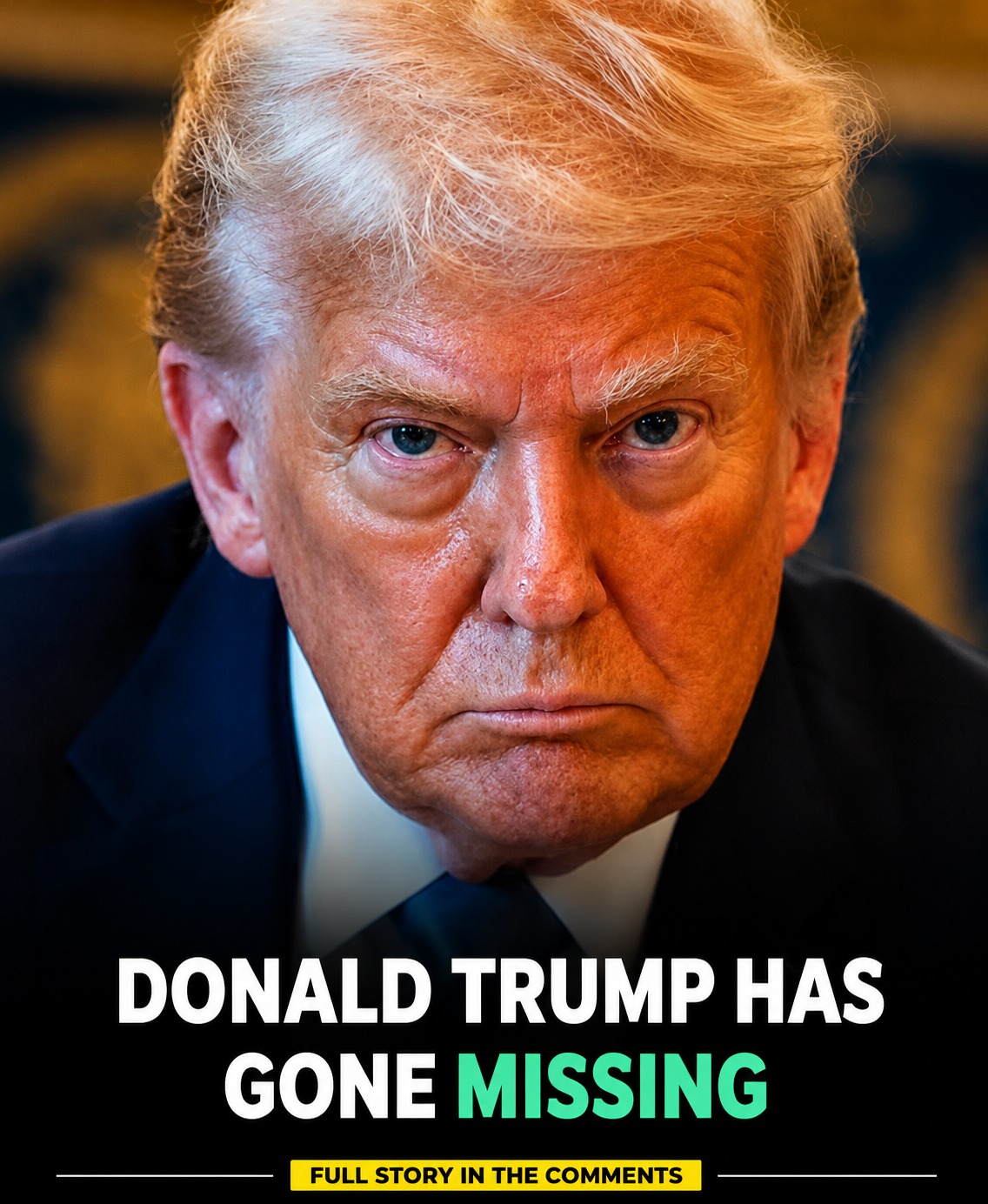
That is exactly what happened when President Donald Trump unexpectedly vanished from public view for an entire week, triggering a wave of questions, theories, and speculation across social media and news platforms.
For years, Trump has built a reputation as one of the most visible political figures in modern American history. Whether speaking to reporters, posting online, holding campaign events, or making surprise appearances, he has rarely stayed out of the spotlight for long. His constant presence has become such a defining feature of his political identity that any noticeable absence immediately attracts attention.
That is why many observers were caught off guard when seven consecutive days passed without a live public appearance from the president.
The unusual silence quickly became a major talking point online.
Commentators from across the political spectrum began asking the same question: Where was Donald Trump?
The discussion intensified after several journalists and political observers highlighted the absence. Social media users quickly joined the conversation, with thousands offering theories about why one of America’s most visible politicians had seemingly disappeared from public view.
For some, the situation appeared unusual simply because it contrasted so sharply with Trump’s normal routine.
Throughout his political career, Trump has rarely gone long without speaking publicly. News conferences, interviews, rallies, and impromptu exchanges with reporters have long been part of his daily rhythm. Even during periods of controversy, he has typically remained front and center, often embracing media attention rather than avoiding it.
As a result, a full week without a live appearance felt unusual to many observers.
Some online users suggested there might be more behind the absence than a simple scheduling adjustment.
Others argued that the public was overreacting.
The debate grew even larger when people began comparing the situation to previous periods during which Trump had maintained a lower public profile. Certain commentators claimed they had noticed a recurring pattern in which the president appeared less frequently at specific times throughout the year.
Whether those observations reflected genuine trends or simply selective attention became a subject of debate itself.
Regardless of the explanation, curiosity continued to grow.
The timing also coincided with renewed attention on presidential health and transparency.
Questions about the physical condition of political leaders have become increasingly prominent in recent years. Voters frequently scrutinize appearances, medical reports, and public schedules, particularly when dealing with older political figures.
Trump, who is approaching his eightieth birthday, has not been immune to that scrutiny.
The speculation gained additional momentum when reports surfaced regarding a recent visit to Walter Reed National Military Medical Center.
The visit itself was not unusual. Presidents routinely receive medical evaluations and consultations as part of their responsibilities. However, because the appointment occurred shortly before Trump’s public appearances stopped, many online observers connected the two events.
The result was an explosion of theories.
Social media users began discussing everything from routine health monitoring to more dramatic possibilities. Some pointed to visible bruising that had occasionally appeared on Trump’s hands during public appearances, while others questioned whether additional medical testing had taken place.
No evidence emerged to support many of the claims circulating online.
Nevertheless, speculation spread rapidly.
That pattern has become increasingly common in the digital age, where limited information often creates space for endless theories.
The White House responded by emphasizing that there was no health crisis.
Officials repeatedly stated that Trump remained actively engaged in presidential duties despite not appearing before cameras. According to administration representatives, he continued participating in meetings, reviewing policy matters, and carrying out the responsibilities of his office throughout the period in question.
They insisted that the president remained fully capable of performing his duties.
Trump himself had recently described the results of a medical evaluation in highly positive terms.
According to statements released by the administration, his physicians reported strong overall health and normal findings across multiple categories. Officials characterized additional testing as precautionary and maintained that no serious concerns had been identified.
Those reassurances satisfied some observers.
Others remained skeptical.
Part of the reason stems from the intense political environment surrounding presidential health disclosures. Every statement, medical report, and public appearance tends to be analyzed in extraordinary detail.
Some medical professionals who reviewed publicly available information expressed questions about certain aspects of the reports.
Their comments generated additional headlines and fueled further discussion online.
However, experts also noted that it is difficult to draw firm conclusions without access to complete medical records and direct evaluations.
As the debate continued, supporters and critics interpreted the situation very differently.
Supporters argued that presidents frequently conduct important work behind closed doors and that public appearances are only one aspect of the job. They viewed the speculation as exaggerated and politically motivated.
Critics countered that transparency becomes especially important when dealing with older leaders and that prolonged absences naturally invite questions.
Both sides found evidence supporting their viewpoints.
Meanwhile, the central mystery continued attracting attention.
The story became less about any specific explanation and more about the public’s reaction to uncertainty.
In many ways, the episode demonstrated how closely modern political figures are monitored.
A generation ago, a few days without public appearances might have passed largely unnoticed. Today, every movement or lack of movement is tracked, analyzed, and discussed in real time by millions of people.
The combination of social media, twenty-four-hour news cycles, and heightened political polarization ensures that even minor deviations from routine can become major stories.
Trump’s week-long absence fit that pattern perfectly.
The lack of appearances created a vacuum.
The vacuum generated speculation.
And the speculation quickly became a story of its own.
As the days passed, public interest continued growing.
People searched for updates.
News outlets examined schedules.
Commentators debated possible explanations.
The longer the silence lasted, the more attention it received.
Eventually, the conversation expanded beyond questions about location or health.
It became a broader discussion about transparency, public expectations, and the relationship between political leaders and the voters who closely follow their every move.
For some Americans, the situation highlighted the challenges of balancing privacy with public accountability.
For others, it reinforced the importance of clear communication from government officials.
Regardless of perspective, the episode demonstrated one undeniable reality.
Donald Trump remains one of the most closely watched figures in American politics.
His ability to command attention has persisted throughout his career, whether through speeches, controversies, victories, setbacks, or even periods of unexpected silence.
In the end, there is currently no evidence that Trump was missing in any official sense. The White House has consistently maintained that he continued working throughout the period and remained actively involved in presidential responsibilities.
Yet the unusual absence from public view proved enough to spark nationwide curiosity.
For a political figure whose image has long been defined by constant visibility, a week away from the cameras was all it took to create a mystery that captured the attention of millions.
And until he fully returned to the public spotlight, the questions continued to linger, fueling one of the most talked-about political discussions of the week.