It started as a completely ordinary morning. Nothing felt unusual about the quiet house, the soft light coming through the bathroom window, or the familiar routine that begins most days without a second thought.
The bathroom, like every other room in the home, represented predictability and control. It was clean, calm, and forgettable in the way everyday spaces are supposed to be.
Then came the moment that shattered that sense of normalcy.
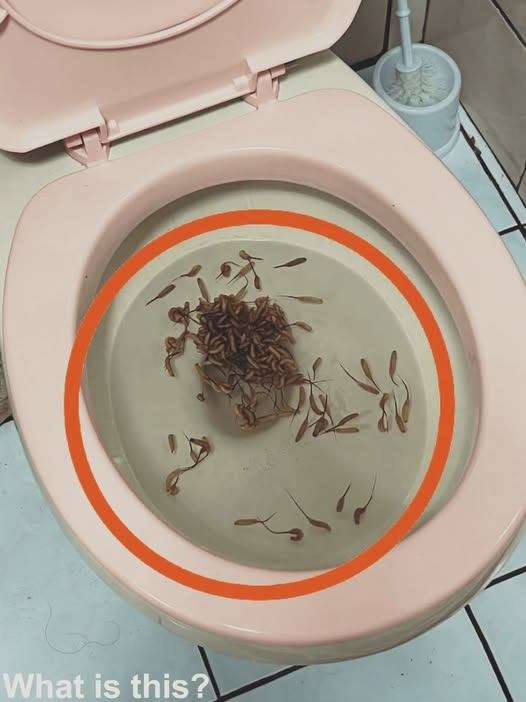
Looking down into the toilet bowl, there was movement.
At first, it barely registered. The eye catches strange things slowly, especially when the brain refuses to accept what it’s seeing. But within seconds, the movement became impossible to ignore. Tiny dark shapes twisted through the water in erratic patterns, darting and circling beneath the surface like living shadows.
The immediate reaction was pure panic.
For one horrifying moment, it seemed like something terrible had invaded the plumbing system. Thoughts raced toward contamination, insects, parasites, or some hidden nightmare crawling up from underground pipes. Bathrooms are supposed to feel sanitary and controlled, so the sight of living creatures moving inside toilet water created a kind of primal discomfort that was difficult to explain.
The longer the observer stared, the stranger it became.
There were several of them. Small. Fast. Alive.
Every instinct screamed that something was wrong.
The fear wasn’t only about what the creatures were. It was about what their presence seemed to imply. If living things could suddenly appear inside a toilet bowl, then perhaps the invisible barrier between the outside world and the safety of the home wasn’t as secure as it seemed. The imagination quickly filled the gaps with worst-case scenarios involving broken sewage systems, contaminated water, or infestations hidden somewhere inside the walls.
But after the initial wave of alarm passed, curiosity slowly began to replace fear.
A closer look revealed something unexpected.
The creatures weren’t worms or insects at all.
They were tadpoles.
Tiny amphibian larvae drifted through the water, their small tails flicking back and forth as they swam in circles. Once the realization settled in, the entire situation shifted from horrifying to deeply confusing. Tadpoles belonged in ponds, marshes, and streams—not inside suburban bathrooms.
How could they possibly end up there?
The answer turned out to be stranger than the discovery itself.
Tadpoles are the earliest stage in the life cycle of frogs. They hatch from eggs laid in freshwater environments and gradually transform into adult amphibians over time. Usually, they live in ponds or standing pools of rainwater where they feed on algae and microorganisms until they mature.
Finding them in a toilet is extremely rare, but not entirely impossible.
Wildlife experts explain that during periods of heavy rain or flooding, frogs can be pushed far outside their natural habitats. Urban and suburban neighborhoods often contain hidden pathways for small animals through drainage systems, open vents, pipes, and exterior gaps around homes. Amphibians are especially sensitive to moisture, and they instinctively search for wet, still environments where they can reproduce safely.
Unfortunately, a toilet bowl can sometimes resemble exactly that.
To a frog moving through dark, damp spaces during a rainstorm, the standing water inside a toilet may appear similar to a protected pond. If an adult frog somehow gains access to the bathroom through an open vent, drain connection, or partially exposed plumbing it may mistakenly lay eggs there.
Days later, those eggs hatch.
And suddenly, a homeowner walks into their bathroom and discovers living creatures swimming where absolutely nothing should be alive.
The explanation sounded unbelievable at first, yet it made perfect sense the more it was considered. Nature does not recognize the boundaries humans create. Animals follow instinct, moisture, temperature, and survival cues. A frog does not understand plumbing. It simply seeks water.
What felt like an invasion was actually an accident of biology and environment.
Still, understanding the situation did not make it any less surreal.
Standing there, staring at tiny tadpoles circling through crystal-clear toilet water, created a strange emotional shift. Fear slowly transformed into fascination. Instead of disgust, there was now curiosity about how something so delicate and alive had found its way into such an unlikely place.
The next decision became important.
Flushing them would have been easy. One quick motion and the problem would disappear instantly. But once the panic faded, it became difficult to see the tadpoles as a “problem.” They were simply living creatures trapped in the wrong environment.
So instead of destroying them, a careful rescue began.
Using a small container, the tadpoles were gently scooped from the water one by one. Their tiny bodies darted nervously inside the bowl as they were transferred into temporary freshwater. The process took patience, but it also created an unexpected feeling of responsibility.
What had started as a moment of horror was now turning into an act of care.
Later that day, the tadpoles were taken to a nearby pond surrounded by reeds and slow-moving water. The moment they were released, they disappeared into the murky shallows where they finally belonged. It felt strangely satisfying to return them to the natural world they had accidentally left behind.
Back at home, the bathroom looked completely ordinary again.
Yet something about it felt different.
The experience left behind an uncomfortable but fascinating realization: human homes are never truly sealed off from nature. Even in modern neighborhoods filled with concrete, electronics, and carefully controlled environments, wildlife continues moving quietly around us. Frogs, insects, birds, and countless other creatures follow ancient instincts that sometimes intersect unexpectedly with human life.
Most people rarely think about that connection.
Bathrooms, kitchens, and living rooms feel disconnected from forests and wetlands, but the divide is thinner than it appears. One storm, one open vent, or one small environmental change can suddenly blur the line between indoor life and the natural world outside.
Experts recommend several ways to prevent similar situations from happening. Ensuring vents are screened, repairing gaps near plumbing, checking drainage systems, and limiting standing water around the home can reduce the chances of frogs or other small animals wandering indoors.
But even with those precautions, strange encounters still happen.
And perhaps that is part of what makes stories like this so unforgettable.
The shock of seeing something alive inside a toilet forces people to confront how unpredictable the world still is, even in places designed for order and routine. Modern life often creates the illusion that humans exist separately from nature, insulated by walls, pipes, and technology. Yet moments like this quietly remind us that nature is never truly far away.
Sometimes it waits outside a window.
Sometimes beneath a drain.
And sometimes, unbelievably, it appears swimming in a toilet bowl on an otherwise ordinary morning.
What began as panic ultimately became something else entirely: a strange lesson about coexistence, perception, and the hidden ways the natural world continues to move alongside us. The memory lingered not because it was frightening, but because it transformed fear into understanding.
And once you’ve looked down into a toilet and discovered tadpoles staring back at you, you never quite see your home or nature the same way again.