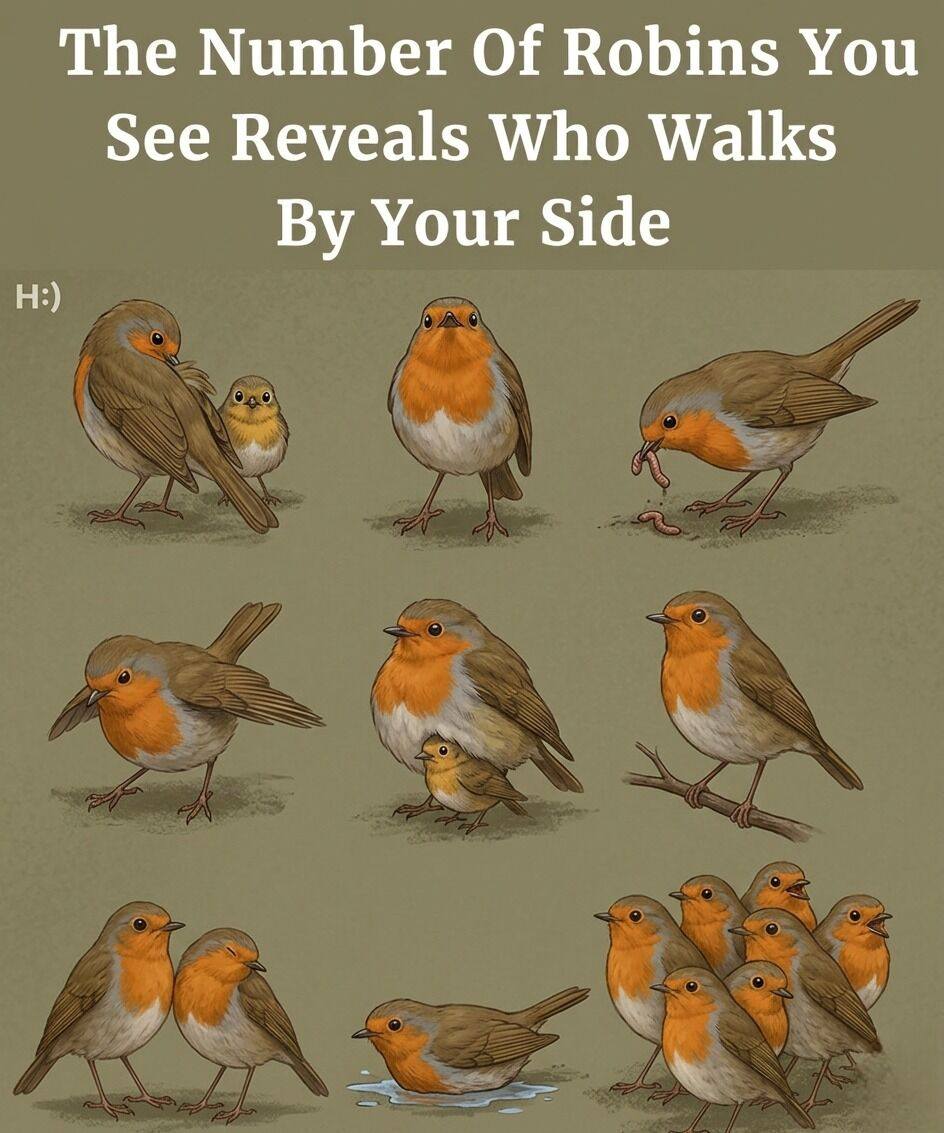
A robin landing nearby is such a small event that most people would normally overlook it. It is not a rare bird, nor especially dramatic compared to hawks, owls, or eagles.
Yet for countless people, spotting a robin can suddenly feel deeply personal, almost as if the ordinary world has paused for a moment to deliver a message meant only for them.
Perhaps it appears during a difficult week, after an emotional conversation, or while someone is quietly grieving a loss they have not fully spoken about. Maybe it lands outside a window at exactly the right moment, standing still long enough to be noticed. In those moments, the bird often becomes more than a bird. It becomes a symbol, a comfort, or a reminder that even in uncertain times, something gentle and alive still exists nearby.
Across many cultures and generations, robins have gathered layers of emotional meaning far beyond biology. Their bright orange-red chests stand out against winter branches and cloudy skies, making them feel almost like sparks of warmth during colder seasons. Because they are often seen close to homes, gardens, parks, and walking paths, robins naturally become woven into people’s personal memories and emotional experiences.
For some, seeing a single robin symbolizes reassurance. It can feel like a quiet sign that they are not completely alone, even if they cannot explain why. Others associate robins with loved ones who have passed away, interpreting unexpected sightings as symbolic visits or reminders of connection. While there is no scientific evidence proving such meanings, the emotional impact can still feel very real to the person experiencing it.
The symbolism changes even more when people notice multiple robins together. In many popular spiritual interpretations, the number of robins someone sees is believed to reflect emotional themes unfolding in their life. A single robin is often linked to independence, reflection, or personal guidance. Two robins may symbolize partnership, emotional balance, loyalty, or the presence of someone walking beside you through life’s challenges.
When people encounter several robins at once, the meaning often shifts toward community and support. A group of robins can create the feeling that help exists beyond what someone immediately sees. During periods of loneliness or uncertainty, that image can become emotionally powerful. It reminds people that connection may still surround them, even when they feel isolated.
None of these beliefs are scientifically measurable facts, yet they persist because human beings naturally search for meaning in the world around them. Psychologists have long studied how people interpret coincidence, symbols, and repeated patterns in everyday life. The human brain is exceptionally skilled at finding connections between events, especially during emotionally intense periods.
This tendency is known as pattern recognition. It helps humans survive by identifying threats, opportunities, and relationships in the environment. However, it also means people often attach emotional meaning to experiences that may technically be random. When someone repeatedly notices robins during emotionally important moments, the brain begins linking the bird to comfort, memory, or guidance.
Emotion strengthens these connections even further. A person who has recently experienced grief, heartbreak, or major life changes may become more emotionally sensitive to symbols in nature. Small details that once felt ordinary suddenly seem loaded with meaning. A bird appearing outside a hospital window, near a cemetery, or during a difficult conversation can become emotionally unforgettable because the mind attaches that image to the emotional weight of the moment.
Memory also plays a powerful role. If someone once shared a meaningful experience involving robins with a loved one, future sightings may trigger those memories instantly. The bird becomes tied not only to nature, but to identity, relationships, and emotional history. In this way, robins act almost like emotional anchors, pulling forgotten feelings and memories gently back to the surface.
This emotional symbolism surrounding birds is not unique to robins alone. Throughout history, humans have attached meaning to countless animals and natural encounters. Owls have symbolized wisdom, ravens mystery, doves peace, and butterflies transformation. Nature often becomes a mirror through which people interpret their own emotions, fears, and hopes.
Robins, however, hold a particularly soft and comforting place in popular imagination. Unlike predators or more intimidating birds, robins appear approachable and familiar. They hop close to people, build nests near homes, and remain visible during transitional seasons. Because of this, they easily become associated with comfort, resilience, and quiet companionship.
Seasonal timing contributes to this symbolism as well. In many places, robins are strongly connected to the arrival of spring. After long winters, their appearance signals warmth, renewal, and movement forward. For centuries, people have viewed them as reminders that difficult seasons eventually end and life slowly returns again.
That symbolism becomes especially meaningful during personal transitions. Someone beginning a new chapter in life may notice robins more frequently simply because they are already emotionally focused on themes of change and renewal. A person starting over after heartbreak, moving to a new city, recovering from illness, or entering a new relationship may unconsciously search for reassuring signs in the world around them.
Interestingly, psychologists note that these symbolic interpretations are not necessarily harmful or irrational. In many cases, attaching meaning to nature can provide emotional comfort, reduce feelings of isolation, and help people process uncertainty. Humans have always used stories, symbols, and rituals to navigate emotional experiences that logic alone cannot fully resolve.
Problems only arise when symbolic thinking completely replaces reality-based decision-making or becomes obsessive. Simply finding emotional comfort in seeing robins, however, is generally understood as part of normal human emotional processing. In fact, many therapeutic approaches encourage people to reconnect with nature precisely because it can create feelings of calm, grounding, and perspective.
Modern life often leaves people emotionally overstimulated yet spiritually disconnected. Constant notifications, digital noise, and social pressure can make daily existence feel rushed and emotionally fragmented. Small encounters with nature including seeing a robin pause on a fence or hearing birdsong early in the morning can interrupt that mental chaos for a brief moment.
Those pauses matter more than many people realize. They invite reflection, stillness, and emotional awareness in ways modern environments often do not. A robin does not solve financial stress, heartbreak, grief, or uncertainty. But it can momentarily soften the emotional sharpness of those experiences by reminding people that beauty and life continue quietly around them.
The internet has amplified these symbolic beliefs even further. Social media is filled with posts claiming that certain birds are signs from loved ones, spiritual messengers, or indicators of future events. While many of these claims lack scientific basis, they continue spreading because they resonate emotionally with people searching for reassurance and connection.
Ultimately, what robins symbolize says less about the birds themselves and more about the people noticing them. The meaning comes from emotion, memory, longing, and personal interpretation. A single person may see an ordinary bird, while another sees comfort during grief or hope during uncertainty.
That difference reveals something deeply human. People do not merely observe the world; they interpret it through the lens of their emotional lives. The things that stand out to us often reflect what we most need, fear, miss, or hope for in a given moment.
In the end, robins remain exactly what they have always been: small birds moving through trees, gardens, and changing seasons. Yet the feelings they awaken can become surprisingly profound. Whether someone sees one robin or many, the emotional meaning often lies not in the bird itself, but in the quiet human desire to feel connected, understood, and less alone while moving through life’s uncertain seasons.