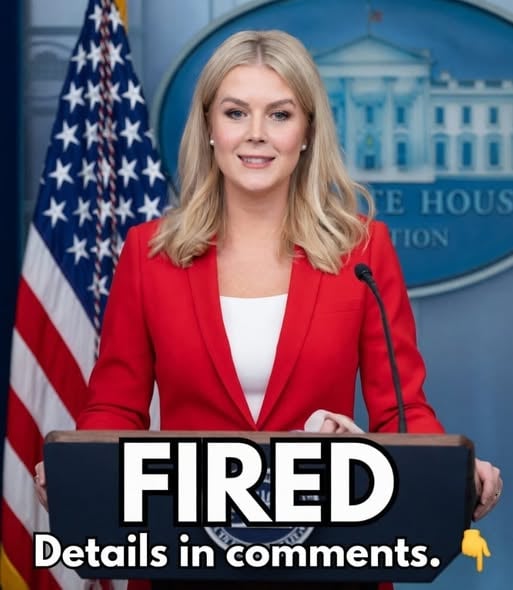
The sudden leadership change inside the Federal Emergency Management Agency has ignited a fierce national debate about the future of disaster response in the United States.
What might once have been viewed as a routine staffing decision is now being interpreted by many officials, analysts, and emergency management experts as something much larger a signal that the country’s approach to handling natural disasters could be entering a dramatic new phase.
At the center of the controversy is the removal of a senior FEMA official whose public testimony sharply defended the agency’s traditional mission. During remarks that quickly drew national attention, he argued that FEMA’s greatest strength lies in its ability to coordinate resources across state lines when local governments become overwhelmed by catastrophe. Hurricanes, wildfires, floods, and large-scale emergencies, he warned, do not respect borders or political boundaries. When multiple states are hit at once, only a strong federal response can mobilize the level of aid necessary to stabilize the situation quickly.
Within a day of those comments, he was removed from his position.
The timing immediately fueled speculation that his departure was connected not simply to policy disagreements, but to a broader shift taking place within the Department of Homeland Security. To critics, the move appeared to send a clear message: open resistance to efforts aimed at restructuring FEMA could carry consequences. Supporters of the administration, however, argued that leadership changes are a normal part of government transitions and that agencies must evolve to meet modern challenges.
Yet the reaction across emergency management circles suggests that this debate reaches far beyond internal personnel decisions.
FEMA has long served as the backbone of coordinated federal disaster relief in the United States. Created to centralize emergency response efforts, the agency was designed to step in when state and local systems become strained beyond their capacity. Over decades, FEMA’s role expanded in response to increasingly destructive disasters, from devastating hurricanes along the Gulf Coast to catastrophic wildfires in the West and historic flooding across multiple regions.
Its defenders argue that large-scale disasters require national coordination because individual states often lack the resources, staffing, and logistical capacity to respond alone. During major emergencies, FEMA helps direct supplies, deploy emergency personnel, organize evacuations, and coordinate recovery efforts involving multiple agencies and jurisdictions.
Without that coordination, experts warn, the system can quickly become fragmented.
The current debate centers on whether FEMA’s role should remain broad and federally driven or whether more authority should shift back to individual states. Advocates for decentralization argue that local governments understand their own communities better than federal officials and can respond more efficiently without layers of bureaucracy slowing decisions. They believe that states should have greater control over disaster planning, emergency funding, and recovery operations.
Supporters of this approach also argue that a leaner federal system could reduce costs and encourage states to strengthen their own preparedness efforts rather than relying heavily on Washington.
Critics see serious risks in that vision.
They point out that wealthier states may be capable of building robust emergency systems, while poorer or underfunded regions could struggle to maintain adequate resources. In situations where disasters span multiple states simultaneously, competition for supplies and personnel could intensify. Smaller states facing large-scale emergencies may find themselves unable to respond effectively without strong federal coordination.
Climate change has added urgency to these concerns.
Scientists and emergency planners have repeatedly warned that severe weather events are becoming more frequent and more destructive. Wildfires are burning longer and hotter. Hurricanes are intensifying rapidly. Flooding events are affecting regions that historically faced fewer risks. Heatwaves, droughts, and severe storms are placing additional pressure on infrastructure and emergency services nationwide.
In that environment, critics argue that weakening FEMA or significantly reducing its authority could create dangerous gaps during future crises.
The leadership change has therefore become symbolic of a much larger ideological conflict. At its core is a disagreement about the role of the federal government itself. Should disaster response remain a centralized national responsibility, or should states carry greater ownership of emergency management, even if outcomes vary dramatically from region to region?
The debate has also exposed tensions between politics and public safety.
Emergency management has traditionally operated with a degree of bipartisan consensus because disasters affect communities regardless of political affiliation. Hurricanes do not target only red states or blue states. Wildfires and floods impact urban and rural regions alike. FEMA’s work has often been viewed as one of the few areas where political divisions temporarily fade in favor of immediate humanitarian needs.
But recent developments suggest that even disaster policy is becoming increasingly politicized.
Observers note that leadership changes tied closely to policy disagreements can create uncertainty within agencies responsible for crisis management. Morale may suffer if employees believe expertise is being overshadowed by political alignment. Long-term planning can also become more difficult when agencies face rapid shifts in direction tied to changing administrations.
Meanwhile, local officials across the country are watching carefully.
Governors, mayors, emergency coordinators, and first responders all rely on federal partnerships during large-scale emergencies. Many are now asking how future disasters would be handled under a system that places greater emphasis on state responsibility. Would federal assistance arrive as quickly? Would funding formulas change? Would states need to dramatically expand their own disaster response budgets?
These questions remain largely unanswered.
For ordinary Americans, the debate may feel distant until the next major disaster arrives. But emergency experts stress that the consequences of policy changes often become visible only during moments of crisis. A hurricane making landfall, a wildfire spreading across multiple counties, or a prolonged power grid failure could become the first real test of whether a decentralized approach can deliver the same level of protection Americans have come to expect.
Supporters of reform insist that change is necessary. They argue that bureaucratic inefficiencies within FEMA have frustrated communities for years and that states deserve more flexibility in managing their own responses. They believe modern emergency management should focus on agility, local leadership, and reduced federal dependency.
Opponents counter that disasters are growing too large and too interconnected for fragmented systems to handle alone. They warn that shrinking FEMA’s role could leave vulnerable communities exposed during the moments they most need national support.
As the political battle continues, one reality remains impossible to ignore: disasters are not slowing down.
Whether the country chooses a stronger federal model or a more decentralized system, the stakes are extraordinarily high. The next catastrophic event may determine not only whether the new approach succeeds, but whether millions of Americans can rely on timely help when their lives are suddenly turned upside down.
And when that moment comes, the debate unfolding today inside Washington will no longer feel theoretical. It will become painfully real for the people waiting for rescue, shelter, and answers in the middle of chaos.