It starts in the quietest moments of your day, long after the noise fades and the lights go out. You slip into bed, settle into a familiar position, and drift off without thinking twice about how you’re lying.
Yet that simple, unconscious choice repeated night after night may reveal far more about you than you realize. Not in a rigid, scientific sense, but in subtle patterns that hint at how you balance effort, comfort, ambition, and rest in your daily life.
Sleep positions are deeply personal. They form over years, shaped by comfort, habit, and even emotional states. While they don’t define your character or determine your work ethic, they can offer a surprisingly revealing glimpse into how you approach the world whether you push forward relentlessly, conserve energy carefully, or settle somewhere in between.
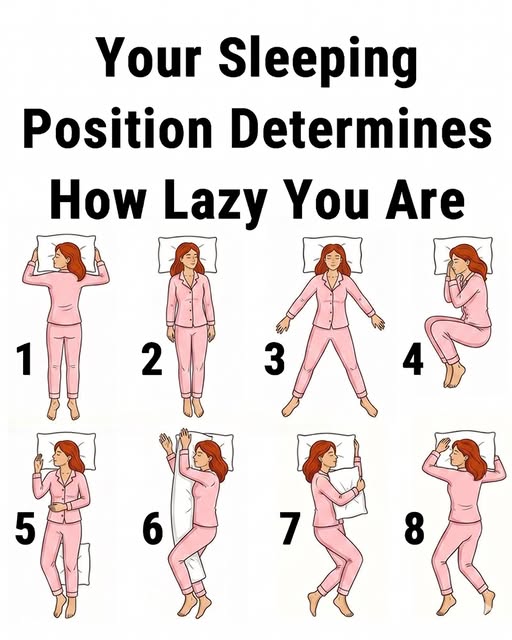
Take the “arms up” sleeper, for example. This is the person who lies on their back with arms lifted near the pillow, almost in a gesture of surrender or openness. At first glance, it might look like pure relaxation, but it often reflects something more active beneath the surface. People who sleep this way tend to be mentally engaged, alert, and ready to face challenges. They enjoy comfort, yes, but they are far from passive. There’s a quiet confidence in their stillness, a sense that they recharge efficiently and wake up prepared to take on whatever comes next.
Then there is the straight sleeper flat on the back, arms resting neatly at the sides. This position suggests structure and consistency. These individuals often prefer routine and predictability, moving through life with a steady rhythm. They may not appear driven in an outward, dramatic way, but their strength lies in reliability. They show up, follow through, and maintain order even when motivation dips. If they seem slow to start, it’s only because they are building momentum that lasts.
On the opposite end of the spectrum is the starfish sleeper, sprawled across the bed with limbs extended in every direction. This position speaks to a love of comfort and space, both physically and emotionally. These individuals tend to value ease and avoid unnecessary strain. They are often generous, laid-back, and unbothered by the need to constantly prove themselves. While some might interpret this as laziness, it’s more accurate to see it as a preference for living life at a sustainable pace. They don’t rush—but they don’t burn out either.
The curled-up ball tells a different story. Sleeping tightly on one side, knees drawn in, suggests a more inward-focused personality. These individuals are thoughtful, sometimes cautious, and often sensitive to their surroundings. They conserve energy not out of avoidance, but out of intention. Rather than scattering their effort everywhere, they choose carefully where to invest it. What might look like hesitation is often quiet calculation, a deliberate approach to life that values depth over speed.
Somewhere in the middle is the casual side sleeper, resting comfortably on one side with relaxed limbs. This position reflects balance. These individuals are capable of working hard when needed, but they also understand the importance of rest. They don’t chase exhaustion as a badge of honor, nor do they avoid effort entirely. Instead, they adapt. If there’s a smarter, easier way to do something, they’ll find it not out of laziness, but out of efficiency.
Then there’s the pillow hugger, especially the face-down variation, where a person twists slightly onto their stomach while clutching a pillow. This position often signals a deep attachment to comfort zones. These individuals appreciate security and familiarity, sometimes needing an extra push to step outside their routine. It’s not that they lack capability far from it but motivation must feel meaningful. Without a strong reason, they are more likely to linger in rest than leap into action.
The side pillow hugger offers a softer version of this trait. Curled on the side, holding onto a pillow, these sleepers seek emotional comfort as much as physical ease. They are not inherently lazy, but they prioritize feeling safe and supported before they fully engage with challenges. When that sense of stability is present, they can be incredibly productive. Without it, their energy naturally retreats.
Finally, the half-turn sleeper somewhere between back and side, often with arms raised captures adaptability. These individuals don’t fit neatly into one category. Their energy shifts with their environment, their mood, and the demands placed on them. One day they may be highly driven, the next more relaxed and introspective. This flexibility can be a strength, allowing them to navigate change with ease, though it may also make their pace seem unpredictable to others.
So what does all of this really mean? Despite the playful idea of a “lazy scale,” sleeping position is not a verdict on your ambition or discipline. It doesn’t measure your worth or define your future. Instead, it reflects your relationship with comfort and effort how you recharge, how you protect your energy, and how you respond to the constant tension between rest and action.
In a world that often glorifies constant productivity, there is something quietly powerful about understanding your natural rhythm. Some people thrive on movement and challenge, while others excel by pacing themselves and avoiding unnecessary strain. Neither approach is inherently better. What matters is awareness knowing when you need to push forward and when you need to step back.
If your sleeping position leans toward comfort, it may simply mean you value rest and recovery. If it leans toward structure or openness, it may reflect readiness and resilience. And if it shifts from night to night, it might be a sign that you are adapting, responding, and evolving in ways that don’t always fit into neat categories.
At the end of the day, the way you sleep is less about laziness and more about balance. It’s a reminder that even in stillness, your body is telling a story one about how you navigate effort, protect your energy, and find your own pace in a demanding world.