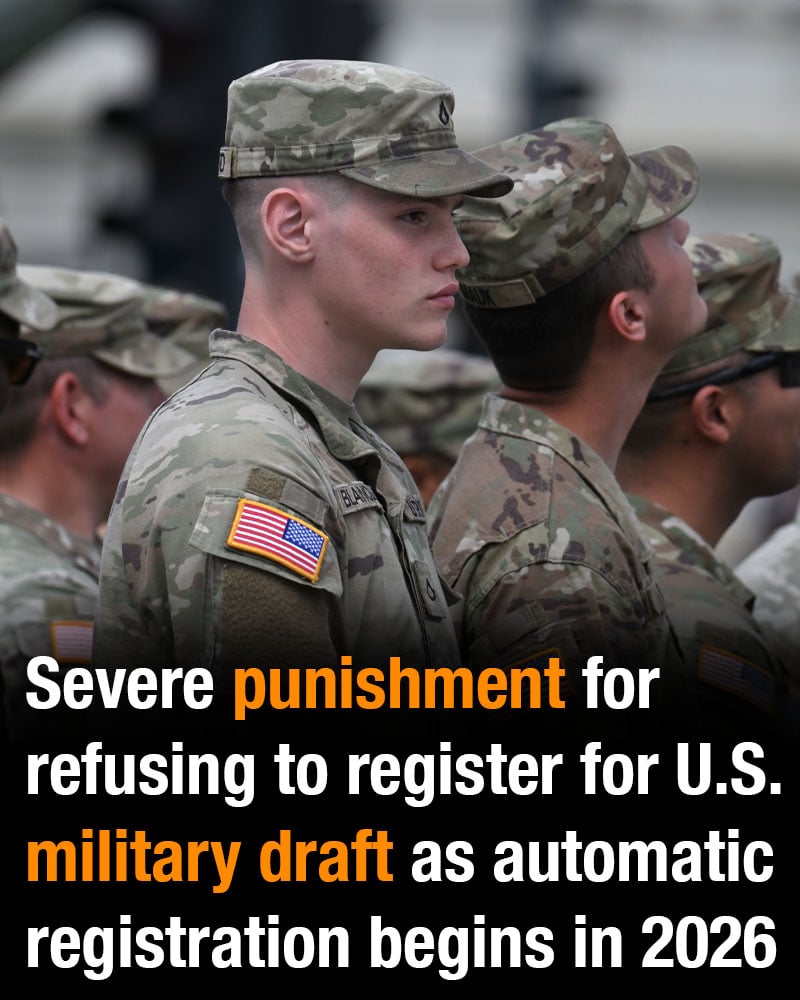
Right now, the situation is more complicated than many people realize. There’s growing talk about a shift toward an automated system for draft registration in the United States, a change that sounds simple on the surface but carries real consequences during this transition period.
While headlines suggest that the process may soon become automatic, the reality is that, for now, responsibility still largely rests on the individual. And that gap between expectation and reality is where problems begin.
For young men approaching adulthood, particularly around the age of 18, registration with the Selective Service System remains a legal requirement. It’s not optional, and it’s not something that can safely be assumed to happen on its own at least not yet. The idea of automation has created confusion, leading some to believe that the system will handle everything automatically. But until those changes are fully implemented and confirmed, that assumption can lead to serious consequences.
What makes this especially tricky is timing. The transition toward automation isn’t an overnight switch. It’s a gradual process, dependent on policy changes, system updates, and coordination across multiple government agencies. During this period, the old rules still apply. That means individuals are still expected to take action themselves, even as the system hints at becoming more streamlined in the future.
The risk isn’t immediate or dramatic, which is why it’s often overlooked. Missing registration doesn’t usually trigger alarms right away. There’s no instant penalty that forces attention. Instead, the consequences appear later, often at moments when they matter most. Applying for federal student aid, seeking a government job, or pursuing certain professional licenses these are the points where the absence of registration suddenly becomes a barrier.
And by then, it can be difficult to fix.
Unlike some administrative oversights that can be corrected with a quick form or explanation, failing to register on time can follow a person for years. Agencies may require proof of compliance, and explanations like “I thought it was automatic” don’t carry much weight in a system that still expects individual responsibility. The doors don’t slam shut loudly they close quietly, often without warning, leaving people confused about why opportunities are slipping away.
For families already navigating a maze of responsibilities college applications, financial aid forms, deadlines, and life transitions this requirement can feel like just another small task. It’s easy to assume it’s been handled or that it will be addressed later. But this is one of those rare cases where a small step carries disproportionate weight.
The shift toward automation, while potentially beneficial in the long run, has created a gray area in the present. It’s a space where assumptions can easily replace action, and where misinformation can spread faster than official updates. Rumors about future policies, timelines, or automatic enrollment can sound convincing, especially when they align with what people hope is true. But relying on those assumptions is where the real risk lies.
The safest approach during this period is straightforward, even if it feels tedious. Go directly to official sources. Verify registration status. Complete the process if it hasn’t been done. And most importantly, keep proof. Documentation may seem unnecessary in the moment, but it becomes invaluable if questions arise later.
This isn’t about fear or urgency in the dramatic sense. It’s about awareness. Understanding that systems in transition don’t always function perfectly, and that personal responsibility doesn’t disappear just because change is coming. It’s about recognizing that a few minutes spent confirming something today can prevent years of complications tomorrow.
There’s also a broader lesson in how easily administrative details can shape long-term outcomes. Opportunities like financial aid or career paths often depend on meeting requirements that seem minor at first glance. Missing one step doesn’t always feel significant in the moment, but it can ripple outward in ways that only become clear later.
For young people stepping into adulthood, this is one of many moments where independence begins to take shape. It’s not just about big decisions or life-changing choices it’s also about handling the small, often overlooked responsibilities that quietly support those larger goals. Registration with the Selective Service is one of those responsibilities. It doesn’t demand much time or effort, but it does require attention.
As the system evolves, there may come a time when registration truly becomes automatic, removing this burden entirely. But until that transition is complete and clearly communicated, the safest path is to act as if nothing has changed. Because in practice, for now, it hasn’t.
In the end, this isn’t just about policy or process. It’s about protecting future options. About ensuring that when opportunities arise whether in education, employment, or service there are no unexpected obstacles standing in the way. And sometimes, protecting those opportunities comes down to something as simple as not assuming the system will take care of it for you.