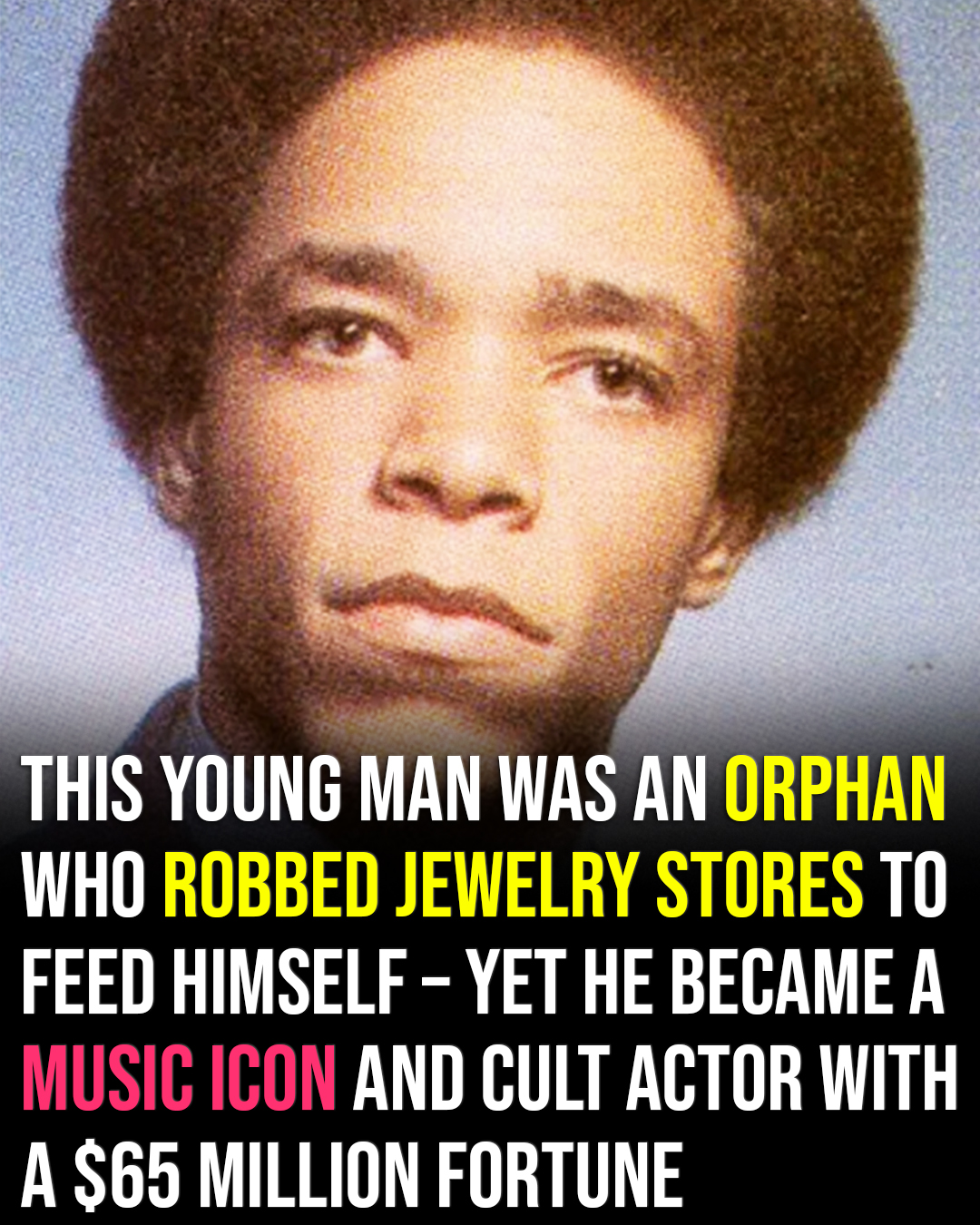
Long before the world knew him as Ice-T, he was just a boy trying to make sense of loss that came far too early and far too often.
Born into a life that would quickly unravel, he experienced the kind of childhood rupture that leaves permanent marks. Losing both parents before reaching his teenage years didn’t just strip away stability it erased the basic sense of safety most children take for granted. Grief arrived before he had the language to process it, and survival became his only consistent teacher.
In Newark, where his early years unfolded, the world already felt uncertain. But it was after being uprooted and moved across the country that the instability deepened. Los Angeles offered no gentle landing. Instead, it exposed him to a harsher reality where identity, race, and opportunity were tightly intertwined with danger. He wasn’t just navigating adolescence; he was navigating a landscape where one wrong move could have lasting consequences. Without the protection of parents or a permanent home, he drifted between relatives, learning quickly that nothing was guaranteed not comfort, not guidance, not even a place to sleep.
On the streets, survival required adaptation. What began as small, impulsive decisions like getting involved in petty theft slowly escalated into more serious risks. A stolen bicycle might seem trivial in another life, but in his world, it was a gateway into a pattern of behavior shaped by necessity and environment. Yet even in the middle of that chaos, there was a strange and rigid line he refused to cross. While many around him turned to alcohol or drugs as an escape, he held himself to a different code. No substances. No surrender to that particular kind of loss of control. It was an unusual discipline, one that hinted at a deeper awareness of how easily everything could spiral beyond recovery.
Still, discipline alone wasn’t enough to pull him out. The streets had their own gravity, and it was easy to get pulled deeper into cycles of risk and reward. Violence wasn’t abstract it was immediate, visible, and often unavoidable. Every decision carried weight, and every day demanded alertness. In that environment, fear became both a burden and a tool. It kept him cautious, but it also kept him moving, always searching for a way forward, even if he didn’t yet know what that looked like.
The turning point didn’t come as a sudden revelation. It came in fragments, one of which was the structure offered by the military. Joining the Army introduced him to discipline in a formal sense rules, routines, expectations. It was a stark contrast to the unpredictability he had known. For a time, it provided a framework that seemed capable of reshaping his path. But transformation is rarely immediate or complete. Even with that structure, he found himself slipping back into old habits, drawn again toward the same risks that had defined his earlier years. The pull of that life was strong, and breaking free required more than just external order.
What ultimately changed everything was not a system, but an outlet. Music became the space where his experiences could be translated into something else something constructive, something powerful. Instead of running from the reality he had lived, he began to articulate it. His words carried the weight of firsthand knowledge, not observation. They weren’t polished or softened; they were direct, raw, and unfiltered. That authenticity resonated. It wasn’t just entertainment it was testimony.
As his voice found an audience, opportunities began to emerge. The same intensity that had once fueled survival on the streets now fueled creativity. His music didn’t just reflect a personal journey; it helped shape an entire genre, pushing boundaries and opening conversations that had previously been ignored or suppressed. He wasn’t just participating in the culture he was helping define it.
From there, another door opened: acting. It was an unexpected extension of his storytelling, but one that fit naturally. The roles he took on often mirrored aspects of his past, blurring the line between performance and lived experience. On screen, he brought a credibility that couldn’t be manufactured. Audiences didn’t just see a character they saw someone who understood the world he was portraying at a fundamental level.
Yet perhaps the most remarkable part of his story is not the fame, but the transformation behind it. The young man who once navigated life through fear and instinct became someone capable of building stability not just for himself, but for others. As a husband and father, he embraced responsibilities that once seemed out of reach. The same life that had been defined by absence of parents, of security, of certainty was now defined by presence. He showed up, consistently, in ways that his younger self never had the chance to experience.
His journey challenges easy narratives. It isn’t a simple story of escape or redemption. It’s a story of persistence, of navigating contradictions, of carrying the past without being consumed by it. The streets didn’t disappear from his memory; they became part of his foundation. Instead of denying where he came from, he integrated it into who he became.
What makes his story resonate is not just its dramatic arc, but its honesty. It acknowledges how close he came to a very different ending. There were moments many of them where the outcome could have been tragic or final. That awareness doesn’t fade with success; it lingers, shaping perspective and grounding achievement in something real.
Today, he stands as more than an entertainer. He is a reminder that identity is not fixed, that even the most difficult beginnings do not dictate the final chapter. His life demonstrates that change is rarely clean or linear. It is messy, complicated, and often uncertain. But it is possible.
From a childhood marked by loss to a life defined by influence, his path is proof that even the most dangerous script can be rewritten. Not erased, not forgotten but rewritten, line by line, choice by choice, until the story becomes something entirely different.