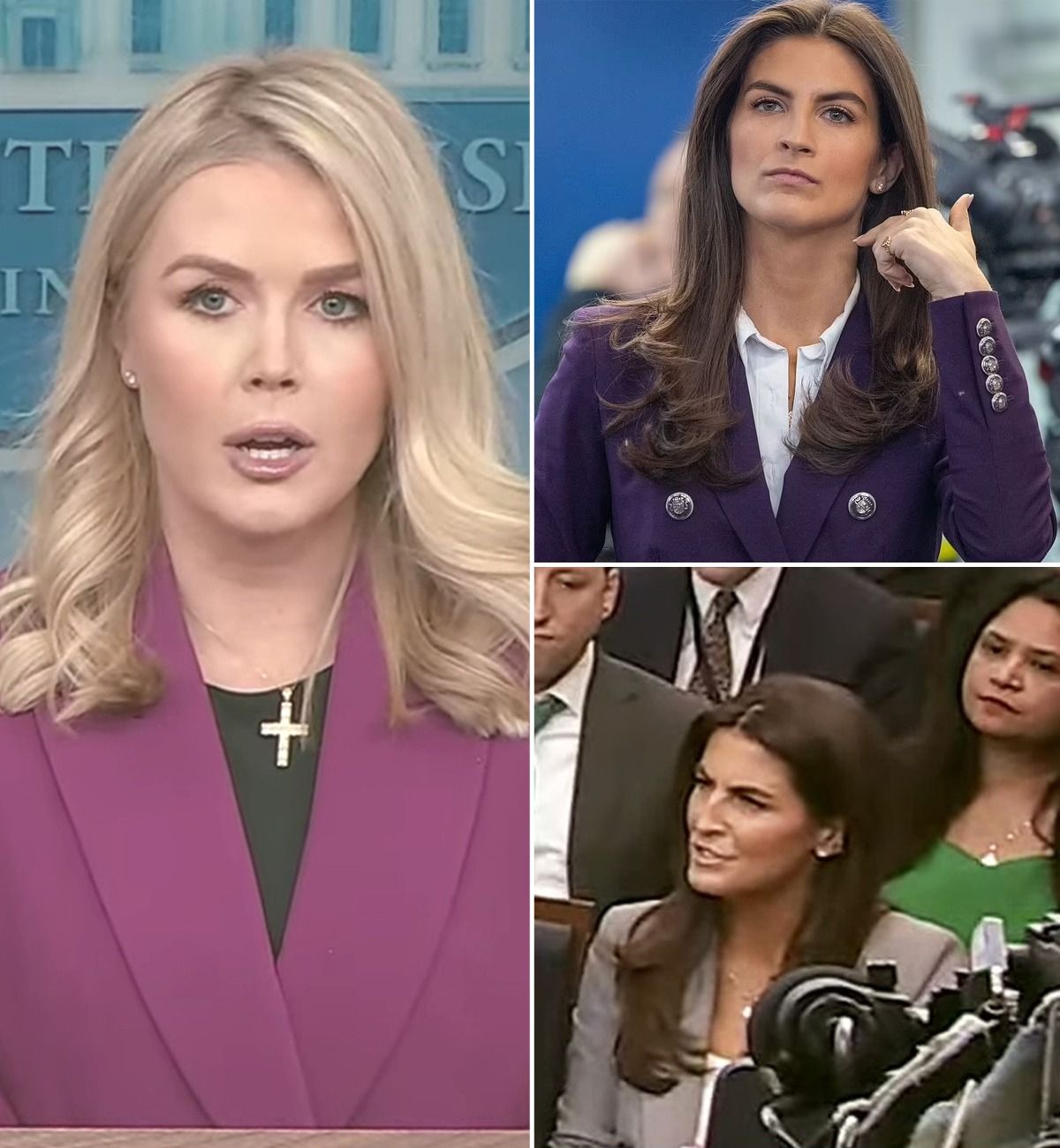
What was supposed to be another polished evening among Washington’s political and media elite quickly unraveled into something far more revealing.
Beneath the chandeliers and camera flashes, where every detail is curated and every appearance carries meaning, an unexpected controversy took hold not over policy, not over speeches, but over a dress. The outfit worn by Jennifer Rauchet, wife of Pete Hegseth, became the unlikely focal point of a debate that stretched far beyond fashion and into the fault lines of identity, politics, and public perception.
At first glance, the criticism seemed almost trivial. Social media users zeroed in on the look, claiming it resembled something purchased from Temu, a platform often associated with low-cost, mass-produced clothing. The implication was immediate and sharp: that her outfit lacked the refinement expected at such a high-profile event. But as the conversation spread, it became clear that the dress itself was only the surface of a much deeper and more charged discussion.
What began as fashion commentary quickly transformed into a broader argument about authenticity and contradiction. Critics framed the moment as a kind of symbolic misstep, questioning whether someone connected to an “America First” worldview could align themselves even indirectly with a marketplace linked to global manufacturing and overseas production. In their view, the outfit was not just a personal choice but a statement, intentional or not, about values and consistency.
Supporters, however, pushed back with equal intensity. They saw the criticism as elitist, arguing that the expectation for women in public life to wear expensive, designer clothing reinforces a narrow and exclusionary standard. To them, the outrage revealed more about the critics than the subject an insistence that legitimacy and taste must be measured by price tags and brand names. In this framing, the dress became a symbol not of contradiction, but of resistance to those expectations.
As the debate intensified, it expanded into territory that had little to do with the original moment. Questions about fast fashion, labor practices, and intellectual property began to surface. Some argued that platforms like Temu represent a larger problem within the global economy, where low prices are often tied to concerns about working conditions and the replication of existing designs. From this perspective, the choice of clothing whether intentional or assumed became part of a wider ethical conversation about consumption and responsibility.
Others rejected that line of reasoning, pointing out the selective nature of such critiques. They noted that fast fashion is deeply embedded across all levels of society, including among those who are quick to criticize it. To single out one individual, they argued, was less about genuine concern and more about finding a convenient target for broader frustrations. In that sense, the outrage felt less like a principled stand and more like a performance, shaped by the dynamics of online attention.
What makes the episode particularly striking is how quickly it escalated. A single outfit, seen for a matter of seconds, became the basis for thousands of interpretations, each layered with assumptions about identity, belief, and intention. The speed of that transformation reflects the nature of the current media environment, where images circulate faster than context and where meaning is often constructed collectively, rather than established by fact.
For Rauchet herself, the experience illustrates the reality of existing in a space where personal choices are rarely just personal. Every detail what is worn, how it is worn, and where it is worn can be reframed as a statement, whether or not it was ever intended to be one. In that environment, the boundary between individuality and symbolism becomes increasingly difficult to maintain.
The reaction also highlights the evolving role of fashion as a form of communication. Clothing has always carried meaning, signaling status, affiliation, and identity. But in a deeply polarized climate, those signals are interpreted through a more rigid lens. What might once have been seen as a simple aesthetic choice is now analyzed for ideological consistency, as though every thread must align with a broader narrative.
This shift places a particular burden on public figures, especially women, whose appearances are often scrutinized more intensely than their words. The expectation to “dress appropriately” is no longer just about formality or style; it has become entangled with expectations about values, authenticity, and even moral positioning. In that sense, the controversy surrounding Rauchet’s dress is not an isolated incident but part of a larger pattern.
At the same time, the intensity of the reaction reveals something about the audience as well. The eagerness to assign meaning, to draw conclusions, and to engage in debate over something so seemingly minor suggests a deeper need to interpret and categorize the world. In a landscape where larger issues can feel overwhelming or unresolved, smaller moments become proxies for those broader tensions.
The dress, in this context, becomes more than fabric. It becomes a canvas onto which competing perspectives are projected. For some, it represents inconsistency; for others, it represents accessibility. For some, it raises ethical concerns; for others, it exposes hypocrisy in the act of judging. Each interpretation says as much about the observer as it does about the subject.
As the conversation continues to ripple outward, it leaves behind a set of questions that extend beyond this particular moment. What does it mean to “dress your values” in a world where nearly every product is shaped by global systems? How much responsibility should individuals bear for the broader implications of their choices? And at what point does scrutiny become less about accountability and more about performance?
There are no clear answers, only a growing recognition that even the smallest details can carry unexpected weight. The evening that began as a display of status and ceremony ultimately revealed something far more complex: a culture in which identity, ideology, and appearance are constantly intersecting, often in ways that are difficult to untangle.
In the end, the dress itself may fade from memory, replaced by the next moment, the next image, the next debate. But the reaction it sparked will linger as an example of how quickly the ordinary can become extraordinary, how easily a single choice can be transformed into a symbol, and how, in a divided society, even something as simple as an outfit can become a battlefield where larger struggles are quietly, and sometimes fiercely, played out.