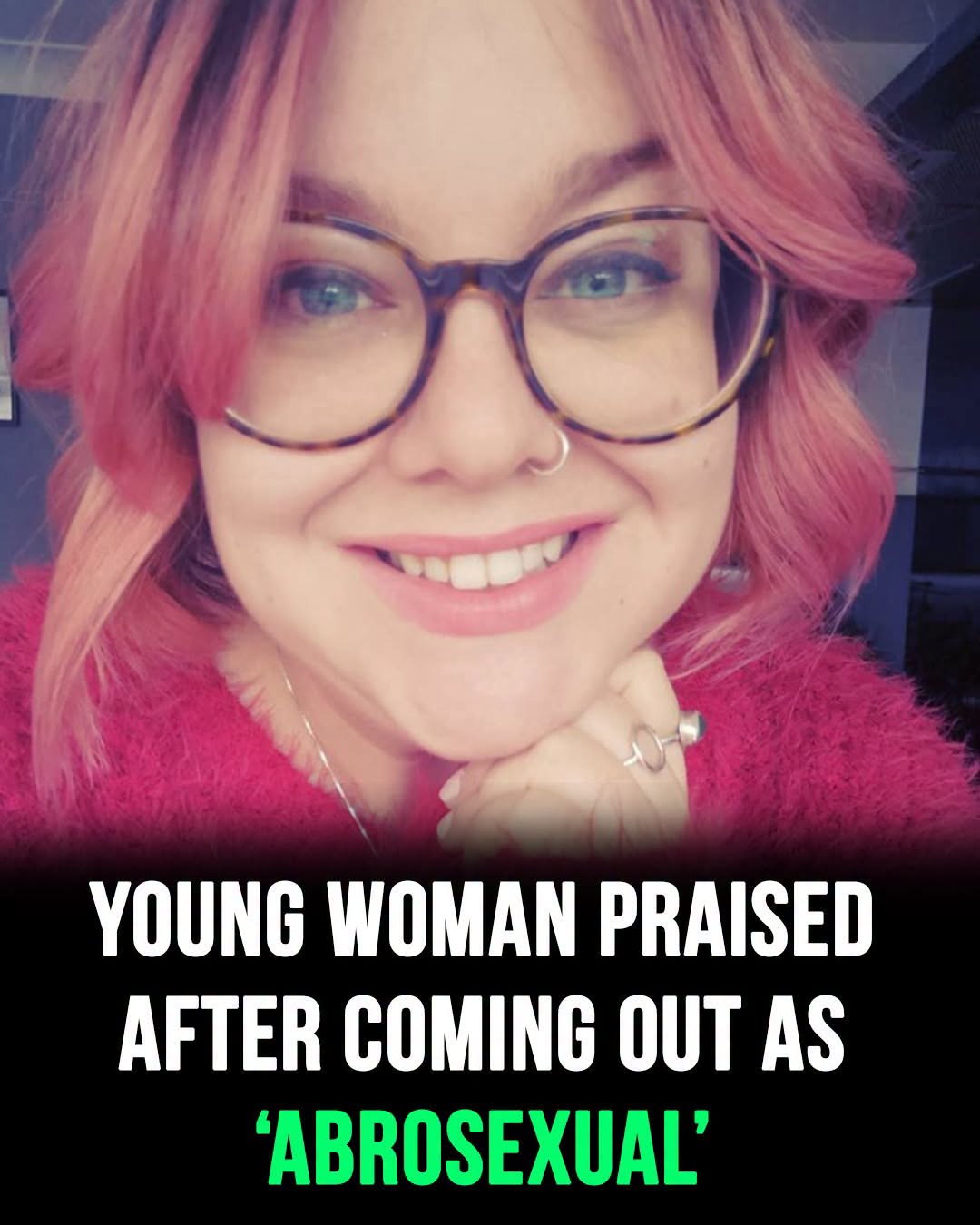
For much of her life, Emma Flint believed something about her simply didn’t make sense. There were periods when she felt certain she was attracted only to women. At other times, she found herself attracted to men. Occasionally, she experienced attraction to people regardless of gender, while there were also long stretches when she felt little or no romantic or sexual attraction at all.
Each shift left her with more questions than answers.
She wasn’t changing her mind on purpose.
She wasn’t trying to confuse anyone.
She wasn’t searching for attention or experimenting with different identities.
She was simply trying to understand experiences that never seemed to fit the definitions she encountered growing up.
For nearly three decades, Emma searched for an explanation.
She explored different labels, hoping each one would finally describe what she had been feeling for years.
Sometimes one identity seemed to fit perfectly.
Then, months later or even years later it no longer reflected her reality.
That cycle became emotionally exhausting.
People around her often misunderstood what she was experiencing.
Some assumed she was indecisive.
Others believed she was simply “going through a phase.”
A few questioned whether her feelings had ever been genuine in the first place.
Repeatedly explaining herself became frustrating.
Eventually, she began wondering whether there was something fundamentally wrong with the way she experienced attraction.
Then she discovered a word she had never heard before.
Abrosexual.
For Emma, finding that term wasn’t about adopting a fashionable identity.
It was about finally finding language for something she had already lived for decades.
Instead of forcing herself into categories that never fully fit, she discovered a description that reflected her actual experience.
Abrosexuality describes a person whose pattern of attraction changes over time.
Those changes can involve who someone is attracted to, how strongly they experience attraction, or whether they experience attraction at all.
For some individuals, these shifts happen over months or years.
For others, they may occur more frequently.
There is no single timeline.
The important feature is that the changes feel authentic rather than chosen.
This distinction often surprises people who have never encountered the concept before.
Many grow up assuming sexual orientation must remain completely fixed throughout life.
While many people do experience relatively stable patterns of attraction, others describe their experiences as more fluid.
Abrosexuality provides language for one form of that fluidity.
It does not suggest that attraction is a conscious decision.
Nor does it imply uncertainty or dishonesty.
Instead, it recognizes that some people naturally experience genuine changes in attraction over time.
For Emma, understanding this brought an enormous sense of relief.
Years of self-doubt slowly began to fade.
She no longer felt compelled to constantly defend experiences that even she had struggled to explain.
Instead of asking herself why she kept changing, she began accepting that the changes themselves were part of who she was.
That acceptance proved transformative.
Many people who identify as abrosexual describe similar experiences.
Some spend years moving between labels without realizing there is already a word that reflects their reality.
Others remain silent because they fear being judged.
Society often values consistency.
People generally feel more comfortable when identities appear stable and easily categorized.
When someone’s experiences don’t follow those expectations, misunderstanding can quickly follow.
Friends may become confused.
Partners may worry the attraction was never genuine.
Family members sometimes assume the person is simply undecided.
These reactions can leave individuals feeling isolated.
Yet for someone who identifies as abrosexual, each period of attraction is genuine while it exists.
The fact that attraction later changes does not erase what came before.
The feelings were real.
The relationships mattered.
The emotions were authentic.
They simply evolved.
Understanding this requires letting go of the idea that every person’s journey follows exactly the same pattern.
Human experiences are remarkably diverse.
While some people describe lifelong consistency, others discover new aspects of themselves throughout adulthood.
Neither experience invalidates the other.
Researchers continue studying the complexity of sexual orientation, attraction, and identity.
Although much remains to be learned, psychologists generally recognize that human sexuality is more nuanced than many traditional categories suggest.
For some individuals, attraction remains remarkably constant.
For others, changes occur naturally across different stages of life.
Abrosexuality exists within those broader conversations about human diversity.
Importantly, being abrosexual is different from simply choosing different partners.
The identity describes internal patterns of attraction rather than behavior alone.
Someone may remain committed to one relationship even while understanding that their overall pattern of attraction changes over time.
Likewise, someone who identifies as abrosexual may experience long periods during which their attraction remains relatively stable before shifting again.
There is no universal experience.
Every individual describes it differently.
Emma has spoken openly about how difficult it was to spend years believing she needed to justify feelings she couldn’t control.
Finding a word didn’t instantly solve every challenge.
Misunderstandings still occur.
Many people remain unfamiliar with the term.
Questions often follow whenever she shares her story.
Some ask whether the identity is “real.”
Others wonder whether attraction can truly change naturally.
Emma responds by explaining that she isn’t asking everyone to experience attraction the way she does.
She simply hopes people understand that not everyone experiences attraction in identical ways.
Language exists to help people communicate their experiences.
For someone who has struggled to explain themselves for decades, discovering the right word can feel profoundly validating.
Rather than creating division, those words often reduce confusion.
They allow conversations that previously seemed impossible.
They offer reassurance that others have experienced something similar.
Most importantly, they remind people they are not alone.
Emma’s story has resonated with countless individuals who spent years wondering why existing labels never fully fit.
Some describe reading about abrosexuality and immediately recognizing themselves.
Others say it gave them permission to stop apologizing for experiences they had spent years trying to hide.
Not everyone will identify with the term.
Not everyone will fully understand it immediately.
And that’s okay.
The goal isn’t to persuade everyone to adopt the same perspective.
It’s simply to acknowledge that human identity is often more varied than many people realize.
Every person’s journey toward understanding themselves looks different.
Some know exactly who they are from an early age.
Others spend decades learning, questioning, and growing before finding language that finally feels right.
Neither path is more valid than the other.
Emma’s thirty-year search ultimately became less about changing who she was and more about recognizing who she had always been.
The discovery of one unfamiliar word didn’t create a new identity.
It simply illuminated an old one that had remained unnamed for much of her life.
Sometimes the greatest gift language can offer is not changing a person’s story.
It is allowing them to finally tell it honestly.
For Emma, that moment arrived after three decades of uncertainty.
Instead of continuing to force herself into definitions that never quite fit, she found one that reflected her lived experience with compassion rather than judgment.
And for the first time in years, she no longer felt like she had to explain why she kept changing.
She simply understood that this was the way she had always experienced the world.
Sometimes understanding ourselves doesn’t begin with finding new feelings.
Sometimes it begins with finally finding the words that have been waiting for us all along.