
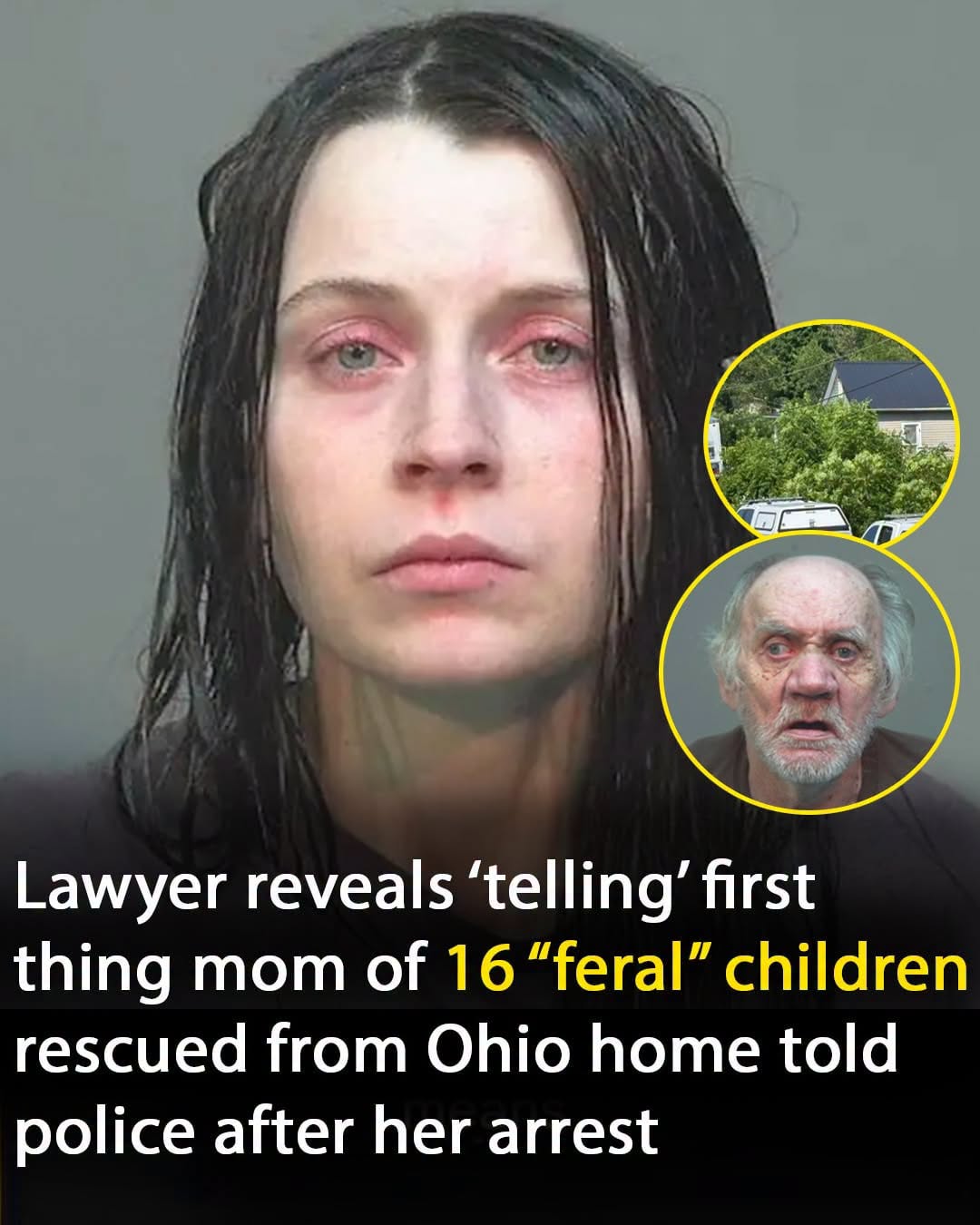
The shocking case involving 16 children rescued from a home in Vinton County, Ohio, has left the nation struggling to understand how such a situation could exist for so long.
Authorities described the conditions inside the property as deeply disturbing, alleging that the children had endured years of severe neglect, isolation, and deprivation. The discovery quickly became one of the most talked-about child welfare cases in the country, raising questions about how so many young lives could remain hidden from the outside world.
When authorities entered the home, they found a scene that investigators said was difficult to comprehend.
The children, ranging in age from infants to teenagers, were reportedly living in conditions that officials compared to something far beyond ordinary neglect. Some required immediate medical attention, with several transported to specialized facilities for treatment. According to officials, the children showed signs of developmental delays, malnutrition, and the effects of prolonged isolation.
The case drew national attention after Ohio Attorney General Andy Wilson described what investigators discovered as a horrifying example of abuse and neglect.
To many observers, the details seemed impossible to process.
How could 16 children remain unseen for so many years?
How could their struggles go unnoticed?
And how could a family situation reach such an extreme point before outside intervention finally occurred?
As public outrage grew, the adults accused in the case became the focus of intense criticism.
However, after the arrest of the children’s mother, her attorney revealed a detail about her first moments in custody that offered a different perspective on her emotional state.
According to her lawyer, her first concern was not her legal situation.
She did not ask about bail.
She did not focus on the charges against her.
Instead, she reportedly wanted to know one thing:
Were her children safe?
The attorney said she was overwhelmed with emotion and repeatedly asked about the condition of her children and when she might be able to see them again.
That moment, he argued, reveals something important about the complicated circumstances surrounding the case.
While prosecutors and authorities have painted a picture of severe wrongdoing, her defense team claims the situation involves years of isolation, manipulation, and a life shaped by circumstances that began long before she became a parent.
Her lawyer has argued that the story is not as simple as labeling one person as purely evil.
He has suggested that the woman’s own background must be considered, claiming she entered adulthood without the support, education, or understanding necessary to break away from the environment in which she had been raised.
According to statements from her defense, she was married at just 15 years old and spent much of her life in an isolated world where unhealthy patterns became normalized.
The attorney argues that understanding those factors does not erase responsibility, but it provides important context.
The criminal justice system will ultimately determine what happened, who is responsible, and what consequences should follow.
But beyond the courtroom, the case has sparked a much larger conversation about hidden abuse, family isolation, and the warning signs that can be missed when vulnerable children are kept away from society.
For neighbors and community members, the revelation has been especially painful.
Many have struggled with the question of how such a large family could exist nearby without anyone realizing the extent of the children’s suffering.
Child welfare experts often emphasize that severe neglect cases are rarely the result of one single moment. Instead, they can develop over years through a combination of secrecy, fear, isolation, and missed opportunities for intervention.
In cases involving extreme isolation, children may have limited contact with teachers, doctors, neighbors, or other adults who could notice signs of danger.
That isolation can allow harmful conditions to continue for long periods.
For the rescued children, the road ahead remains challenging.
Medical professionals, therapists, and social workers are working to address not only their physical needs but also the emotional and developmental impact of their experiences.
Recovery from years of neglect is not immediate.
Many children who experience severe deprivation require long-term support to learn basic skills, build relationships, and adjust to a world that may feel completely unfamiliar.
Experts say healing requires patience, stability, and consistent care.
The goal is not only to provide safety but also to help the children develop a sense of normal life that they were previously denied.
Meanwhile, the legal process continues.
The adults involved face serious allegations, and prosecutors are expected to present evidence regarding the conditions inside the home and the children’s treatment over the years.
The defense, however, is preparing to present its own explanation, focusing on the circumstances that shaped the family’s life and the psychological factors they believe played a role.
The case has created a difficult emotional conflict for many people watching from the outside.
There is anger over the suffering the children allegedly endured.
There is heartbreak over the childhood experiences they may never recover.
And there are complicated questions about accountability, responsibility, and whether a person can be both responsible for harm and also someone shaped by years of dysfunction.
The first words reportedly spoken by the children’s mother after her arrest have become one of the most discussed details of the case because they highlight that complexity.
A woman accused of failing to protect her children was, according to her attorney, immediately asking whether those same children were safe.
That contradiction is at the center of the legal and moral questions surrounding the case.
The courts will determine the facts and deliver judgment based on evidence.
But for the public, the story remains a painful reminder of the importance of protecting vulnerable children and recognizing the signs of hidden suffering.
Behind the headlines are 16 young lives now beginning a new chapter.
Their future will not be defined only by what happened inside that home, but also by the support, care, and opportunities they receive moving forward.
The hope now is that after years spent hidden away, these children finally have the chance to experience the safety, education, and childhood they should have had all along.