For decades, Robert De Niro built his reputation by portraying some of the most memorable characters in film history. His performances often explored power, fear, loyalty, conflict, and human vulnerability.
Yet in recent years, many of his most widely discussed moments have not occurred on movie screens but in public conversations about politics and the future of the United States.
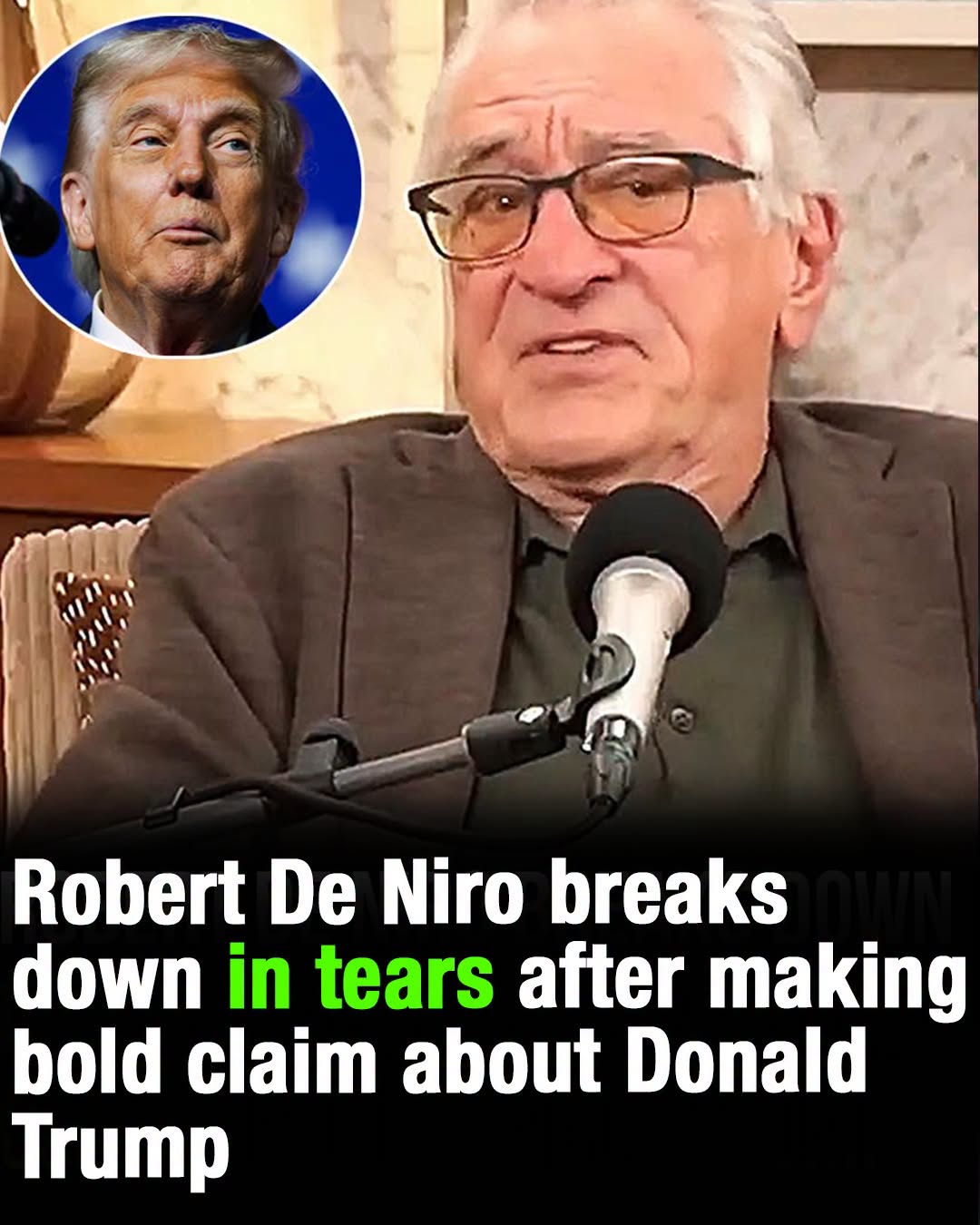
During a recent podcast appearance, the legendary actor spoke with unusual intensity about former President Donald Trump, delivering remarks that quickly spread across social media and news platforms. But what captured the greatest attention was not simply his criticism. It was the emotion behind it.
As the conversation unfolded, De Niro appeared deeply affected by the issues he was discussing. Rather than relying on humor or carefully prepared talking points, he spoke openly about his concerns regarding the political climate, the direction of the country, and what he believes is at stake for future generations.
For De Niro, the discussion was not about political rivalry.
It was about fear.
It was about responsibility.
And it was about what he views as a larger struggle over the character of the nation itself.
Throughout the interview, the actor described his concerns in deeply personal terms. He spoke not only as a public figure but as a father, grandfather, and citizen who has witnessed significant changes throughout his lifetime.
His comments reflected the perspective of someone who feels that political divisions have grown deeper and more personal in recent years.
He suggested that the challenges facing the country extend beyond elections and individual politicians. Instead, he framed the issue as a broader debate about democratic values, public trust, and the responsibilities of citizens.
At several moments during the discussion, De Niro appeared visibly emotional.
His voice reportedly softened.
His words slowed.
The anger that had initially characterized some of his remarks gradually shifted into something else: concern.
Rather than expressing only frustration, he began speaking about unity, civic responsibility, and the importance of protecting democratic institutions.
He emphasized the need for people to engage with one another rather than retreat into political camps.
He spoke about lifting people up rather than dividing them.
He argued that political disagreements should not destroy the bonds that hold communities together.
For De Niro, these concerns appear deeply connected to his view of Donald Trump and the political movement that has developed around him.
The actor has been one of Trump’s most vocal critics within the entertainment industry. Over the years, he has repeatedly expressed disagreement with the former president’s rhetoric, leadership style, and political approach.
His recent remarks continue that pattern, but they also reveal something more personal.
Rather than simply criticizing a politician, De Niro described what he sees as a broader cultural and political challenge.
He expressed concern that divisions within the country have become increasingly difficult to bridge.
He warned about the dangers of political movements built around personalities rather than institutions.
And he argued that civic participation remains essential regardless of political affiliation.
The actor also emphasized that the issues he worries about cannot be solved simply by changes in leadership.
Political movements, he suggested, often outlive individual figures.
Ideas continue.
Divisions remain.
The work of rebuilding trust, he argued, requires participation from ordinary citizens.
This message formed the emotional center of his remarks.
As the conversation progressed, De Niro moved away from criticism and toward an appeal for engagement.
He encouraged people to remain involved.
To participate.
To vote.
To speak openly.
To defend democratic principles.
His comments reflected a belief that democracy depends not only on elected officials but on the willingness of citizens to remain engaged in public life.
The emotional nature of the interview resonated strongly with supporters and critics alike.
Many individuals praised De Niro for expressing his concerns honestly.
They viewed his remarks as the reflections of someone genuinely worried about the country’s future.
Others disagreed with his political views, arguing that celebrities should avoid becoming heavily involved in political debates.
Such reactions are not new.
The relationship between entertainment figures and politics has long generated discussion in the United States.
Actors, musicians, writers, and public figures frequently use their platforms to advocate for causes they believe in. Supporters often welcome these contributions, while critics sometimes question whether celebrities should influence political conversations.
De Niro has never appeared particularly concerned about that debate.
Throughout his career, he has spoken openly about issues that matter to him, regardless of public reaction.
For him, recent political developments seem to carry personal significance.
His remarks suggest that he views silence as a greater concern than criticism.
At the heart of his message was the belief that political disagreement should not destroy the sense of shared purpose that holds a society together.
He warned against treating political figures as larger than the institutions they serve.
He emphasized the importance of country over personality.
He encouraged people to think beyond political loyalty and focus on broader democratic values.
For some listeners, these comments reflected frustration.
For others, they reflected concern.
For still others, they represented a call for civic responsibility.
Regardless of political perspective, the emotional nature of the interview stood out.
De Niro did not appear interested in winning arguments.
He appeared interested in expressing worry.
The actor’s comments also highlight the growing role that public figures play in political discussions. In an age of podcasts, social media, and instant communication, celebrities often become participants in national conversations that extend far beyond entertainment.
Their words reach millions.
Their opinions generate headlines.
Their emotions become public.
For De Niro, this visibility carries both influence and responsibility.
He used his platform not simply to criticize but to urge engagement.
To encourage participation.
To emphasize the importance of democratic institutions.
And to remind people that political disagreements should never entirely replace shared humanity.
As political divisions continue to shape public life, voices like De Niro’s often become part of larger conversations about citizenship, responsibility, and the future of democratic societies.
His recent appearance revealed not only his political views but also his personal concerns about where the country may be heading.
Whether people agree with his perspective or reject it entirely, the emotion behind his words left a lasting impression.
He spoke as an actor.
He spoke as a citizen.
He spoke as someone deeply invested in the future of the country.
And as his voice grew quieter, his message became simpler.
The future, he suggested, depends not only on leaders, but on the willingness of ordinary people to stand together, protect democratic values, and place the nation above political personalities.
For Robert De Niro, the conversation was never solely about politics.
It was about the kind of country future generations will inherit and the responsibility people share in shaping what comes next.