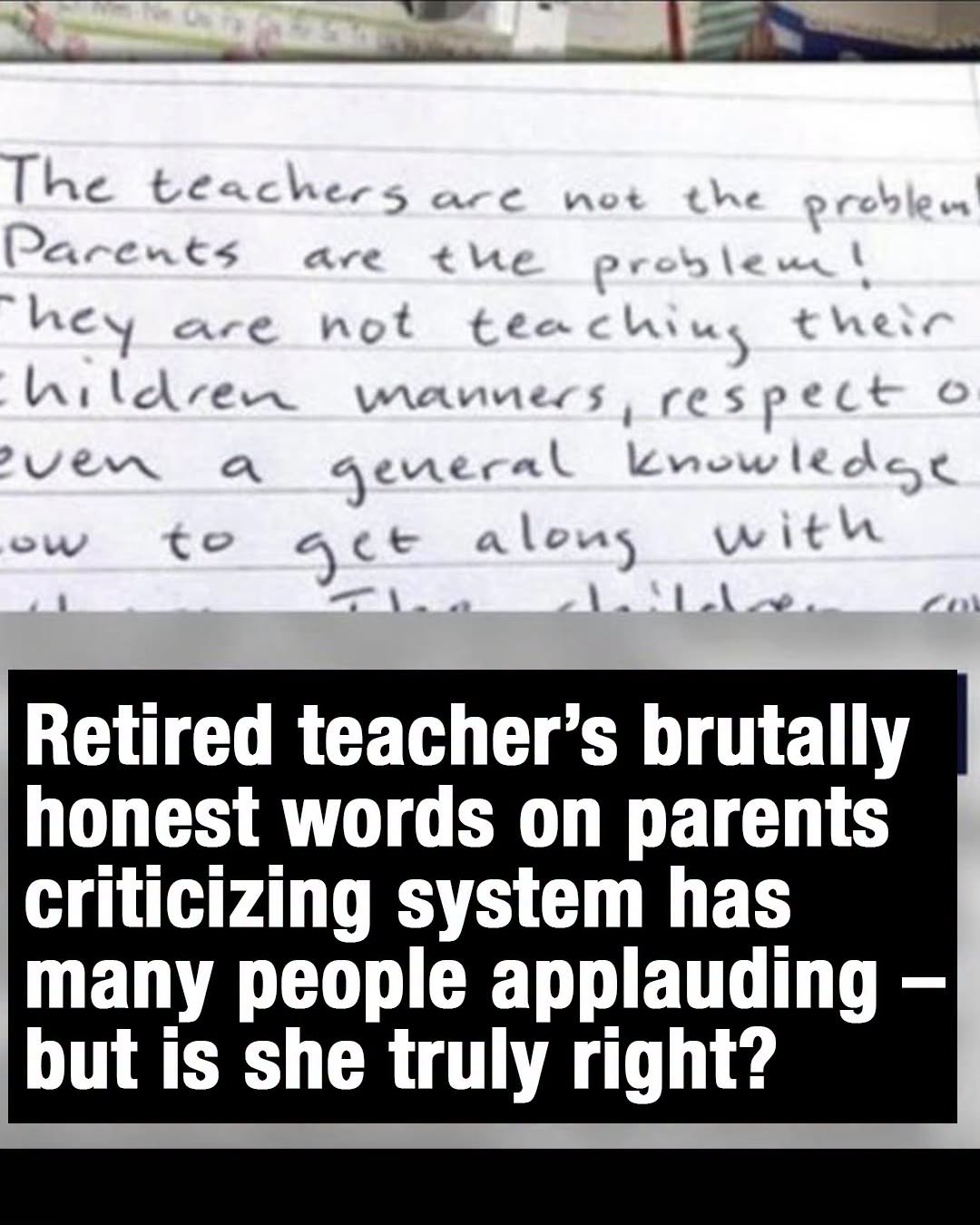
After spending decades inside classrooms, retired teacher Lisa Roberson finally said something many educators have quietly carried for years.
Her words were not carefully polished.
They were not softened to avoid criticism.
And they were not written to start an argument.
Instead, they came from years of frustration, concern, and heartbreak after watching countless children struggle while the adults responsible for helping them often seemed disconnected from their education.
What began as a simple letter quickly spread across social media, news websites, and parenting groups. Thousands of teachers shared it. Parents debated it. Some praised her honesty while others felt criticized or misunderstood.
Yet regardless of where people stood, one thing became clear.
Her message touched a nerve.
Roberson did not direct her frustration toward parents who work multiple jobs, struggle financially, or face difficult circumstances. She acknowledged that many families are doing everything possible to support their children despite enormous challenges.
Her criticism was aimed elsewhere.
She spoke about parents who appear disengaged from their children’s education.
Parents who purchase expensive clothes, phones, and shoes but never buy school supplies.
Parents who never attend conferences.
Parents who ignore phone calls from teachers.
Parents who never ask a simple question at the dinner table.
What did you learn today?
For Roberson, the issue extends far beyond homework assignments and test scores.
She believes many children arrive at school lacking not only academic preparation but also emotional and social foundations that are traditionally built at home.
Teachers, she argued, increasingly find themselves expected to fill every gap.
They teach reading.
They teach math.
They teach science.
But they are also expected to teach respect.
Responsibility.
Discipline.
Empathy.
Basic manners.
Conflict resolution.
And emotional regulation.
While educators willingly support students in these areas, many say the growing expectations have become overwhelming.
Teachers spend hours preparing lessons.
They grade assignments.
They communicate with parents.
They manage classrooms.
They support struggling students.
Yet when academic results fall short, they often become the primary targets for criticism.
Roberson’s letter expressed frustration with this reality.
She described situations where children come to school without pencils, notebooks, completed assignments, or adequate sleep.
Some students struggle to focus because they spend hours on phones or video games.
Others arrive carrying emotional burdens that interfere with learning.
Teachers attempt to help.
But there are limits.
No matter how dedicated an educator may be, six or seven hours inside a classroom cannot fully compensate for what happens during the remaining hours of a child’s life.
This reality, Roberson argued, is often ignored.
Many teachers quietly discuss these concerns among themselves.
They talk in faculty lounges.
They share frustrations after long days.
They wonder how to help students who seem unsupported outside school.
But these conversations rarely reach the public.
Roberson changed that.
Her words resonated with many educators because they reflected experiences that often remain hidden.
Teachers across the country shared similar stories.
Stories of unanswered emails.
Missed meetings.
Phone calls that go unreturned.
Assignments left untouched.
Parents who appear only when grades become a problem.
For many educators, the issue is not perfection.
They do not expect perfect parents.
They simply hope for involvement.
A question.
A conversation.
A sign that education matters at home as much as it does at school.
Yet the reaction to Roberson’s letter also revealed another important truth.
Many parents felt misunderstood.
Some argued that modern parenting comes with enormous pressures.
Long work hours.
Financial struggles.
Single-parent households.
Childcare costs.
Health issues.
Stress.
Exhaustion.
Many parents are balancing responsibilities that previous generations may not have faced in the same way.
For them, the letter felt less like an invitation to partnership and more like criticism.
This tension highlights a deeper issue.
Education does not happen in isolation.
Schools cannot raise children alone.
Parents cannot educate children alone.
Communities cannot thrive when each group blames the others.
Real progress requires partnership.
Teachers bring expertise.
Parents bring knowledge of their children.
Communities provide support.
When these elements work together, children benefit.
When they work against each other, students often pay the price.
Research consistently shows that parental involvement remains one of the strongest predictors of educational success.
This involvement does not necessarily require advanced degrees or hours of tutoring.
Simple actions often matter most.
Reading together.
Checking homework.
Attending conferences.
Limiting distractions.
Encouraging effort.
Talking about school.
Showing interest.
Children notice these behaviors.
They understand when adults value education.
Likewise, they notice when school feels unimportant.
Roberson’s message also touched on issues beyond academics.
She spoke about respect.
About accountability.
About consequences.
Many teachers report increasing challenges involving classroom behavior.
Students sometimes struggle with patience, attention, and conflict resolution.
Educators often find themselves addressing issues that extend far beyond curriculum.
These concerns are not limited to schools.
Many parents also struggle with changing technology, social media, and growing pressures facing children.
Raising children today can feel overwhelming.
Teaching children today can feel overwhelming.
Perhaps that is why the letter generated such strong reactions.
It exposed shared frustrations.
Teachers feel overwhelmed.
Parents feel overwhelmed.
Communities feel divided.
And children often find themselves caught in the middle.
The real lesson may not be about assigning blame.
Blame is easy.
It offers simple answers.
It creates clear villains.
Partnership is much harder.
It requires listening.
Understanding.
Compromise.
Respect.
Teachers need parents.
Parents need teachers.
Children need both.
No report card fully captures a child’s future.
Test scores matter.
Grades matter.
But so do kindness, responsibility, resilience, and character.
Those qualities develop through cooperation between families, schools, and communities.
Lisa Roberson’s letter may have sparked controversy, but it also started an important conversation.
A conversation about responsibility.
About involvement.
About expectations.
And about the shared work required to help children succeed.
Because in the end, the most important measure of any educational system is not a school’s ranking or a district’s test scores.
It is the lives children build.
The adults they become.
The values they carry.
And the opportunities they receive.
That responsibility belongs to everyone.
Parents.
Teachers.
Communities.
Working together.
Because when adults stop pointing fingers and begin sharing responsibility, children have their best chance to succeed.