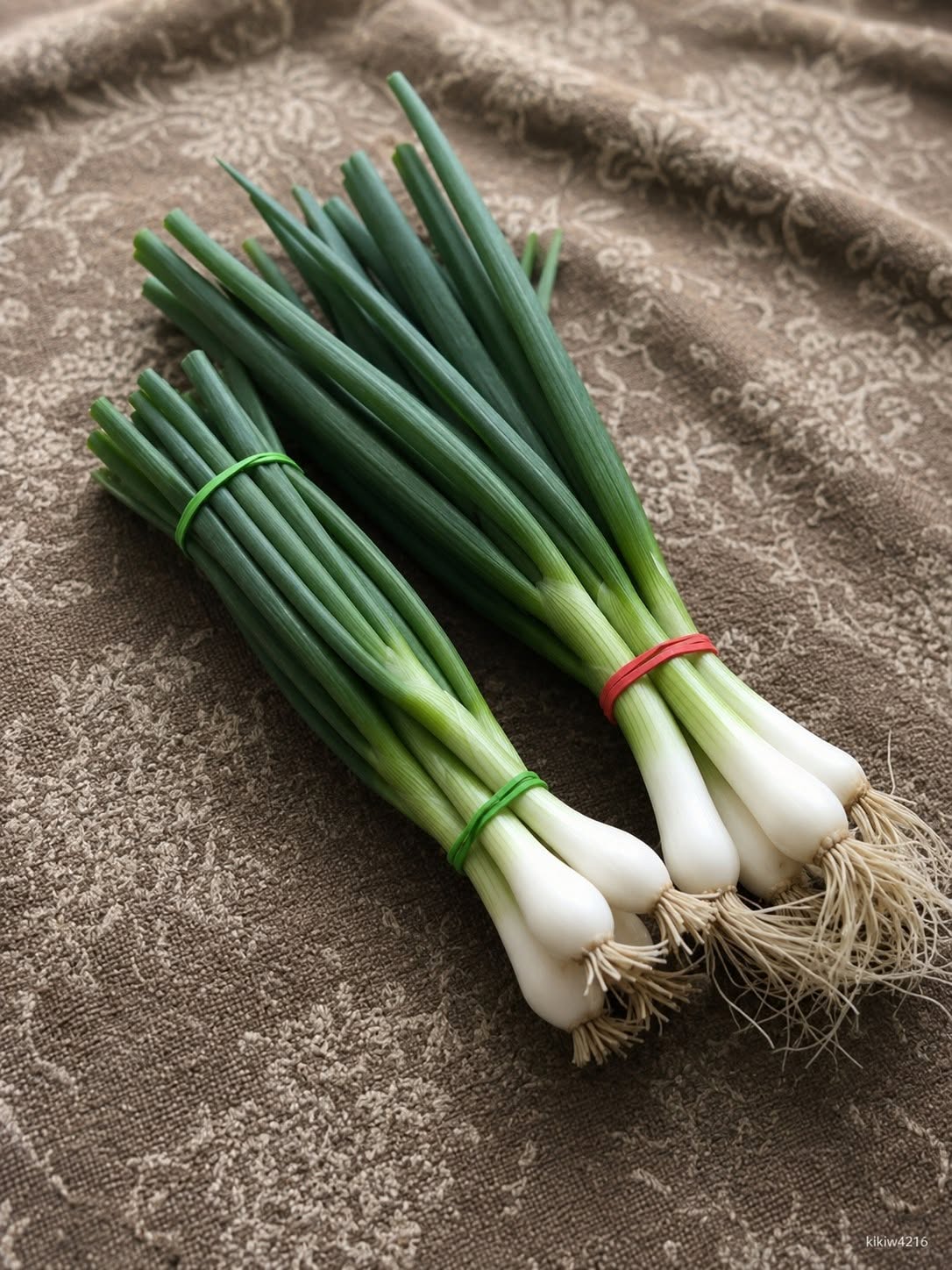
It started with onions.
Not money. Not politics. Not parenting. Not any of the big issues that people expect to create tension in a relationship. Just a simple trip to the store and a request that seemed impossible to misunderstand.
“Can you grab some green onions?”
The words were ordinary enough. A quick favor. Something that should have taken only a few seconds to process and complete. But by the time the groceries reached the kitchen counter, those two words had somehow transformed into frustration, disappointment, and a disagreement neither of us expected.
I placed the bunch of onions on the counter, proud that I had remembered everything on the list. But instead of appreciation, I was met with confusion.
“These aren’t green onions,” she said.
I looked down.
Long green stalks.
White bulbs.
Exactly what I thought green onions looked like.
“Yes, they are.”
“No, they’re scallions.”
That single sentence opened a door neither of us realized was there.
Suddenly we were discussing vegetables with the seriousness of attorneys arguing a court case. She insisted green onions and scallions were different. I insisted they were the same. The kitchen became a courtroom, the onions became evidence, and neither of us wanted to surrender.
What made the situation stranger was that both of us genuinely believed we were correct.
She had grown up calling one type of onion “green onions” and another “scallions.” In her family recipes, those words meant different things. In my experience, they had always referred to exactly the same vegetable.
Neither of us was trying to be difficult.
Neither of us intended to start an argument.
Yet there we were, standing in the kitchen with two entirely different understandings of the same thing.
For a while, the conversation stopped being about onions.
It became about something deeper.
She felt ignored.
I felt accused.
She believed I had failed to listen.
I believed I had done exactly what was asked.
The more we explained ourselves, the more frustrated we became.
How could something so simple feel so personal?
After a while, curiosity replaced irritation.
Instead of continuing to argue, we began searching for answers.
What exactly is the difference between green onions and scallions?
The answer, surprisingly, was that there often isn’t one.
In many regions, the terms are used interchangeably. Grocery stores frequently label the same vegetable differently depending on location. Some cooks make slight distinctions based on maturity or bulb size, while others consider them identical.
The more we read, the more obvious it became that both of us had been operating from perfectly reasonable experiences.
Neither person was wrong.
We simply learned different language for the same ingredient.
That realization changed everything.
The tension in the kitchen slowly disappeared.
The onions sitting on the counter suddenly looked harmless again.
We laughed.
The argument that had seemed so important only minutes earlier became almost ridiculous.
But something interesting happened after that.
Instead of simply moving on, we started talking.
I asked why the distinction mattered so much to her.
She explained childhood meals, family recipes, and the words her parents always used.
She described the dishes she remembered from growing up and how certain ingredients carried emotional meaning.
In her world, scallions and green onions had always been separate.
I shared my own experiences.
I explained how every grocery store I had visited labeled them the same way.
I talked about recipes I had cooked and the terminology I had always known.
Suddenly we weren’t discussing onions anymore.
We were discussing our histories.
Our families.
Our habits.
Our assumptions.
What had looked like disagreement was actually two people bringing different experiences into the same kitchen.
That realization stayed with us.
It made us think about how many other small conflicts begin exactly the same way.
One person says one thing.
Another person hears something different.
Both people feel certain.
Both people feel misunderstood.
And before long, the disagreement grows larger than the original issue.
The onion argument became a lesson in language.
Words often feel universal.
We assume everyone attaches the same meaning to them that we do.
But they do not.
Families create their own vocabulary.
Regions develop their own expressions.
Cultures shape definitions differently.
Even simple foods can carry completely different meanings depending on where someone grew up.
The experience also reminded us how quickly emotions can attach themselves to everyday situations.
When someone feels unheard, even onions can become important.
When someone feels blamed, even a grocery trip can become frustrating.
Most arguments are not really about the surface issue.
They are about the emotions underneath.
Respect.
Validation.
Being understood.
Being seen.
Looking back now, neither of us remembers the frustration as much as we remember the conversation afterward.
The onions worked perfectly in the recipe.
Dinner turned out exactly as intended.
Nothing had actually gone wrong.
Yet the experience changed the way we communicate.
Now we ask more questions.
“What kind do you mean?”
“Can you show me?”
“Is this the one you usually buy?”
Small clarifications prevent larger misunderstandings.
We also learned to pause before assuming the other person is wrong.
Sometimes two people can look at the same thing and honestly see it differently.
That does not mean either person is foolish.
It simply means they arrived there through different experiences.
Today the story has become part of our relationship.
Friends hear about “the onion fight.”
Family members laugh.
Whenever we shop together, someone inevitably asks, “Are these green onions or scallions?”
The answer usually changes depending on who is speaking.
But the argument itself has become something valuable.
It reminds us that peace is often fragile.
That misunderstandings can begin with the smallest details.
And that listening usually matters more than winning.
The strange truth is that the onions were never really the problem.
The problem was assuming that our experiences were identical.
The solution was discovering they were not.
Most conflicts begin small.
A misunderstood word.
A forgotten request.
An assumption.
A difference in perspective.
They grow only when people stop listening.
But they can also end gently.
A conversation.
A little curiosity.
A willingness to understand.
The onions eventually disappeared into dinner.
The disagreement disappeared too.
But the lesson remained.
Sometimes the smallest arguments reveal the biggest truths.
And sometimes a bunch of onions can teach two people how to hear each other again.