
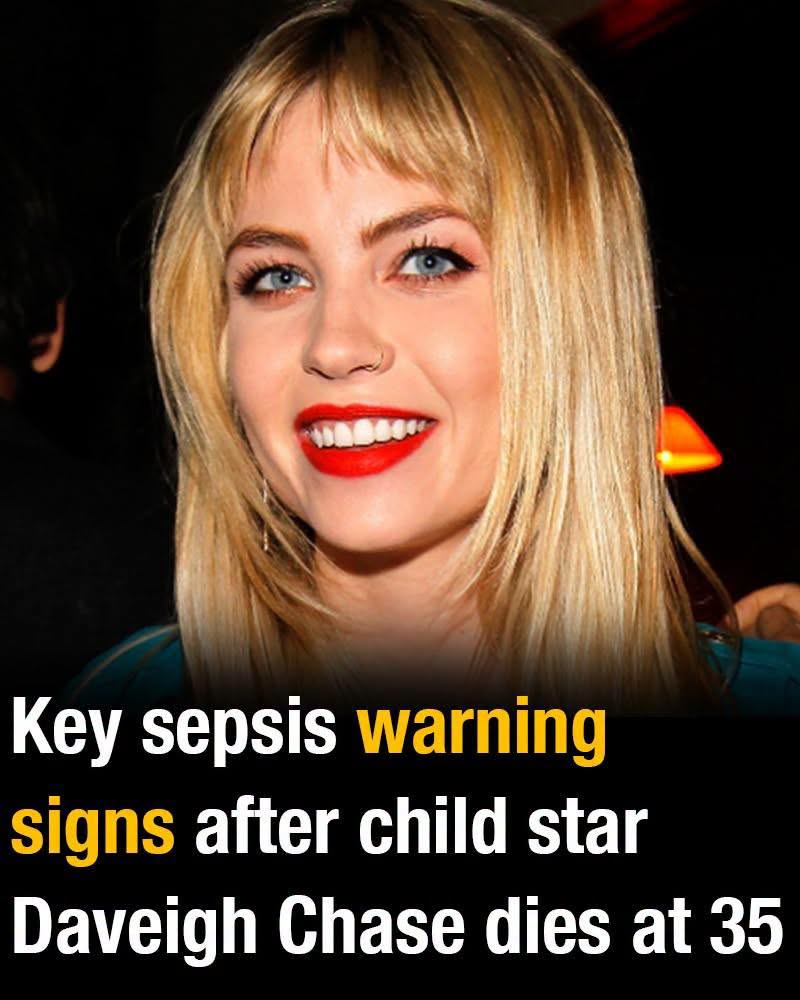
The tragic death of actress Daveigh Chase at the age of 35 has sparked renewed conversations about one of medicine’s most dangerous and misunderstood emergencies.
What can begin as a common infection, a fever, or what feels like an ordinary illness can, in some cases, escalate with frightening speed into a life-threatening medical crisis.
For many people, sepsis is a term they have heard but never fully understood. Yet doctors have long warned that it remains one of the leading causes of preventable deaths worldwide, largely because its early symptoms often resemble far less serious illnesses.
The loss of a young public figure has once again drawn attention to how rapidly infection can overwhelm the body and how important it is to recognize the warning signs before precious time is lost.
Most infections are successfully defeated by the body’s immune system. The immune response identifies harmful bacteria, viruses, or other pathogens and works to eliminate them. In some situations, however, the immune system’s reaction becomes extreme.
Instead of protecting the body, it begins damaging healthy tissues and organs.
This dangerous response is known as sepsis.
When infection enters the bloodstream or triggers widespread inflammation, the body can begin attacking itself. Organs may stop functioning properly. Blood pressure can fall. Circulation can become impaired. Without prompt medical treatment, the condition can rapidly become fatal.
One of the most concerning aspects of sepsis is that it often disguises itself as something far less serious.
A person may initially experience symptoms that resemble the flu, a stomach virus, or a common infection.
Fever.
Chills.
Fatigue.
Body aches.
Weakness.
Sweating.
Rapid heartbeat.
Difficulty breathing.
Because these symptoms are so common, many people assume they simply need rest, fluids, or time to recover.
Unfortunately, sepsis does not always allow time.
Doctors frequently emphasize that the speed of progression is what makes the condition so dangerous. Someone who feels mildly ill in the morning may become critically ill by evening.
As the infection spreads and the immune response intensifies, additional symptoms can begin to appear.
Confusion.
Disorientation.
Difficulty staying awake.
Extreme weakness.
Dizziness.
An overwhelming sense that something is seriously wrong.
Many survivors later describe experiencing an unexplained feeling that they were dying long before doctors identified the cause.
Medical professionals often encourage patients and families to trust these instincts.
When someone suddenly becomes confused, unusually lethargic, or mentally altered during an illness, immediate medical evaluation becomes especially important.
In some cases, infections such as meningitis can increase the risk of sepsis.
Meningitis causes inflammation of the protective membranes surrounding the brain and spinal cord. It can be caused by bacteria, viruses, or other infections. When severe infections spread throughout the body, the risk of sepsis rises significantly.
The combination of infection, inflammation, and immune overreaction can place enormous stress on the body.
As sepsis progresses, it may enter an even more dangerous stage known as septic shock.
At this point, blood pressure can fall dramatically.
Organs begin receiving insufficient oxygen.
Kidneys may stop functioning normally.
The heart struggles to maintain circulation.
Medical experts identify several symptoms that can indicate septic shock:
Very low blood pressure.
Cold or clammy skin.
Rapid breathing.
Rapid pulse.
Reduced urination.
Extreme pain.
Bluish skin or lips.
Severe weakness.
Loss of consciousness.
This stage is considered a medical emergency requiring immediate treatment, often including intravenous antibiotics, fluids, oxygen support, and intensive care.
One reason sepsis remains so dangerous is that people often delay seeking treatment.
Many individuals hope symptoms will improve.
Others worry about overreacting.
Some assume they simply have the flu or a minor infection.
Doctors increasingly encourage patients to ask a simple question if symptoms suddenly worsen:
Could this be sepsis?
That question alone can sometimes lead to faster testing, earlier treatment, and better outcomes.
Medical professionals emphasize that there is no single symptom that guarantees someone has sepsis. Instead, it is often the combination of symptoms and the speed at which they develop that raises concern.
Particularly concerning signs include:
A high fever or abnormally low temperature.
Confusion or altered mental status.
Difficulty breathing.
Severe pain.
Rapid heart rate.
Extreme weakness.
Reduced urination.
Pale, mottled, or clammy skin.
A feeling that something is seriously wrong.
Anyone experiencing these symptoms, especially during or after an infection, should seek medical attention immediately.
The tragedy surrounding the death of a young actress has also highlighted a broader reality.
Serious illness does not always follow expectations.
Many people assume severe infections primarily affect the elderly, very young children, or those with serious medical conditions. While these groups may face increased risk, sepsis can affect people of nearly any age.
Healthy individuals.
Young adults.
Athletes.
Parents.
Students.
Professionals.
No one is entirely immune.
Public awareness campaigns have attempted to educate people about the warning signs, but many cases continue to go unrecognized until the condition becomes advanced.
Health organizations often emphasize that early treatment saves lives.
Every hour matters.
Antibiotics administered quickly can dramatically improve survival rates.
Delayed treatment can allow infection and inflammation to spread further throughout the body.
Families who have experienced sepsis often describe the same painful realization: they did not understand how serious the symptoms were until it was too late.
That is why medical experts continue urging people to pay attention to sudden changes.
If symptoms escalate rapidly.
If confusion develops.
If breathing becomes difficult.
If weakness becomes overwhelming.
If the illness simply feels unusually severe.
Those signs deserve immediate attention.
The death of a beloved performer serves as a heartbreaking reminder that even illnesses that appear manageable can become dangerous under certain circumstances.
While medicine has made enormous advances in treating infections and critical illness, awareness remains one of the most powerful tools available.
Recognizing the signs.
Acting quickly.
Seeking help without delay.
These actions can save lives.
Sepsis is often described as a silent emergency because it can hide behind symptoms that seem ordinary. But when the body begins sending signals that something is terribly wrong, those signals should never be ignored.
Sometimes the difference between recovery and tragedy is not days.
It is hours.
And understanding those warning signs may help protect countless lives in the future.