
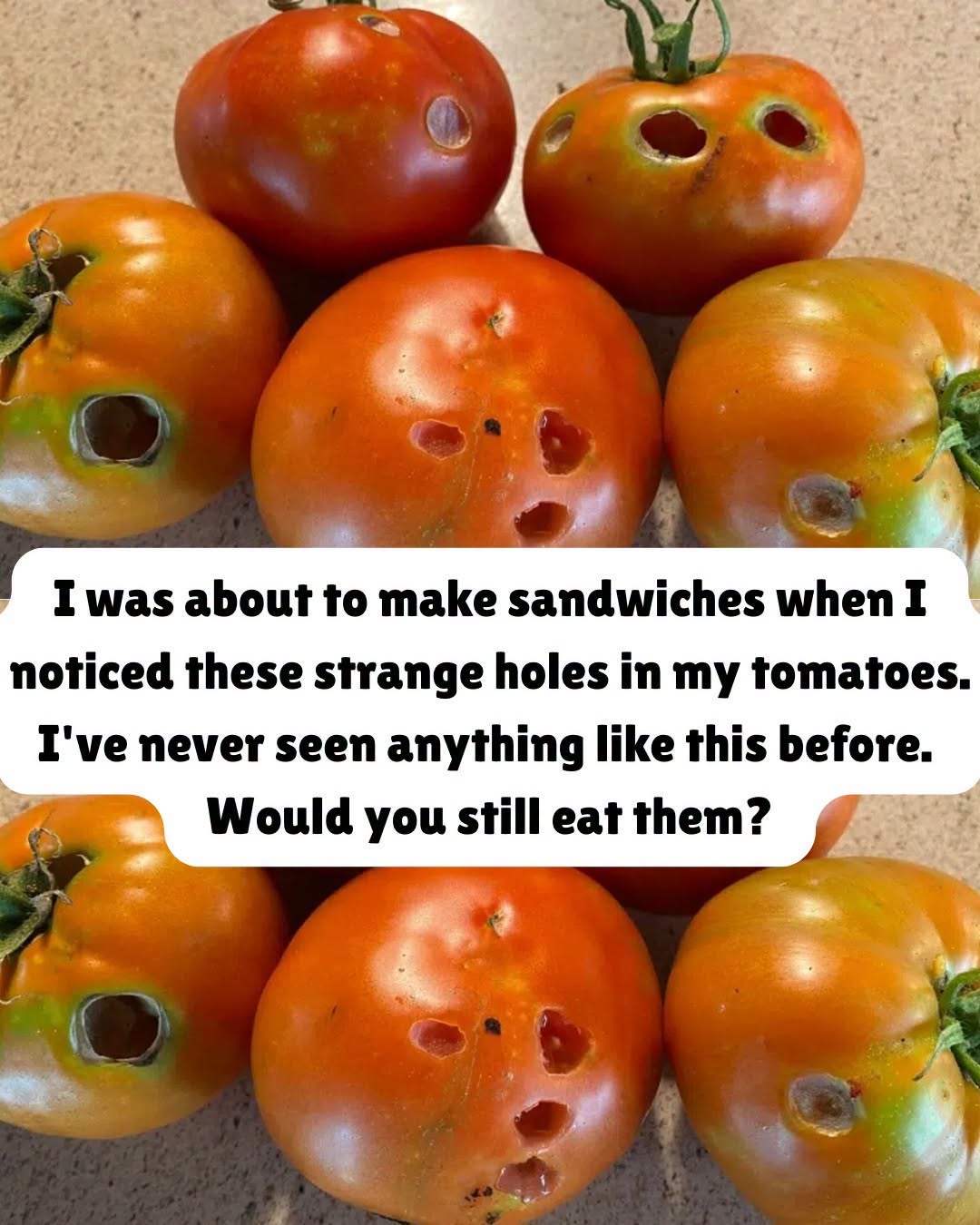
You walk into your garden one morning, excited to pick a tomato that has finally ripened after weeks of watering, pruning, and waiting. The color is perfect. The fruit looks healthy from a distance. But as you reach down and turn it over in your hand, you notice something unexpected.
A tiny hole.
At first, it seems insignificant. Perhaps it happened while harvesting. Maybe a branch rubbed against the fruit. Yet the longer you look, the more unsettling it becomes. Is something living inside? Has the tomato gone bad? Is your entire garden in danger?
For many gardeners, discovering holes in tomatoes can feel surprisingly frustrating. After investing months of care into a plant, finding damage just before harvest often feels like losing a small battle.
But those tiny holes are not random.
They are messages.
Your garden is trying to tell you something, and understanding the cause can mean the difference between saving your harvest and losing much of it.
One of the most common causes is insect activity.
Tomatoes attract numerous pests that see your garden as an all-you-can-eat buffet. Caterpillars, hornworms, beetles, stink bugs, and fruit worms often target ripening fruit because it contains sugars and moisture.
Some insects chew directly through the skin.
Others create small entry points that gradually expand.
Often the outside damage looks minor while the inside tells a completely different story.
Gardeners sometimes slice open a tomato only to discover tunnels, decay, or even insects hidden within the fruit itself. The small hole becomes an entrance that allows additional pests, fungi, and bacteria to invade.
One particularly troublesome culprit is the tomato fruitworm.
These larvae can bore into fruit shortly after hatching, feeding quietly from the inside. Because much of the damage remains hidden, many gardeners don’t realize a problem exists until harvest time.
Birds are another surprisingly common explanation.
Many species peck tomatoes for moisture rather than food. During hot weather, birds may be searching for water, and a juicy tomato provides an easy source.
Their pecks often leave perfectly round holes.
Squirrels can behave similarly.
Sometimes they take a single bite from multiple tomatoes, leaving behind damaged fruit scattered throughout the garden. The result can be especially frustrating because the animal may not even consume the entire tomato.
One small taste is enough.
Weather also plays a role.
Tomatoes experience stress when watering becomes inconsistent. Long dry periods followed by heavy watering can cause the fruit to crack, split, or develop irregular openings.
These damaged areas may later appear as holes.
Growth disorders such as catfacing can also create unusual scars, indentations, and openings on tomatoes. Catfacing often develops during cool temperatures while flowers are forming, producing oddly shaped fruit with deep scars and holes.
While these tomatoes often remain edible, the damaged areas can become entry points for insects and disease.
Disease itself is another possibility.
Certain fungal infections cause soft spots that eventually break down into holes. Bacterial diseases can create dark lesions that weaken the fruit’s surface.
Mold may develop around damaged areas.
Rot can spread quickly.
If a tomato feels soft, slimy, or produces an unpleasant odor, it is generally best to discard it rather than risk consuming spoiled produce.
The first step when you find a hole is simple:
Slow down.
Examine the tomato carefully.
Look for chew marks around the opening.
Inspect the underside of leaves.
Search for insect droppings, sometimes called frass, which often appear as small black pellets near feeding areas.
Cut the fruit open if necessary.
Sometimes the damage is entirely superficial. Other times it reveals a larger problem that requires immediate attention.
Many gardeners are surprised to discover that one damaged tomato can teach them exactly what is happening throughout their entire garden.
Once you identify the cause, solutions become much easier.
Bird netting can protect plants from hungry visitors.
Lightweight garden fabric creates a barrier against insects while still allowing sunlight and airflow.
Companion planting can also help.
Many gardeners plant basil, marigolds, garlic, or onions near tomatoes because their strong scents may discourage certain pests. These companion plants also attract beneficial insects that naturally control harmful bugs.
Regular inspections are one of the most effective tools available.
Walking through your garden every few days allows you to catch problems early. Removing damaged fruit prevents pests and disease from spreading.
Cleaning fallen tomatoes from the ground is equally important.
Rotting fruit creates an ideal environment for insects, fungi, and bacteria. Leaving damaged produce beneath plants often invites future problems.
Watering practices matter as well.
Tomatoes prefer consistent moisture. Deep watering several times a week is usually better than frequent shallow watering. Mulch helps retain moisture and reduces sudden changes that cause fruit cracking.
Healthy plants are naturally more resistant to damage.
Strong roots.
Proper spacing.
Good airflow.
Balanced nutrition.
All of these factors reduce stress and help plants defend themselves.
Perhaps the most important lesson is that a damaged tomato does not mean you have failed.
Gardening has always involved partnership with nature.
Birds, insects, weather, and disease have challenged gardeners for thousands of years. Even experienced growers occasionally discover holes in their fruit.
The difference is not avoiding every problem.
The difference is learning to understand what the garden is saying.
A tomato with a hole is not merely damaged produce.
It is evidence.
It tells a story about weather conditions, insects, wildlife, watering habits, and the environment surrounding your plants.
Every gardener eventually learns that the garden speaks through leaves, flowers, fruit, and even imperfections.
The tiny hole that first caused frustration may ultimately become one of the most valuable lessons of the season.
Because once you know what to look for, you stop seeing damaged tomatoes as failures.
You start seeing them as warnings.
As clues.
As opportunities to protect the harvest that still remains.
And the next time you pick up a tomato with a mysterious hole, you may discover that your garden has been trying to help you all along.