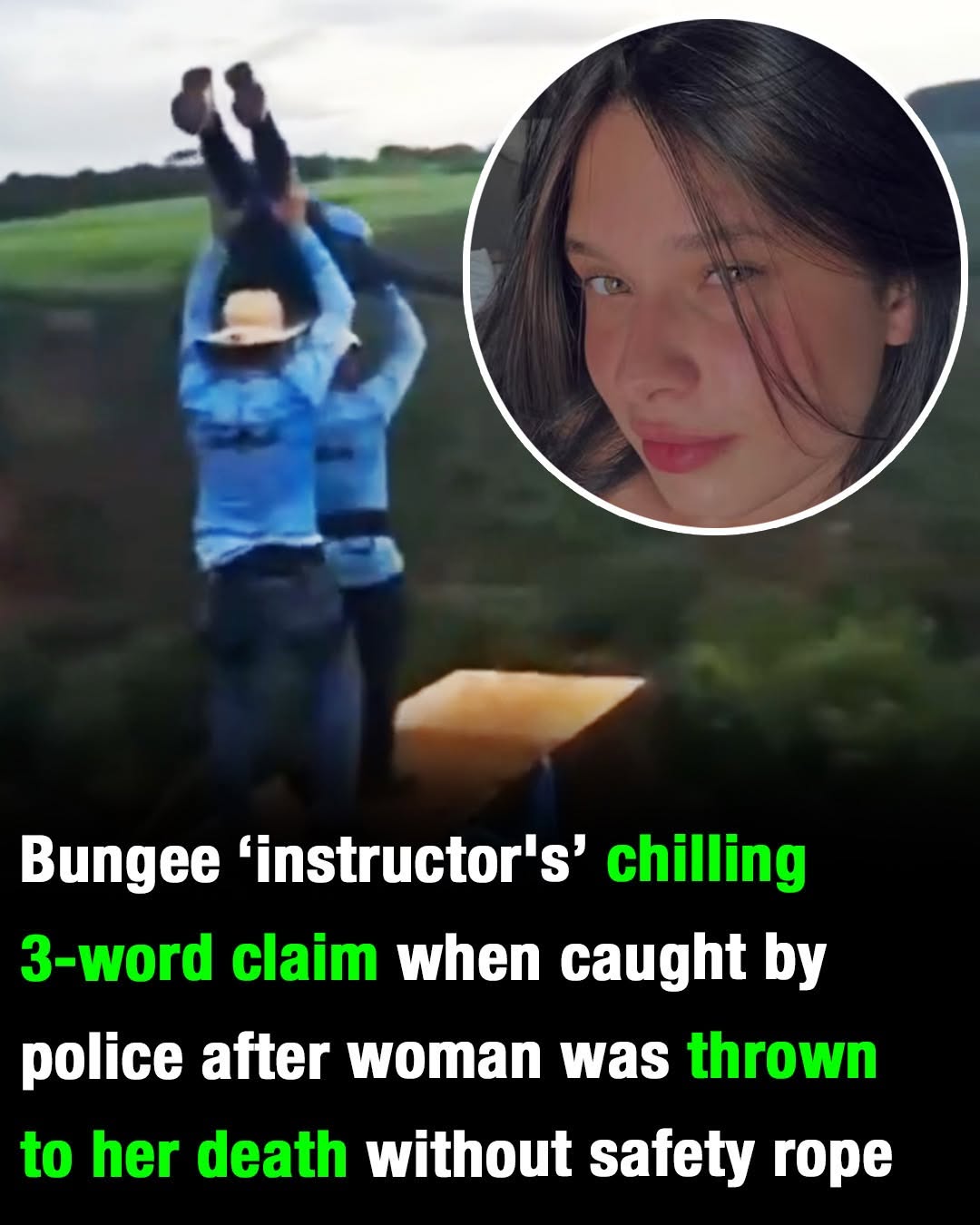
What began as a search for adventure ended in a tragedy that has stunned an entire country and raised urgent questions about safety, responsibility, and oversight in extreme sports.
Maria Eduarda Rodrigues de Freitas arrived at a popular jump site seeking the thrill that attracts thousands of adrenaline enthusiasts every year. Like many young people drawn to adventure tourism, she expected an experience built on excitement, careful preparation, and strict safety measures.
Instead, authorities allege that a catastrophic chain of failures turned what should have been a memorable day into a devastating loss.
According to reports, the incident occurred at a site commonly referred to as the “Skeleton Bridge,” a location known for attracting thrill-seekers eager to experience the rush of bungee jumping from significant heights. Witnesses described an atmosphere that initially appeared routine, with participants preparing for jumps while staff coordinated activities.
But within moments, that routine reportedly gave way to horror.
Investigators allege that Maria was directed toward the jump platform and proceeded with the activity under the belief that all required safety procedures had been completed. Witnesses later recounted the terrifying realization that something had gone terribly wrong.
The safety system that should have protected her life was allegedly not properly secured.
According to preliminary accounts, the rope intended to stop her fall was not attached as required.
The realization came too late.
What had been expected to be seconds of exhilaration instead became a scene of panic and disbelief.
People nearby reportedly screamed as the gravity of the situation became clear. Emergency responders were called, and chaos quickly spread through the area as witnesses struggled to comprehend what had just occurred.
For many who were present, it was a moment they say they will never forget.
Extreme sports inherently involve risk, but participants generally trust that operators follow rigorous procedures designed to minimize danger. Bungee jumping, in particular, relies heavily on strict safety protocols, equipment inspections, and multiple verification steps before any jump takes place.
Experts frequently emphasize that redundancy is central to these systems.
Safety checks are typically designed to ensure that no single mistake leads to disaster. Equipment is often inspected repeatedly, and multiple staff members may confirm attachments before a participant leaves the platform.
When those safeguards fail, the consequences can be catastrophic.
As authorities began investigating the incident, reports emerged raising questions about whether the operation had been properly licensed or operating under all required regulations.
Investigators reportedly examined issues including staff training, safety procedures, and operational oversight.
In the aftermath of the tragedy, some witnesses alleged that several individuals connected to the operation left the scene shortly after the incident. These reports added further scrutiny to the investigation and intensified public concern.
Law enforcement later located and questioned multiple individuals in connection with the case.
According to reports, investigators sought to determine who held responsibility for various safety tasks, including equipment setup, participant preparation, and final verification before the jump.
One aspect of the investigation reportedly focused on the chain of command.
Authorities allegedly questioned who was responsible for conducting the final safety inspection before Maria’s jump. In high-risk activities, clear responsibility is considered essential because safety depends on accountability at every stage.
Reports indicate that investigators encountered conflicting accounts regarding specific duties and roles.
According to publicly reported statements, one organizer allegedly suggested that responsibilities were shared among multiple individuals rather than assigned to a single person.
Investigators reportedly pressed further, seeking clarity on who performed the final checks.
When questioned, one response allegedly stood out for its brevity and controversy.
According to reports, the individual said: “I can’t remember.”
Those three words quickly spread across media coverage and social platforms, becoming a focal point of public reaction.
For many observers, the statement symbolized the confusion and uncertainty surrounding the incident. Others viewed it as raising deeper concerns about whether adequate safety systems and oversight were in place.
At the center of the tragedy, however, remains a young woman whose life ended far too soon.
For Maria’s family, headlines and investigations cannot erase an absence that now shapes every day. Loved ones are left grieving not only the loss itself but also the unanswered questions that continue to surround the circumstances of her death.
Extreme sports often carry inherent dangers, but participants generally accept those risks believing that trained professionals have taken every reasonable precaution to protect them.
Trust is fundamental.
Without trust in equipment, procedures, and operators, activities like bungee jumping could not exist.
This tragedy has reignited broader discussions about regulation within adventure tourism industries. As extreme sports grow in popularity worldwide, experts increasingly emphasize the importance of licensing, staff training, maintenance standards, and independent inspections.
Even minor oversights can produce devastating consequences when human lives depend on precision.
Safety experts frequently stress that procedures are designed not because mistakes are impossible, but because people are human. Checklists, double-verification systems, and role assignments exist precisely to prevent a single lapse from becoming irreversible.
Investigations into incidents like this often serve two purposes.
First, they seek accountability.
Second, they help identify failures that may prevent future tragedies.
As authorities continue examining the circumstances surrounding the incident, public attention remains focused on what happened and whether additional safeguards are needed to ensure similar accidents never occur again.
For many people following the case, the tragedy is a painful reminder that excitement and risk must always be balanced with responsibility and rigorous safety standards.
Adventure can inspire unforgettable memories.
But when procedures fail, those same moments can become lifelong heartbreak.
Today, investigators continue their work, legal questions remain unresolved, and a family mourns a future that was suddenly taken away.
What should have been a brief moment of exhilaration instead became a tragedy that continues to resonate far beyond the bridge where it occurred.
And as the investigation moves forward, one question still echoes louder than any other:
How did a day meant for adventure end in a loss that may have been preventable?