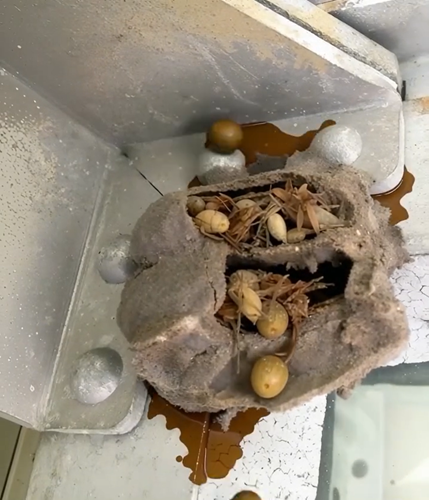
Every day, people stumble across objects that leave them completely puzzled.
Sometimes they are discovered in old family homes, tucked away inside forgotten drawers or dusty attics.
Other times they appear while cleaning out garages, walking through antique stores, exploring beaches, or simply sorting through inherited belongings.
At first glance, these mysterious items seem impossible to identify.
Some look like tools from another century.
Others resemble strange machines, oddly shaped pieces of metal, or unusual plastic objects with no obvious purpose.
The natural reaction is almost always the same.
“What is this?”
For years, questions like these often went unanswered.
People might ask relatives, neighbors, or local experts, hoping someone would recognize the unfamiliar object.
Today, however, the internet has transformed that experience into something remarkable.
Instead of one or two opinions, thousands of people from around the world now work together to solve everyday mysteries.
Someone uploads a photograph of a strange item they found.
Within minutes, replies begin pouring in.
A retired mechanic recognizes an old automotive part.
A farmer identifies a forgotten agricultural tool.
A historian explains an artifact from decades ago.
Collectors contribute detailed knowledge about antiques.
Engineers explain unusual machinery.
Sometimes the answer appears almost instantly.
Other times, dozens of people work together, each adding one small clue until the mystery is finally solved.
It is one of the internet’s most fascinating communities.
At first glance, it might seem like people are simply identifying random objects.
But something much deeper is happening.
These conversations demonstrate the incredible value of shared knowledge.
No single person knows everything.
Each individual brings different experiences, professions, hobbies, and interests.
When those perspectives come together, remarkable things happen.
An object that appears completely meaningless to one person may immediately remind someone else of childhood memories.
A strange metal hook may actually be an old farming implement used generations ago.
An unusual wooden device could turn out to be a forgotten kitchen tool.
A mysterious piece of heavy iron may once have belonged to railroad workers or blacksmiths.
Even objects that initially seem frightening often have surprisingly ordinary explanations.
One person posted a photograph of what looked like a terrifying plastic creature.
Speculation quickly filled the discussion.
Some guessed it was medical equipment.
Others imagined it belonged in a science fiction movie.
The actual answer?
It was simply a child’s toy missing several pieces.
Another user photographed a dramatic opening in dark storm clouds.
The image appeared almost supernatural.
Many viewers wondered whether it had been digitally edited.
Meteorologists quickly explained that it was an unusual but completely natural weather formation.
Suddenly something mysterious became an opportunity to learn about atmospheric science.
These moments happen repeatedly.
A strange object becomes a lesson.
A confusing photograph becomes an educational experience.
A forgotten tool becomes a glimpse into history.
Perhaps the most refreshing aspect of these communities is the atmosphere they create.
In many places, admitting ignorance can feel uncomfortable.
People often worry about asking simple questions because they fear embarrassment or criticism.
The internet, unfortunately, is not always known for patience.
Yet these identification communities frequently operate differently.
Instead of mocking someone for not recognizing an unfamiliar object, members often respond with genuine enthusiasm.
They enjoy solving puzzles.
They appreciate opportunities to teach.
Many even provide detailed explanations about how an object worked, where it was commonly used, and why it eventually disappeared from everyday life.
Some answers become miniature history lessons.
Others reveal fascinating engineering principles.
Many include personal stories.
Someone might explain that they remember their grandparents using the same tool decades earlier.
Another person shares memories of helping on a family farm.
An experienced craftsperson explains techniques that younger generations have never seen.
The object itself becomes a bridge connecting people across different ages and backgrounds.
One simple question often sparks conversations about culture, technology, history, and family traditions.
The educational value extends far beyond identifying individual items.
Participants gradually learn how people lived in previous generations.
They discover forgotten professions.
They gain appreciation for inventions that solved everyday problems before modern technology existed.
Even modern objects create interesting discussions.
Some devices appear so specialized that only experts immediately recognize them.
Medical equipment.
Industrial tools.
Scientific instruments.
Manufacturing components.
The diversity of expertise found online often means someone eventually identifies them.
These exchanges also highlight something important about human curiosity.
People naturally enjoy solving mysteries.
There is satisfaction in recognizing patterns, connecting clues, and uncovering hidden explanations.
Every solved object provides a small moment of accomplishment.
The person asking gains an answer.
The people responding enjoy sharing knowledge.
Everyone reading learns something new.
That shared curiosity creates a surprisingly welcoming environment.
Many users admit they continue browsing long after finding the original answer.
Each new photograph becomes another challenge.
Another opportunity to test observation skills.
Another chance to learn something unexpected.
Over time, participants become better at recognizing historical objects and unusual tools.
They start noticing design details that previously escaped attention.
The communities become informal classrooms where education happens naturally.
There are no grades.
No exams.
Only curiosity.
Perhaps that explains their popularity.
People arrive expecting entertainment.
They leave with knowledge they never expected to gain.
The experience reminds us that learning does not always need to happen inside traditional classrooms.
Sometimes education begins with a simple photograph and a genuine question.
“What is this?”
That question has become surprisingly powerful.
It invites conversation instead of judgment.
It encourages expertise rather than competition.
It allows people from different countries, professions, and generations to contribute equally.
Most importantly, it reminds everyone that not knowing something is completely normal.
Every expert was once a beginner.
Every collector once encountered an unfamiliar object.
Every historian started by asking questions.
These online communities celebrate that process rather than discouraging it.
They prove that curiosity deserves encouragement.
Knowledge grows stronger when shared.
And the willingness to ask questions is often the first step toward discovering something remarkable.
In a world where people sometimes feel pressure to have every answer, these simple object-identification communities offer a refreshing reminder.
It is perfectly acceptable not to know.
Someone else might.
And together, complete strangers can turn confusion into understanding, one mysterious object at a time.