When Steven Paul Owens passed away, his family wanted his memorial to reflect the person they knew better than anyone else. They did not want cold formality, polished clichés, or the kind of generic inscription that could belong to almost anyone.
They wanted something unmistakably Steven something that captured the humor, personality, and rough affection that had defined him throughout his life.
To outsiders, he could seem blunt, sarcastic, even intimidating at times. But to the people closest to him, that sharp humor was how he expressed love. Friends and family understood that when Steven teased someone mercilessly or delivered a perfectly timed insult, it was usually his way of showing comfort, closeness, and trust. Beneath the rough edges was someone deeply loyal to the people he cared about.
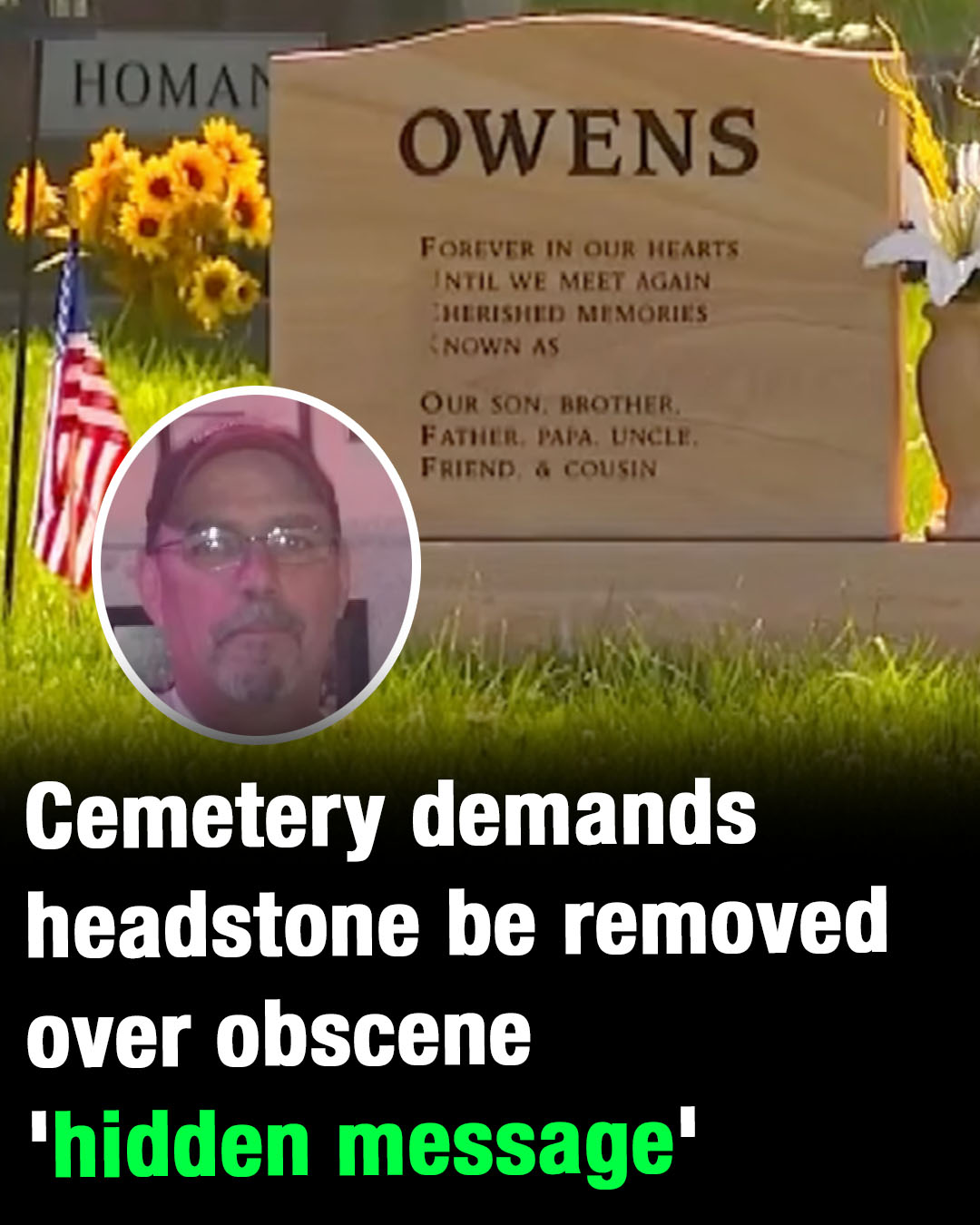
So when the family gathered to decide what would be written on his headstone, they searched for words that would feel authentic rather than overly sentimental. They eventually chose an acrostic-style inscription, one where the first letters of each line secretly spelled out a hidden phrase. At first glance, the message appeared harmless and heartfelt. But once someone noticed the concealed wording buried within the text, the memorial quickly became the center of controversy.
The hidden phrase contained profanity something Steven himself reportedly used constantly in everyday life, often jokingly and affectionately. To his loved ones, the concealed message felt deeply personal, almost comforting. It was not intended as vandalism or disrespect toward the cemetery. Instead, they viewed it as a final private joke, a quiet tribute to the man they had lost.
For the family, grief was never going to look perfectly polished. Loss rarely does. Some people mourn through tears and silence, while others survive heartbreak through humor, stories, and the familiar language of the person who is gone. In their eyes, the inscription reflected Steven honestly. It was painful, funny, loving, and human all at once.
But not everyone saw it that way.
As awareness of the hidden message spread, trustees overseeing the cemetery began receiving complaints and concerns from visitors. Some families felt the inscription crossed a line in a place meant for reflection, mourning, and shared respect. Others worried about children discovering the message or about the broader precedent it might create if similar inscriptions became more common.
What had started as a deeply personal tribute slowly evolved into a much larger argument about grief, public space, and the limits of expression in places connected to death and remembrance.
Cemeteries occupy a strange emotional territory in society. They are intensely personal places filled with private memories, yet they are also shared public environments governed by rules, traditions, and expectations. Every headstone tells an individual story, but each one also exists within a communal landscape shaped by cultural ideas about dignity, mourning, and respect.
That tension sat directly at the center of the dispute surrounding Steven’s memorial.
Trustees argued that while families should absolutely have freedom to honor loved ones in meaningful ways, there still needed to be boundaries. A cemetery, they insisted, was not the same as a private backyard or personal property. It was a place visited by grieving families, elderly spouses, children, and members of the public seeking quiet reflection. Allowing explicit language, even hidden within an acrostic, risked changing the tone of the environment itself.
Some worried about practical consequences as well. If one controversial inscription remained untouched, where would the line eventually be drawn? Trustees feared future memorials might become increasingly provocative, competitive, or intentionally shocking. They did not want the cemetery transformed into a place where attention-grabbing messages overshadowed peace and remembrance.
Yet the family remained firm in defending the headstone.
To them, removing or altering the inscription would feel like erasing Steven’s personality after death. They argued that memorials should represent real people, not sanitized versions shaped entirely by public comfort. Steven was not a formal, restrained man in life, so why should his grave pretend otherwise?
The conflict revealed something deeper about the way modern society approaches grief. Public mourning often comes with unspoken rules about how sadness should appear: respectful, quiet, controlled, and dignified. Humor especially dark humor can make people uncomfortable in spaces associated with death. Yet psychologists who study grief frequently note that humor can also serve as an important coping mechanism, helping people process pain and maintain emotional connection with the person they lost.
For Steven’s family, the hidden message represented exactly that kind of connection. Every time they visited the grave and noticed the concealed phrase, it reminded them not only of his humor, but of the countless conversations, jokes, and moments that had shaped their relationship with him. The inscription made them laugh in the middle of mourning, and that laughter mattered.
As the story spread online and through local conversations, public opinion became sharply divided.
Some people passionately defended the family’s choice, arguing that memorials should belong first and foremost to the loved ones left behind. They believed cemeteries are filled with deeply personal symbols already religious references, inside jokes, favorite song lyrics, sports logos, photographs, and customized artwork. From that perspective, Steven’s hidden phrase was simply another form of personal expression.
Others strongly disagreed, insisting that public memorial spaces require shared standards. Even if the phrase was intended lovingly, they argued, profanity in a cemetery inevitably affects everyone who visits the space, not just one family. Critics worried that normalizing such inscriptions could gradually erode the sense of reverence many people seek when visiting gravesites.
Years after the controversy first emerged, the headstone reportedly still remains in place. The argument surrounding it, however, has never fully disappeared.
The story continues to resonate because it touches something universal and uncomfortable: who truly controls memory after someone dies? Families often want memorials to feel personal and authentic, but public institutions frequently prioritize consistency and broader community expectations. Somewhere between those competing ideas lies a difficult question with no easy answer.
Death itself tends to strip away performance and pretense. In mourning, people often reach desperately for anything that feels genuine—whether that means solemn tradition, laughter, storytelling, or private jokes that outsiders may never fully understand. Steven’s family believed authenticity mattered more than appearance. Cemetery officials believed shared public standards mattered more than individual expression. Both sides, in their own way, were trying to protect something meaningful.
What makes the story so emotionally charged is that neither perspective is entirely unreasonable.
The family saw love carved into stone. Trustees saw responsibility to an entire community. Visitors saw either touching honesty or inappropriate disruption, depending on their own experiences and beliefs about death, memory, and respect.
In the end, the headstone became more than a memorial for one man. It became a symbol of a larger cultural debate about grief itself about whether mourning must always appear solemn to be sincere, and whether humor has a place beside sorrow in spaces devoted to remembrance.
For Steven’s loved ones, the hidden message remains a final echo of the man they knew: imperfect, funny, blunt, and unforgettable. For the cemetery, it remains a reminder of how fragile the balance can be between private memory and public space.
And somewhere in the quiet rows of Warren-Powers Cemetery, beneath the arguments and controversy, one simple truth still remains unchanged: a family wanted to remember someone they loved in the way that felt most honest to them, even if the rest of the world could never fully agree on what that should look like.