The arrest of conservative influencer Craig Long has ignited a storm of controversy across social media and political circles, turning a once-celebrated online personality into the center of a growing scandal tied to one of the largest undercover operations in recent memory.
What began as a sweeping law enforcement effort targeting prostitution and suspected human trafficking activities has now become a story about public image, political identity, and the dramatic collapse of carefully crafted online personas.
Authorities say the operation, known as “Polk Around & Find Out,” led to the arrest of more than 200 individuals during a large-scale undercover initiative designed to target illegal prostitution networks and identify possible victims of exploitation and trafficking. Investigators described the operation as one of the region’s most extensive coordinated crackdowns, involving multiple agencies working together to uncover criminal activity linked to illicit meetups and online arrangements.
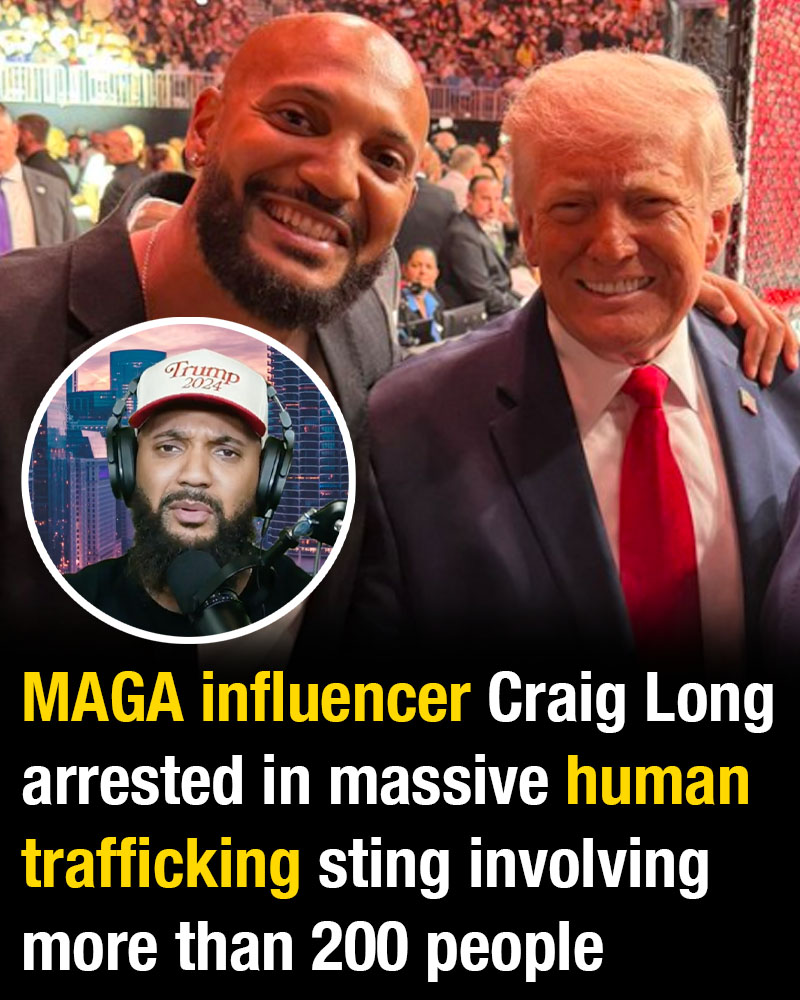
Among those arrested was Craig Long, a social media figure known within conservative circles for his outspoken support of law enforcement, his close identification with the MAGA movement, and his public appearances alongside prominent Republican figures, including Donald Trump and Donald Trump Jr.
The arrest stunned many of his followers.
For years, Long had built an image centered around patriotism, redemption, and unwavering support for conservative causes. His online presence frequently featured messages praising police officers, condemning crime, and promoting traditional values. He often portrayed himself as someone who had turned his life around and embraced discipline, responsibility, and faith.
That image now faces intense scrutiny.
According to investigators, Long allegedly responded to undercover communications connected to prostitution-related activity during the operation. Law enforcement officials claim he arrived at a location expecting an illicit encounter, leading to his arrest alongside dozens of others accused of similar offenses.
The broader operation uncovered far more disturbing allegations beyond individual prostitution-related charges.
Authorities reported identifying suspected victims of human trafficking and exploitation during the investigation. Officials also revealed troubling details involving some suspects allegedly bringing children to illicit meetings or exposing minors to dangerous environments connected to criminal activity.
Those revelations transformed the operation from a standard vice sting into a much larger public conversation about exploitation, online secrecy, and hidden criminal networks operating beneath seemingly ordinary public lives.
Long’s arrest became especially explosive because of the contrast between his public identity and the allegations against him.
Supporters who once viewed him as a symbol of conservative values suddenly found themselves confronting accusations that appeared deeply inconsistent with the persona he had spent years building online. Critics quickly seized on the irony, pointing out that Long had frequently celebrated aggressive policing tactics and public crackdowns on crime.
Screenshots of his previous social media posts praising law enforcement circulated widely after news of his arrest broke. For many observers, the scandal appeared to expose a sharp divide between public messaging and private behavior.
The controversy deepened further because Long was not the only politically connected figure reportedly caught up in the operation.
Another man facing prostitution-related charges connected to the sting is Ryan Yates, a January 6 participant who had previously received a pardon from Donald Trump. The involvement of two individuals tied in different ways to pro-Trump political activism intensified media attention and fueled heated debates online.
Supporters of the former president argued that the arrests were unrelated to politics and should be treated as individual legal matters rather than ideological scandals. Critics, however, framed the arrests as symbolic examples of hypocrisy within segments of the influencer-driven political world.
As news spread, reactions across social media became intensely polarized.
Some users expressed disappointment and anger, particularly those who had followed Long for years and viewed him as authentic and trustworthy. Others mocked the downfall, describing it as another example of internet personalities projecting moral authority while allegedly engaging in contradictory behavior behind the scenes.
The scandal also reignited broader discussions about influencer culture itself.
Modern political influencers often build large audiences not through traditional journalism or policy expertise, but through personality-driven branding. Followers frequently form emotional attachments to creators who present themselves as relatable, morally confident, and ideologically committed. Those relationships can create powerful loyalty but also devastating backlash when scandals emerge.
In Long’s case, much of his appeal came from the sense that he represented personal transformation and conservative conviction. His content often emphasized themes of accountability, patriotism, and law and order. For some followers, the allegations now feel like a betrayal not just of public values, but of personal trust.
Legal experts caution, however, that arrests alone do not determine guilt.
As with any criminal case, the accused are entitled to due process, legal representation, and the presumption of innocence until proven otherwise in court. Authorities have released limited public details regarding specific evidence tied to individual suspects, and legal proceedings are expected to continue over the coming months.
Still, public opinion often moves much faster than the legal system.
In today’s digital landscape, reputations can unravel within hours of an arrest announcement, particularly when public figures are involved. Viral headlines, screenshots, and online commentary frequently shape perceptions long before trials or legal resolutions occur.
The case has also renewed attention on the methods used in undercover prostitution and trafficking stings.
Supporters of these operations argue they are necessary tools for disrupting exploitation networks and identifying trafficking victims who might otherwise remain hidden. Law enforcement agencies often emphasize that such investigations are designed not only to arrest offenders but also to locate individuals who may be trapped in abusive or coercive situations.
Critics of these operations sometimes raise concerns about entrapment, public shaming, or the broad release of arrest information before convictions occur. Nevertheless, authorities involved in the Polk County operation defended the investigation as an important effort to combat exploitation and protect vulnerable individuals.
For many observers, however, the emotional core of the story remains tied to the collapse of image.
Craig Long’s online identity was carefully built around certainty, morality, and public loyalty to conservative ideals. The allegations against him now stand in direct conflict with the values he publicly championed. Whether the legal outcome ultimately confirms or complicates those accusations, the damage to his public reputation may already be profound.
The scandal reflects a recurring reality of modern internet culture: audiences often feel they truly know the personalities they follow online, even when much of that image is curated through selective presentation.
Behind political slogans, patriotic photos, and polished videos, private behavior can remain invisible until one unexpected moment changes everything.
For supporters who once admired Long, the arrest has become more than a news story. It is a painful reminder of how quickly confidence in public figures can collapse when actions and image no longer align.
And as the investigation continues, the broader questions surrounding accountability, redemption, and authenticity in the age of online influence are only growing louder.