It was supposed to be just another moment in a carefully orchestrated public appearance, one of countless speeches delivered under bright lights and constant scrutiny.
Yet in the middle of his remarks, Donald Trump paused, shifted tone, and made a brief, almost offhand comment about his marriage to Melania Trump. The remark lasted only seconds, but its impact stretched far beyond the room, quickly becoming the focal point of discussion across media and social platforms.
What might once have passed as a casual aside instead took on a life of its own. Trump referenced the long-lasting marriage of his parents, noting that he would likely never match their 63 years together. The statement was delivered lightly, almost as a joke, but it landed in a space already shaped by years of public curiosity about his relationship. In that context, even a simple observation carried layers of meaning, whether intended or not.
The crowd responded immediately, reacting to the moment with a mix of laughter and attention that suggested they understood its potential weight. It was a brief interruption in an otherwise structured speech, yet it became the defining highlight. For those present, it felt spontaneous. For those watching from afar, it became something to analyze, interpret, and debate.
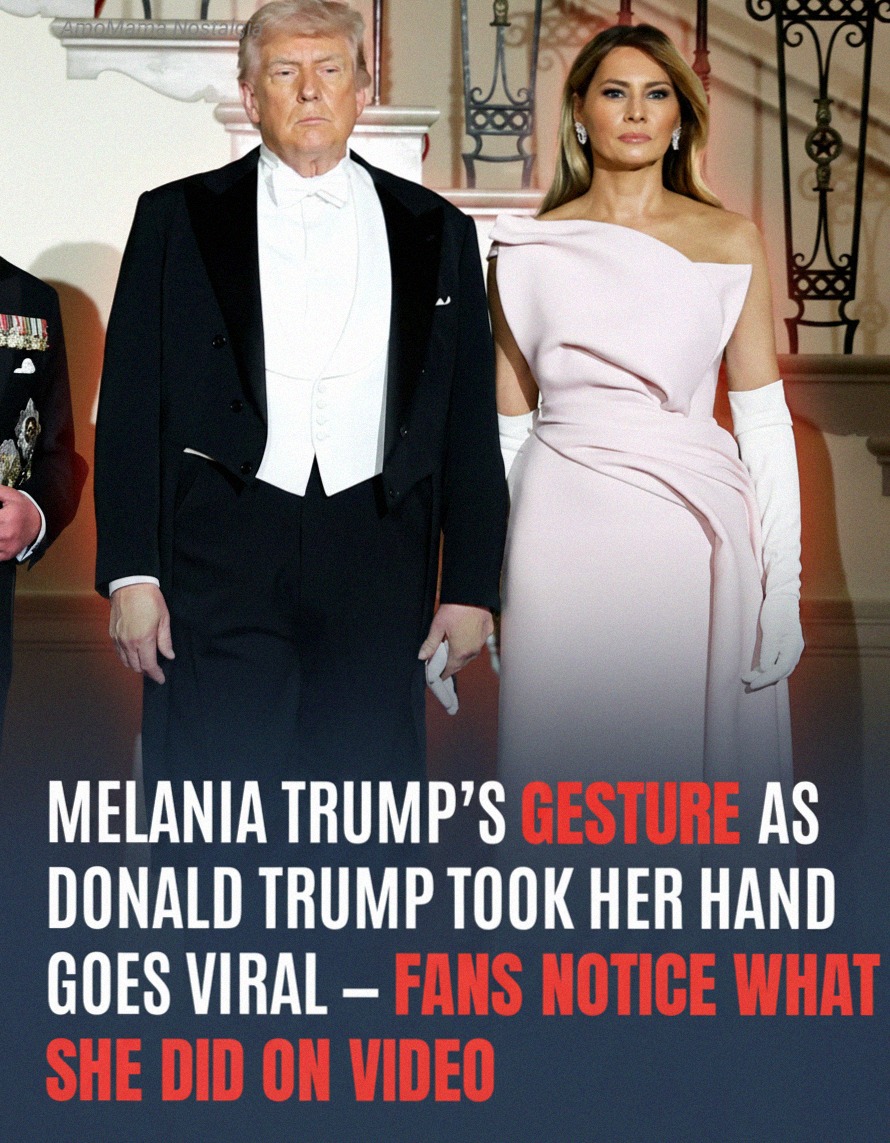
Melania Trump’s presence added another dimension to the moment. Known for her composed demeanor and controlled public appearances, she maintained the same calm expression that has long characterized her role in the public eye. Her posture, her gestures, even the smallest movements during shared appearances have often been scrutinized, and this occasion was no different. Observers quickly revisited images and clips, searching for subtle cues that might reveal more than what was said aloud.
None of those details offered definitive answers. A reserved smile, a brief glance, a measured interaction each could be interpreted in multiple ways. Yet in the current media environment, ambiguity often fuels speculation rather than limiting it. The absence of clear signals does not quiet discussion; it amplifies it.
What followed was a rapid shift in focus. The broader context of the event, which had been carefully planned and executed, faded into the background. The official agenda, the policy discussions, the diplomatic elements all were overshadowed by a single unscripted line. In an era defined by constant recording and instant sharing, moments like these rarely remain isolated. They are captured, replayed, and reframed within minutes, reaching audiences far beyond the original setting.
This dynamic reflects a larger transformation in how public figures are perceived. Speeches are no longer consumed solely for their content; they are mined for moments that feel personal, revealing, or unexpected. A brief comment can carry more influence than an entire prepared statement, especially when it touches on topics that already attract public interest.
The marriage between Donald and Melania Trump has long been one such topic. As a couple occupying one of the most visible positions in global politics, their relationship has been observed from countless angles. Public appearances, interviews, and even informal interactions have all contributed to an ongoing narrative shaped as much by perception as by fact.
In this context, Trump’s remark did not exist in isolation. It became part of a larger story that audiences have been constructing over time. Each new moment is layered onto previous impressions, creating a complex and often contradictory picture. The result is a form of collective interpretation, where meaning is not fixed but constantly evolving.
The reaction to this particular moment highlights how deeply that process has become embedded in modern media culture. Within hours, clips of the exchange circulated widely, accompanied by commentary that ranged from lighthearted to analytical. Some viewers treated it as a simple joke, a fleeting acknowledgment of the unpredictability of life. Others saw it as a revealing glimpse into a private relationship, reading significance into every word and gesture.
This divergence of interpretation underscores a key aspect of contemporary public life. Information is no longer passively received; it is actively shaped by those who engage with it. Audiences bring their own perspectives, assumptions, and expectations, transforming a single moment into multiple narratives.
For the Trumps, this dynamic is not new. Their public presence has consistently generated strong reactions, both supportive and critical. What sets this moment apart is not its content but its timing and context. In a setting designed to project stability and control, an unscripted remark introduced an element of unpredictability. That contrast made it stand out, drawing attention precisely because it deviated from the expected script.
At the same time, it serves as a reminder of the human dimension that exists even within highly managed public roles. Behind the speeches, the protocols, and the carefully constructed images are individuals navigating personal relationships under extraordinary visibility. Moments that might seem ordinary in private life take on amplified significance when they occur in front of a global audience.
The broader implications extend beyond any single figure or event. They reflect a shift in how public discourse operates, where the boundaries between personal and political, private and public, are increasingly blurred. A comment about marriage can become a focal point of national conversation, not because of its inherent importance but because of the context in which it is delivered.
As the initial wave of reaction subsides, what remains is the lasting impression of that brief pause and the words that followed. The official purpose of the event may eventually fade from memory, documented only in formal records and archives. The unscripted moment, however, is likely to endure, preserved through countless replays and discussions.
In the end, the significance of the moment lies not only in what was said but in how it was received. It illustrates the power of perception in shaping public narratives, as well as the role of audiences in defining what matters. A single sentence, delivered in passing, can overshadow an entire event, becoming the detail that people remember long after everything else has been forgotten.
For Donald and Melania Trump, the moment is now part of that evolving narrative. For the public, it is another example of how meaning is created in real time, shaped by interpretation as much as by intention. And for anyone watching, it serves as a reminder that in today’s world, even the smallest aside can become the story itself.