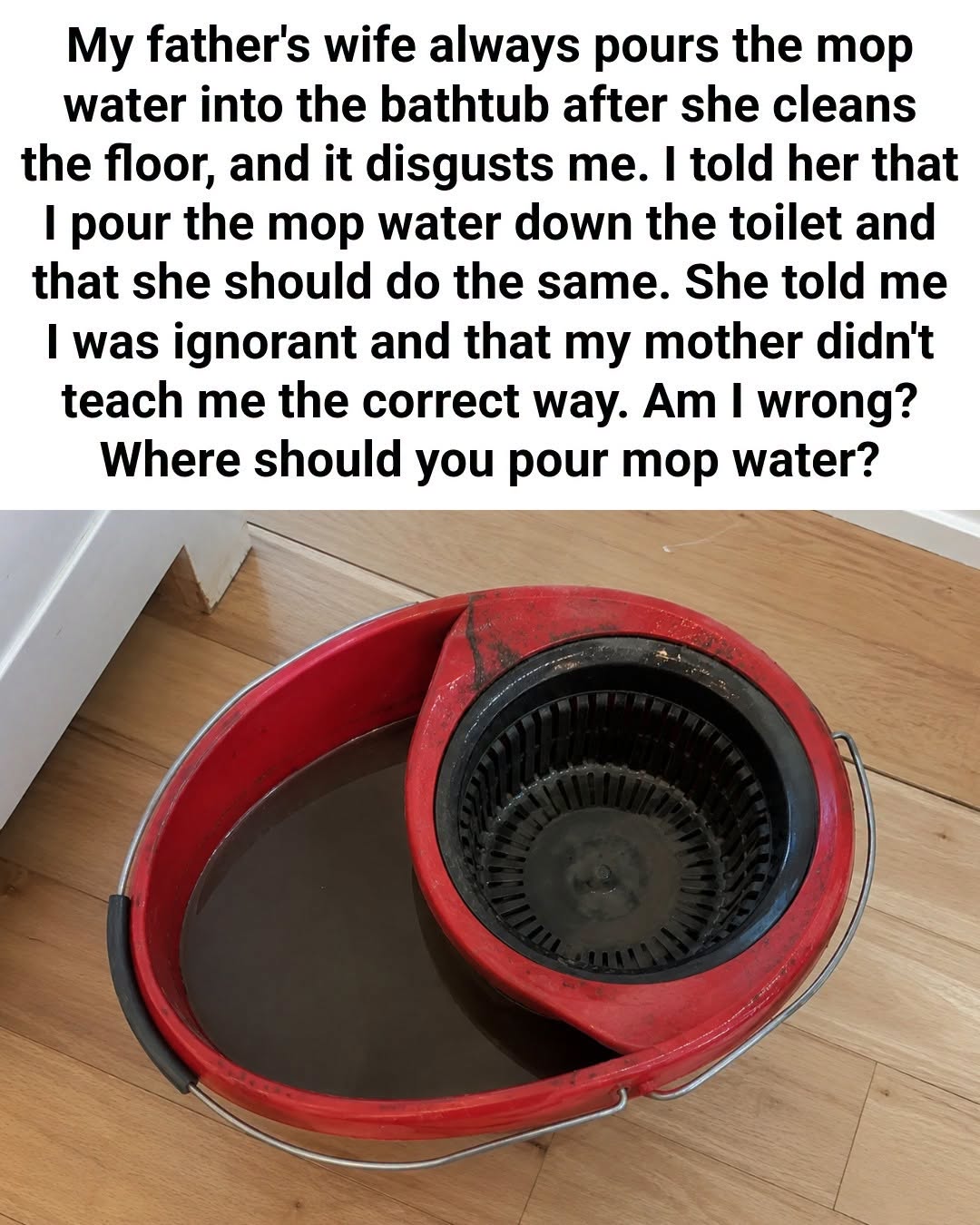
After finishing a long session of mopping floors, most people focus on one final task: getting rid of the bucket of dirty water.
It sounds simple enough.
Walk to the nearest drain.
Pour it out.
Rinse the bucket.
Move on with your day.
But where that dirty water ends up can actually make a difference not only for your plumbing, but also for cleanliness and hygiene throughout your home.
Many people automatically choose the bathtub because it seems convenient. Others head straight for the toilet without thinking twice. Some are fortunate enough to have a utility sink in the laundry room or garage, while a few wonder whether the kitchen sink is acceptable.
The answer depends on what your mop water contains and how your home is set up.
At first glance, dirty mop water may look like nothing more than cloudy water mixed with a little cleaning solution.
In reality, it often contains much more.
Every pass of the mop collects dust, dirt, pet hair, food crumbs, grease, pollen, body oils, bacteria, and tiny particles that have accumulated across your floors. If you’ve cleaned areas around the kitchen, entryway, or underneath furniture, the bucket may also contain sand, grit, bits of leaves, and other debris tracked in from outside.
The water may appear harmless, but it is carrying everything your mop just removed from the floor.
That is why choosing the right place to dispose of it matters.
For most homes, the toilet is often considered the safest and most practical option.
Toilets are specifically designed to handle waste moving into either the sanitary sewer system or a properly maintained septic system. They are built with larger drain pathways than most sinks or tubs, making them better suited to carrying away small suspended particles without creating unnecessary plumbing problems.
When dirty mop water is poured slowly into the toilet and flushed afterward, it moves through a system already intended for waste disposal.
For many cleaning professionals, this makes the toilet a sensible everyday choice.
The bathtub, on the other hand, presents a different situation.
While it certainly has a drain and can physically handle water, it is also one of the cleanest places in the home—the place where people bathe, children play during bath time, and pets are often washed.
Pouring dirty mop water into the tub means every particle collected from your floors ends up coating the bathtub before washing down the drain.
Although much of the water disappears immediately, residue can remain on the tub’s surface.
That means the bathtub should ideally be rinsed thoroughly and disinfected before anyone uses it again.
Skipping that step may leave behind bacteria, grime, or cleaning product residue that nobody wants touching their skin.
Another concern is the drain itself.
Bathtub drains are generally narrower than toilet plumbing and often include strainers designed to catch hair.
When mop water contains hair, pet fur, dust clumps, or larger pieces of debris, those materials can collect around the drain and contribute to future clogs.
While one bucket may not create a problem, repeated dumping over months or years can increase the likelihood of slow drainage.
If your home has a utility sink, laundry sink, or garage sink, many experts consider it the best option of all.
These sinks are designed specifically for cleaning tasks.
Whether washing paintbrushes, emptying mop buckets, rinsing gardening tools, or cleaning dirty equipment, utility sinks are built with heavier use in mind.
They are easier to clean afterward and keep household dirt away from areas intended for personal hygiene or food preparation.
For homeowners who have one, this is often the ideal destination for mop water.
Regardless of where the water is poured, one important habit can help protect plumbing.
Before emptying the bucket, take a moment to remove larger debris.
Hair, paper, leaves, crumbs, pet fur, and other visible materials can be strained out using a simple mesh strainer or even by allowing the water to settle briefly before pouring.
Those larger particles belong in the trash rather than the drain.
Removing them reduces the chance of blockages and helps keep plumbing working properly.
The cleaning products used in the bucket also deserve attention.
Most household floor cleaners are designed to be safely disposed of through household wastewater systems when used according to instructions.
However, stronger chemicals, industrial cleaners, solvents, or products containing harsh disinfectants may require additional care, especially for homes with septic systems.
If you rely on a septic tank, using excessive amounts of powerful chemicals can interfere with the beneficial bacteria that help break down waste naturally.
Reading product labels and following disposal instructions remains the safest approach.
One place dirty mop water should almost never be poured is the kitchen sink.
Although the drain itself may connect to the same plumbing system, the kitchen sink is where food is prepared, fruits and vegetables are washed, and dishes are cleaned.
Introducing floor dirt, grease, bacteria, and debris into that area creates unnecessary sanitation concerns.
Even after rinsing the sink, many people simply prefer to keep floor contaminants away from surfaces associated with food.
Outdoor disposal also requires caution.
Pouring mop water into storm drains, onto sidewalks, or into yards may seem harmless, but if the water contains detergents or cleaning chemicals, it can affect plants and eventually enter local waterways without treatment.
Storm drains typically lead directly into streams, rivers, or lakes rather than wastewater treatment facilities.
That is why many municipalities discourage disposing of household cleaning water outdoors.
There is also a simple matter of courtesy when cleaning in someone else’s home.
If you are helping family members, cleaning a friend’s house, or working professionally, asking where they prefer mop water to be emptied is always a good idea.
Different households have different preferences, and respecting those preferences helps avoid misunderstandings.
Wherever the water is poured, taking a few extra moments to rinse the surrounding area afterward leaves everything cleaner than before.
In the end, disposing of dirty mop water is not complicated, but choosing the right location can make routine cleaning more hygienic and reduce unnecessary wear on plumbing.
If you have a utility sink, that is generally the best option.
If not, the toilet is usually the next most practical choice because it is built to handle waste efficiently.
The bathtub can work when necessary, but it should always be cleaned afterward before anyone uses it for bathing.
The kitchen sink is best avoided, and outdoor disposal should only happen when appropriate and free of harmful cleaning products.
A single bucket of mop water may not seem important.
But every cleaning habit adds up over time.
Choosing the right place to pour it away helps keep your plumbing healthier, your home cleaner, and the spaces you use every day just a little more sanitary.