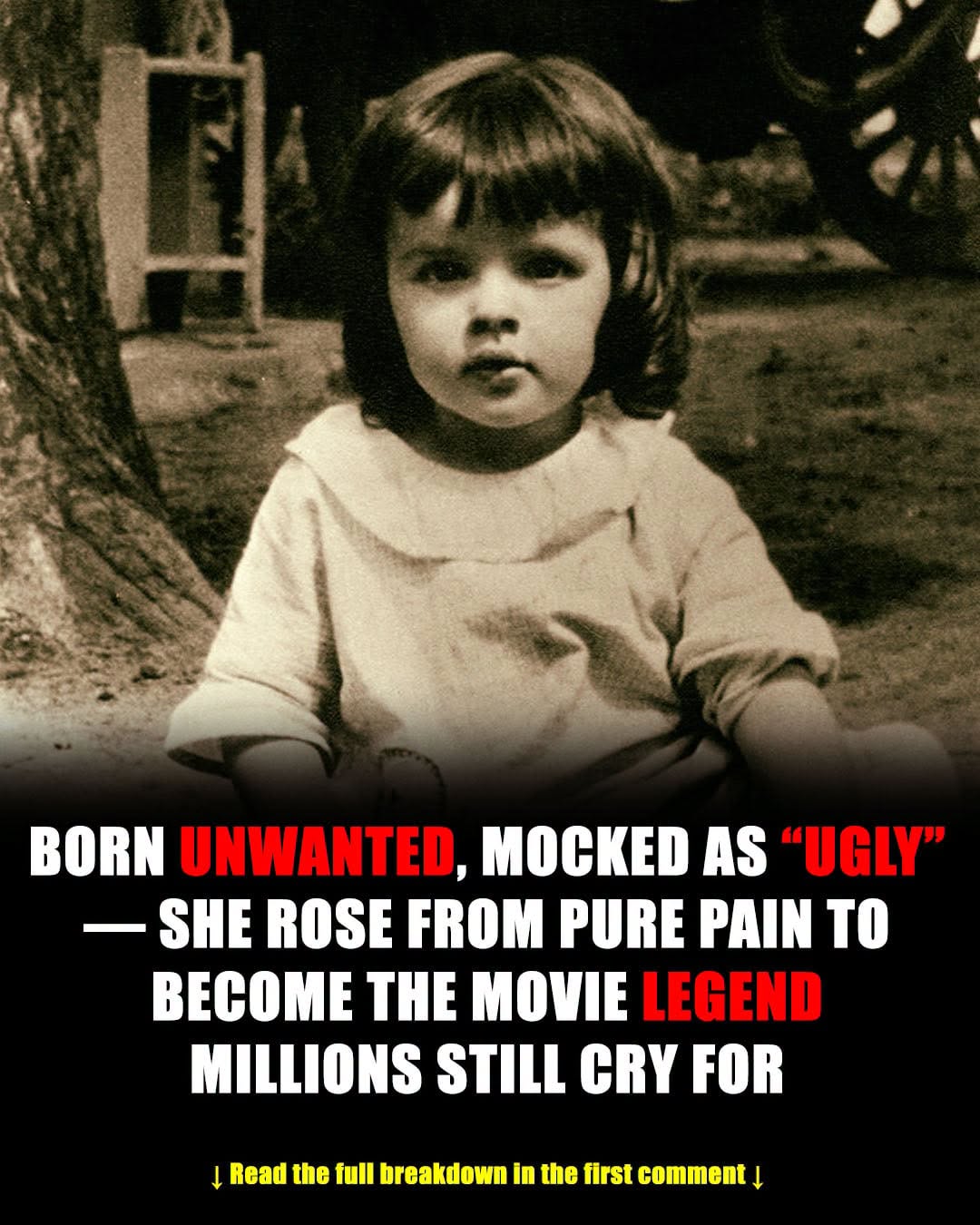
To the world, she was the girl with the unforgettable voice, sparkling eyes, and a smile that seemed capable of brightening even the darkest days.
Millions knew her as Judy Garland, the beloved star whose performances became part of cinema history and whose songs touched generations of listeners.
But behind the applause, the standing ovations, and the dazzling lights was a child who carried wounds few people ever saw.
Long before she became one of Hollywood’s greatest icons, she was simply Frances Ethel Gumm, a little girl born into a family of entertainers who stepped onto a stage before she was old enough to understand what fame truly meant.
Performing quickly became her life.
There was little separation between childhood and work. While other children played freely, Judy spent countless hours rehearsing, traveling, and learning how to entertain audiences far older than herself.
Her remarkable talent captured attention almost immediately.
Producers recognized something extraordinary in her voice.
Studios saw enormous potential.
Hollywood saw a future star.
But instead of protecting the child behind that extraordinary gift, the industry often treated her as a product to be shaped, controlled, and sold.
As Judy grew older, the pressure only intensified.
Executives wanted her to fit a carefully designed image. Every part of her appearance became subject to scrutiny.
Her weight.
Her hairstyle.
Her clothing.
Even her natural features became topics of discussion among people who viewed her career as a business investment.
She later spoke openly about how criticism of her appearance affected her confidence.
Comments about her body, her height, and her smile followed her throughout her early career.
She often felt she was constantly being compared to other actresses who matched Hollywood’s traditional standards of beauty more closely.
The emotional toll was enormous.
Instead of allowing her to mature naturally, the studio system attempted to control nearly every aspect of her daily life.
One of the darkest chapters involved the widespread use of medication.
During Hollywood’s Golden Age, long working hours were common, especially for young performers.
To keep productions moving, some studios relied on stimulants to help actors stay awake during exhausting filming schedules and sedatives to help them sleep afterward.
Judy became caught in that cycle at an incredibly young age.
The pills were introduced as tools to help her meet impossible expectations.
They allowed her to work longer.
They helped her recover more quickly.
At least, that was the promise.
Over time, however, those medications contributed to struggles that would follow her for much of her life.
The demands never seemed to end.
Even after becoming one of the biggest stars in the world through films like The Wizard of Oz, Judy rarely experienced the stability many assumed accompanied success.
The public saw glamour.
She often experienced exhaustion.
Audiences admired effortless performances.
Behind the scenes were countless hours of pressure, anxiety, and relentless expectations.
The role of Dorothy made her immortal in popular culture, but it also became a symbol of the enormous burden she carried.
Ironically, the character searched for a place called home while Judy herself often struggled to find that same feeling in her own life.
Her extraordinary voice became both her greatest gift and her emotional refuge.
When Judy sang, audiences heard something impossible to imitate.
There was honesty in every note.
Joy.
Heartbreak.
Hope.
Longing.
She possessed a rare ability to communicate emotion so deeply that listeners often felt she was singing directly to them.
That emotional connection remains one of the reasons her performances continue to resonate decades later.
Even during periods of personal hardship, she stepped onto the stage and delivered performances filled with remarkable vulnerability.
Many fans felt they were witnessing not simply a singer performing music, but a woman sharing pieces of her own soul.
Away from the spotlight, however, her personal life remained turbulent.
She searched repeatedly for lasting love and stability.
She married several times, hoping each new relationship would provide the sense of security that had always seemed just beyond reach.
Some relationships brought moments of happiness.
Others ended in disappointment and heartbreak.
Financial struggles also added to the difficulties she faced.
Despite years of extraordinary success, poor management, business challenges, and personal difficulties left her facing financial uncertainty multiple times throughout her life.
The contrast between public admiration and private hardship became one of the defining aspects of her story.
Yet through everything, Judy continued working.
She returned to concert stages.
She appeared in television specials.
She performed before sold-out audiences who remained captivated by her remarkable talent.
Each comeback demonstrated incredible resilience.
No matter how many setbacks she experienced, she continued finding the strength to perform.
Friends and colleagues often described her generosity, humor, and warmth.
Despite carrying tremendous emotional burdens, she remained deeply compassionate toward others.
Those who worked closely with her frequently spoke of her kindness, her intelligence, and her determination to keep moving forward despite overwhelming challenges.
Her life also sparked broader conversations about the responsibilities of the entertainment industry.
Many historians now view Judy Garland’s experiences as a powerful reminder of how young performers were sometimes exploited during Hollywood’s studio era.
The pressure placed on child stars, the lack of personal freedom, and the widespread use of medications have become subjects of ongoing reflection.
Her story helped encourage later generations to demand stronger protections for young actors and greater awareness of mental health within the entertainment industry.
Judy Garland passed away far too young, but her influence has never disappeared.
Her music continues inspiring new audiences.
Her films remain beloved classics.
Her courage, vulnerability, and remarkable talent continue to earn admiration around the world.
Perhaps her greatest legacy is not simply the unforgettable performances she left behind.
It is the reminder that extraordinary success does not erase human pain.
Behind every famous face is a person with fears, hopes, and struggles that audiences may never fully understand.
Judy Garland gave the world timeless songs, unforgettable performances, and moments of genuine emotional connection.
In return, she often carried burdens no child should have been asked to bear.
Today, her story stands as both a celebration of one of history’s greatest entertainers and a powerful reminder that talent deserves protection as much as applause.
Her voice may have fallen silent, but the honesty, strength, and humanity she poured into every performance continue to echo long after the curtain came down.