In a political climate where security concerns are constant and highly visible, the choices public figures make about their own protection often carry symbolic weight far beyond personal safety.
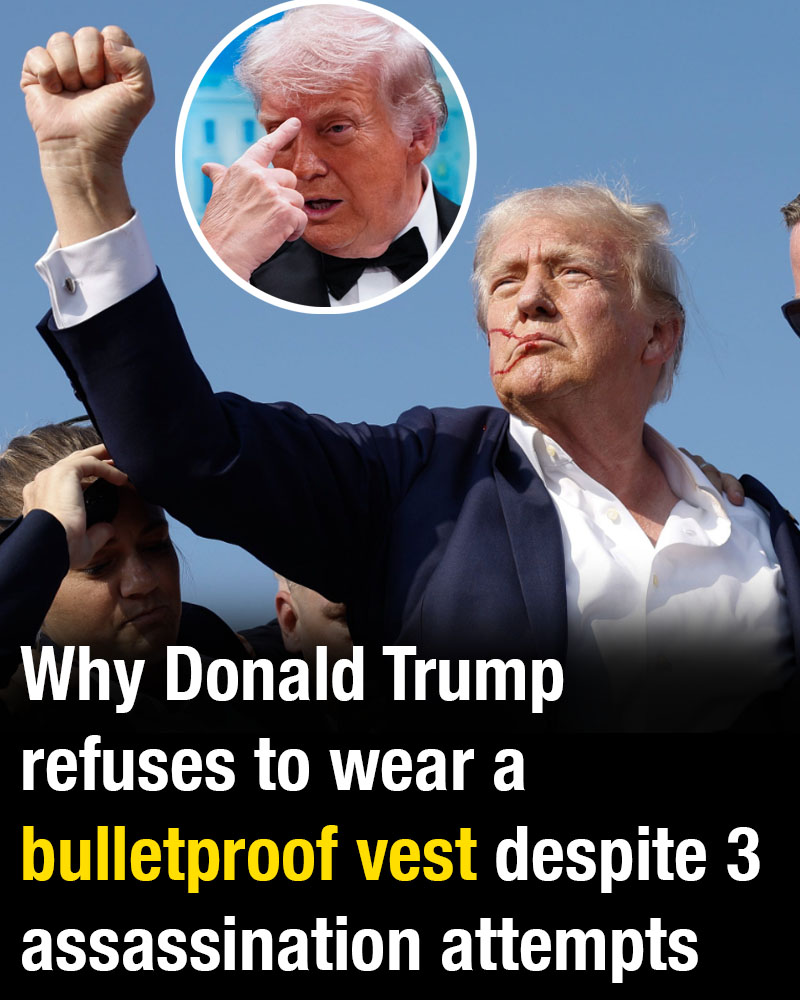
Donald Trump has once again drawn attention not for a policy decision or a campaign statement, but for his stance on something far more immediate his own physical protection in the face of repeated threats.
The issue surfaced following a series of reported security incidents, including multiple threats that underscored the risks faced by individuals in high-profile political roles. In one widely discussed account, a member of the United States Secret Service was injured while intervening in a dangerous situation, shielded in part by protective gear designed to absorb the impact of a potentially fatal attack. The incident highlighted the effectiveness of modern body armor, particularly Kevlar-based vests that are engineered to stop or reduce the force of bullets.
Trump publicly acknowledged the bravery of the agent, praising the quick response and resilience shown in a moment of crisis. The recognition was consistent with the longstanding tradition of honoring those tasked with protecting national leaders. Yet when attention shifted to his own safety measures, the tone changed noticeably.
During a public exchange, Trump addressed the question of whether he would consider wearing a bulletproof vest under certain circumstances. His response, delivered with characteristic bluntness, leaned into humor. He dismissed the idea by referencing the appearance such gear would create, suggesting that it would make him look heavier and less presentable. The comment drew laughter from those in the room, transforming what could have been a serious discussion into a lighter moment.
Behind that brief exchange, however, lies a more complex dynamic. The decision to forgo visible protective equipment is not merely about comfort or aesthetics. For figures like Trump, public image is a carefully constructed element of political identity. Every appearance, gesture, and statement contributes to a broader narrative that supporters and critics alike interpret in different ways.
In this case, the refusal to wear a bulletproof vest can be seen as part of a larger effort to project confidence and resilience. For supporters, such a stance reinforces an image of strength someone who does not appear to retreat or shield themselves, even in the face of danger. It aligns with a style of leadership that emphasizes visibility and direct engagement with the public, often prioritizing presence over precaution.
Critics, on the other hand, interpret the same decision differently. From their perspective, declining additional protection in the context of known threats raises questions about risk management and responsibility. The role of a national leader carries not only personal implications but also broader consequences for security and stability. In that light, the choice to avoid protective measures can be viewed as unnecessary exposure to danger.
This divergence in interpretation reflects a broader pattern in how public actions are perceived. The same decision can simultaneously symbolize courage and recklessness, depending on the lens through which it is viewed. In a highly polarized environment, even matters of personal safety become part of a larger conversation about leadership style and public expectations.
The role of the Secret Service adds another layer to the discussion. As an organization tasked with ensuring the safety of current and former presidents, its protocols are designed to minimize risk through a combination of planning, technology, and situational awareness. Protective equipment, including bulletproof vests, is one of many tools available to achieve that goal. However, the final presentation of security measures often involves balancing effectiveness with visibility.
In many cases, protective gear is worn discreetly, integrated into clothing in a way that does not draw attention. The decision to make such measures visible or invisible can influence how a leader is perceived. A visible vest may signal caution, while its absence may suggest confidence. Both interpretations carry implications for how a public figure connects with their audience.
Trump’s approach appears to favor the latter. Throughout his public life, he has consistently emphasized a direct and unfiltered style, often prioritizing immediate impact over conventional expectations. His response to the question of protective gear fits within that pattern, blending humor with a clear rejection of anything that might alter his public image.
The context of repeated threats makes the situation more complex. Security risks are an inherent part of high-level political roles, and they require constant assessment and adaptation. Each incident serves as a reminder of the vulnerabilities that exist, even within highly controlled environments. In this setting, decisions about personal protection are not made in isolation but are part of an ongoing dialogue between the individual and the security apparatus surrounding them.
Public reaction to Trump’s comments has been varied, reflecting the same divisions that characterize much of contemporary political discourse. Some view his stance as a continuation of a persona that values visibility and defiance, while others see it as an unnecessary gamble in situations where caution could provide an additional layer of safety.
Beyond the immediate debate, the episode highlights a broader truth about leadership in the modern era. Public figures are not only decision-makers but also symbols, and their choices often carry meaning beyond their practical implications. A comment about a bulletproof vest can become a statement about identity, perception, and the balance between appearance and reality.
The contrast between the agent protected by Kevlar and the leader choosing not to wear similar protection underscores this dynamic. It illustrates the different roles individuals play within the same security framework one focused entirely on protection, the other shaped by the demands of public perception.
Ultimately, the decision reflects a personal calculation, one that weighs the benefits of additional protection against the desire to maintain a particular image. It is a choice that exists at the intersection of safety, symbolism, and strategy, shaped by both individual preference and the expectations of a global audience.
As discussions continue, the moment serves as a reminder of how even seemingly small decisions can carry significant meaning in the public sphere. In an environment where every detail is observed and interpreted, the line between practicality and perception becomes increasingly blurred. For Donald Trump, the choice not to wear a bulletproof vest is not just about physical comfort it is part of a broader narrative about how he chooses to be seen, even in the face of risk.