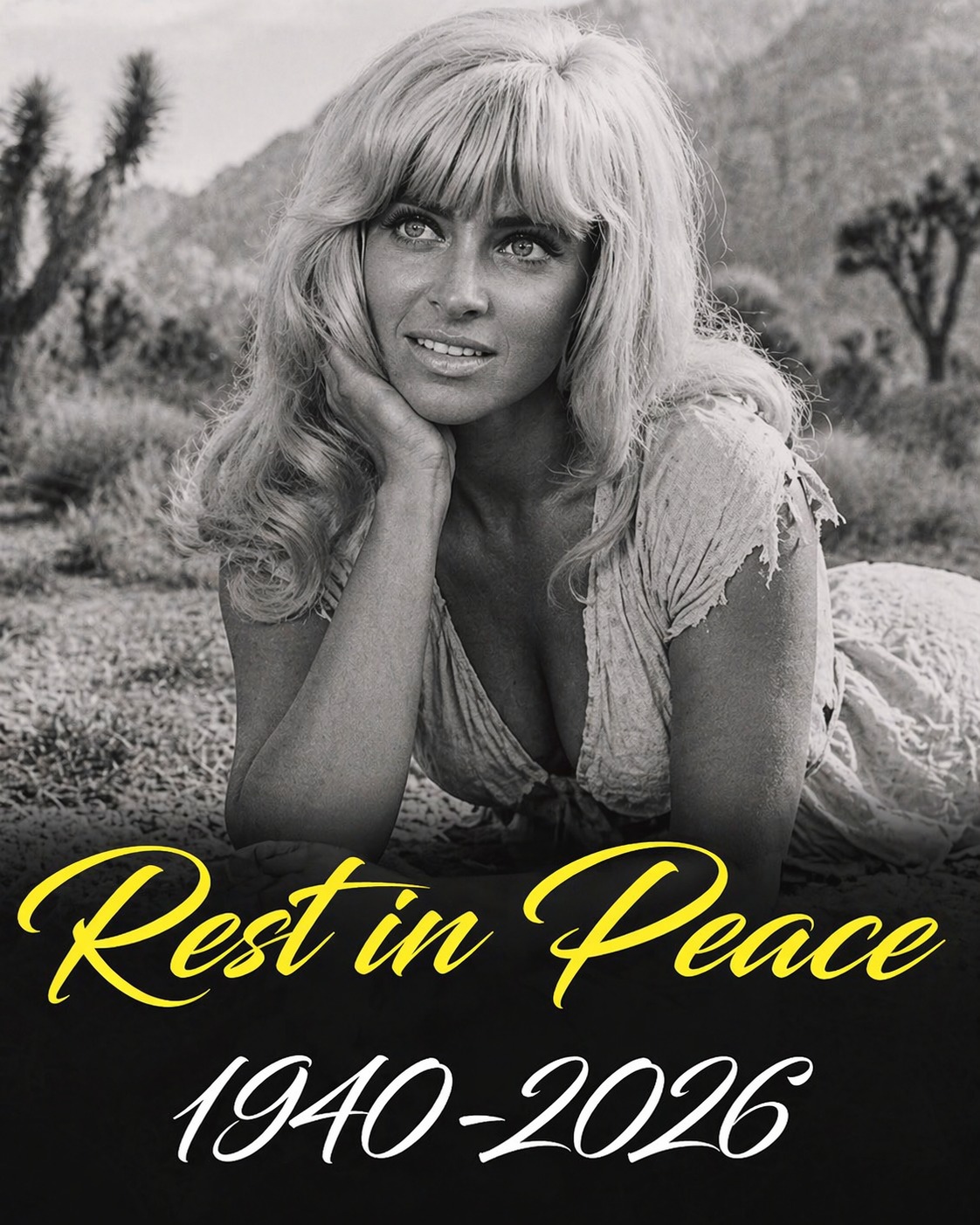
For many, her name may not immediately spark recognition, but her presence is forever etched into film history. Joy Harmon, best known for her brief yet unforgettable appearance in the classic film Cool Hand Luke, has passed away at the age of 87.
While her time on screen was relatively short, the impact she left behind proved that a single moment when delivered with authenticity and quiet confidence can outlive decades of louder, more elaborate performances.
Harmon’s role as Lucille in Cool Hand Luke was never intended to dominate the story. It was a fleeting scene, almost incidental in the larger narrative led by Paul Newman. And yet, it became one of the most talked-about and enduring images in the film. There was something about the way she carried herself natural, unforced, and completely at ease that made the moment linger long after it had passed. She did not need extended dialogue or dramatic monologues. Her presence alone was enough to leave an impression that audiences would remember for generations.
What made that scene so powerful was not just its visual impact, but the subtlety behind it. Harmon didn’t try to compete for attention; she simply existed within the moment, allowing her authenticity to do the work. It was this quiet confidence that gave the scene its lasting resonance. In a film filled with tension, struggle, and defiance, her appearance offered something different an almost disarming sense of humanity that grounded the story in a way that words could not.
Despite becoming part of such an iconic cinematic moment, Harmon’s approach to her career remained refreshingly understated. She did not chase fame or attempt to build an identity around that single role. Instead, she continued working steadily in television throughout the 1960s, appearing in a variety of shows that reflected the era’s growing appetite for entertainment. These roles allowed her to explore different characters and expand her experience, but she never seemed driven by the need for constant visibility.
In an industry often defined by ambition and relentless pursuit of recognition, Harmon chose a different path. At a time when many actors were striving to remain in the spotlight, she made the decision to step away. It was not a dramatic exit or a public declaration. Rather, it was a quiet transition one that reflected her priorities and the kind of life she wanted to build beyond the screen.
That next chapter would prove to be just as meaningful as her time in Hollywood, though in a very different way. Settling into a more grounded routine, Harmon shifted her focus toward family and personal fulfillment. In Burbank, far from the pressures of film sets and studio schedules, she began to cultivate something entirely her own. What started in her kitchen gradually grew into a beloved baking business, one built not on celebrity, but on care, consistency, and genuine connection.
Those who encountered her during this period often spoke not of her past in film, but of the warmth she brought into everyday interactions. Her baking became more than a craft it became a way of bringing people together. Each item she created carried the same sense of authenticity that had defined her performance years earlier. There was no need for spectacle or attention; the quality of her work spoke for itself.
In many ways, this second act of her life revealed something deeper about who she was. It showed that reinvention does not always have to be bold or dramatic. Sometimes, it is quiet, deliberate, and rooted in simple choices that lead to a more fulfilling existence. Harmon did not measure success by public recognition or industry accolades. Instead, she found it in the relationships she built, the family she nurtured, and the work she created with her own hands.
Surrounded by her husband, children, and later her grandchildren, she embraced a life that was rich in ways that cannot be captured by headlines. Family dinners replaced film premieres. Conversations replaced scripts. The rhythm of her days became slower, more intentional, and deeply personal. It was a life that many might overlook when compared to the glamour of Hollywood, but for Harmon, it was exactly what she wanted.
Her story offers a perspective that is often missing from narratives about fame. It challenges the idea that success must always be visible, loud, or widely recognized. Instead, it suggests that there is equal, if not greater, value in choosing a path that aligns with personal happiness and meaning. Harmon’s legacy is not confined to a single scene, no matter how iconic it may be. It extends into the life she built afterward a life defined by balance, purpose, and quiet fulfillment.
As news of her passing spreads, there is a renewed appreciation for the role she played, both on and off the screen. For those who remember her from Cool Hand Luke, she will always be part of a moment that captured something timeless. For those who knew her beyond that, she will be remembered for her kindness, her creativity, and the way she chose to live her life on her own terms.
In the end, Joy Harmon leaves behind more than a cinematic memory. She leaves behind a story of authenticity of knowing when to step forward and when to step away, of understanding that life is not defined by a single chapter, and of proving that even the quietest choices can create the most lasting impact.