For decades, Wheel of Fortune has been one of television’s most comforting traditions. Families have gathered around the screen, contestants have spun the famous wheel, and millions of viewers have played along from their living rooms, shouting answers before the contestants could even guess them.
The show’s formula has always been simple: solve the puzzle, win the prize, and celebrate the moment.
But after one recent episode, many longtime fans say something felt different.
What should have been a fun and romantic Valentine’s-themed episode quickly became one of the most debated moments in the show’s recent history. Instead of leaving viewers smiling, the episode left many frustrated, confused, and questioning whether the beloved game show still understands what made it successful in the first place.
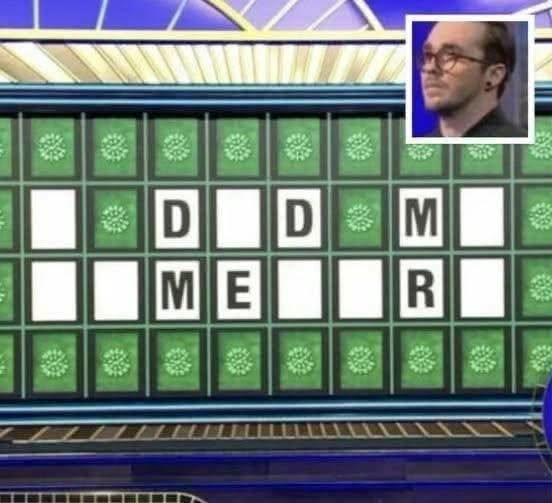
The controversy centered around contestant Conner Kemmsies, a pilot who had performed impressively throughout the game and earned his place in the highly anticipated bonus round.
Going into the final puzzle, expectations were high.
Conner had already shown strong gameplay, and viewers watching at home were hoping to see him complete the journey with a memorable victory. The final round is often the most dramatic part of Wheel of Fortune, where a contestant has only a short amount of time to solve a phrase and potentially walk away with a major cash prize.
For Conner, the opportunity was huge.
The category appeared, the letters began filling the board, and the puzzle was revealed:
“I DID MY HOMEWORK.”
As the clock started counting down, the tension immediately increased.
Conner studied the puzzle, searching for the missing words that would unlock the answer. Despite his efforts, the solution never came to him before time expired.
The moment was heartbreaking.
A contestant who had worked hard all night watched a potential $40,000 prize disappear in a matter of seconds. Many viewers understood the disappointment of missing a difficult puzzle, because the final round has always been designed to test even the strongest players under pressure.
But the reaction afterward was not focused only on the lost money.
Instead, many fans argued that the puzzle itself was the problem.
Across social media, viewers questioned whether “I DID MY HOMEWORK” was a fair and satisfying final-round clue. Some said the phrase felt too ordinary, while others believed it lacked the kind of clear structure and wordplay that usually makes the show enjoyable.
For many longtime fans, the issue was not that Conner failed to solve the puzzle.
The issue was that they felt the puzzle failed him.
They argued that Wheel of Fortune has traditionally relied on puzzles that reward familiarity, common phrases, and clever thinking. The best puzzles create that exciting moment when the answer suddenly becomes obvious.
Fans said this one did not create that feeling.
Instead, they described it as confusing and disconnected, leaving contestants and viewers struggling to understand what logic was supposed to lead someone to the correct answer.
The frustration became even stronger when another detail from the episode caught attention.
After Conner missed the puzzle, viewers noticed that the bonus wheel once again landed on the lowest available prize amount. While this has happened many times throughout the show’s history, some fans began expressing disappointment that the outcome felt increasingly predictable.
To them, the combination of a difficult puzzle and a minimum reward created a frustrating experience.
A number of viewers began questioning whether the show was moving away from the classic balance that made it popular. They worried that instead of creating exciting challenges, the program might be leaning toward overly difficult puzzles that make big wins less likely.
The criticism quickly spread online.
Fans who had watched Wheel of Fortune for years shared their disappointment, with some even using words like “boycott” to express their frustration. They argued that the show’s producers need to remember that viewers are not only watching for prizes—they are watching for fairness, entertainment, and the satisfaction of seeing contestants succeed.
However, not everyone agreed with the criticism.
Some viewers defended the show, pointing out that the final round has always been unpredictable. The difficulty is part of what makes the bonus puzzle exciting, and even experienced contestants regularly miss answers that seem obvious once revealed.
They argued that one unlucky puzzle does not represent a larger problem.
Still, the strong reaction shows how emotionally connected audiences remain to the program.
A show does not inspire this level of debate unless people truly care about it. For generations, Wheel of Fortune has been more than a competition. It has been a shared television experience, a nightly routine, and a piece of American pop culture.
That is why even a single controversial episode can create such a strong response.
Fans are not simply upset about one contestant losing money. They are reacting to the fear that something familiar may be changing.
The show’s challenge moving forward will be maintaining the trust of the audience that helped build its legendary status. Viewers want difficult puzzles, but they also want puzzles that feel fair. They want suspense, but they do not want to feel like contestants are being set up to fail.
The difference between a memorable final round and a frustrating one often comes down to one thing: whether the audience believes the game was truly winnable.
For now, Wheel of Fortune remains one of television’s most recognizable shows. Its history, popularity, and loyal fan base are enormous.
But the recent backlash serves as a reminder that even the most beloved programs are judged by the people who watch them every night.
The wheel may keep spinning, the puzzles may keep appearing, and contestants may continue chasing life-changing prizes.
But if fans begin feeling that the game is no longer fair, the biggest challenge facing Wheel of Fortune may not be solving the puzzle.
It may be winning back the trust of the audience.