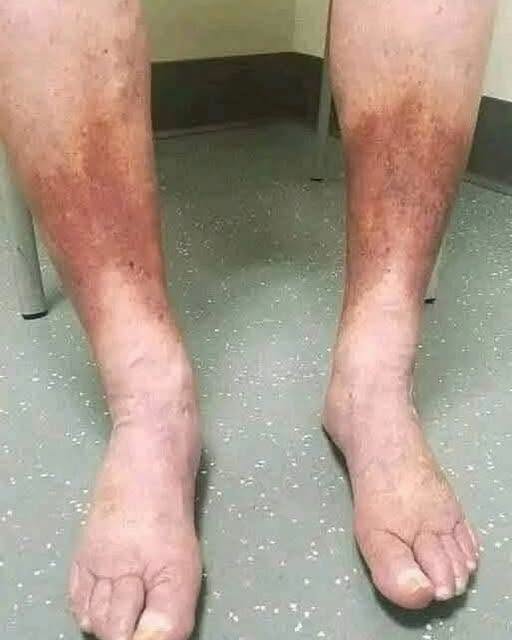
At first glance, swollen feet can seem like a minor annoyance. Maybe your shoes feel tighter than usual, your ankles look slightly larger, or your legs feel heavy after a long day. Many people ignore these changes, assuming they are simply part of getting older, standing too long, or spending too much time on their feet.
But swelling is not always just a cosmetic issue.
Your feet often reveal what is happening inside your body. Because they are the lowest point of your circulation system, they are constantly affected by gravity, blood flow, fluid balance, and the way your organs are functioning. Sometimes swelling is completely harmless and temporary. Other times, it can be an early warning sign that something deeper needs attention.
Understanding the difference can make all the difference.
One of the most common reasons feet swell is simply being still for too long. Sitting at a desk all day, spending hours traveling, or standing in one place for extended periods can cause fluid to collect in the lower legs and feet. When muscles are not moving regularly, they are less effective at helping push blood back toward the heart.
The result is often familiar: swollen ankles, tight shoes, and a feeling of heaviness that appears toward the end of the day.
Fortunately, this type of swelling often improves with simple changes. Walking around, stretching your legs, moving your ankles, and elevating your feet can encourage circulation and help excess fluid return to normal.
Heat can also play a major role.
During warmer months, blood vessels naturally expand to help the body cool itself. This widening allows more fluid to move into surrounding tissues, especially in areas like the feet and ankles. People often notice their rings, shoes, or socks feeling tighter during hot weather because the body is temporarily holding more fluid.
Diet can also contribute.
A meal high in salt may taste satisfying, but sodium causes the body to retain water. That extra fluid does not disappear instantly, and some people notice swelling in their feet and hands after consuming large amounts of salty foods.
Reducing sodium intake, drinking enough water, and maintaining a balanced diet can help the body regulate fluid levels more effectively.
Minor injuries are another common cause.
A twisted ankle, strain, or small impact can trigger inflammation as part of the body’s natural healing response. The immune system sends extra fluid and chemicals to the injured area to protect and repair damaged tissue. Although swelling can be uncomfortable, it is often a normal part of recovery.
Rest, ice, gentle compression, and elevation are commonly used to manage mild injury-related swelling. However, swelling that worsens, becomes extremely painful, or does not improve should always be evaluated.
While many cases are harmless, swollen feet can sometimes signal more serious problems.
One important concern is poor circulation. When veins struggle to move blood efficiently back toward the heart, fluid can begin accumulating in the lower legs. This condition, often associated with vein problems, may cause swelling that increases throughout the day and improves after resting with the legs elevated.
Other symptoms may include aching, heaviness, visible veins, or changes in skin texture.
Swelling can also sometimes be connected to problems involving major organs.
The heart, kidneys, and liver all play important roles in maintaining the body’s fluid balance. If these systems are not working properly, the body may begin storing more fluid than it should. In some cases, swelling in the feet and ankles may appear alongside fatigue, changes in urination, weight gain, or difficulty breathing.
These signs should not be ignored.
One of the more urgent causes of swelling is a blood clot in a deep vein, known as deep vein thrombosis. This condition can be dangerous because a clot may travel to the lungs and create a life-threatening emergency.
Warning signs can include swelling that appears suddenly, especially in only one leg, along with pain, warmth, redness, or tenderness. If these symptoms occur, medical attention should be sought quickly.
The same applies when swollen feet appear together with breathing difficulties, chest pain, dizziness, or unusual weakness. These combinations can indicate a more serious medical issue requiring immediate evaluation.
The pattern of swelling often provides important clues.
Swelling in both feet that gradually appears after a long day is usually different from sudden swelling affecting only one side. Occasional puffiness after certain foods or activities is different from swelling that continues for weeks without explanation.
Paying attention to these details can help identify when something is normal and when something deserves a closer look.
There are also everyday habits that can support healthier feet and circulation.
Regular movement is one of the simplest and most effective tools. Walking, stretching, and avoiding long periods of sitting can help keep blood flowing properly. For people who spend much of their day standing, taking short breaks to sit and elevate the feet can reduce pressure on the lower legs.
Maintaining a healthy weight, limiting excessive salt, staying hydrated, and wearing comfortable shoes can also reduce unnecessary strain.
For people who frequently experience swelling, compression socks may provide support by improving circulation in the legs. However, they are not appropriate for everyone, especially those with certain circulation problems, so discussing options with a healthcare professional can be helpful.
The most important lesson is simple: do not ignore what your body is trying to communicate.
Your feet may be farthest from your heart, but they are often among the first places where circulation and fluid problems become visible. A little swelling after a long day may be nothing more than a reminder to rest and move more.
But persistent, painful, unusual, or sudden swelling deserves attention.
The body rarely sends signals without a reason. Sometimes those signals are small and temporary. Sometimes they are warnings that allow problems to be discovered before they become more serious.
Listening to your feet is not about worrying over every change.
It is about recognizing when something feels different, understanding the possible causes, and taking action when needed.
Because something as simple as swollen feet may be more than a discomfort.
It may be your body asking you to pay attention.