From the outside, Farrah Fawcett appeared to have everything.
She was one of the defining faces of American television, a symbol of beauty and glamour whose image became almost inseparable from the golden era of Hollywood. Her career brought fame, admiration, and worldwide recognition. Yet behind the photographs, television appearances, and red carpets was a deeply complicated family story one that became increasingly painful as the years passed.
At the center of that story was her only child, Redmond O’Neal.
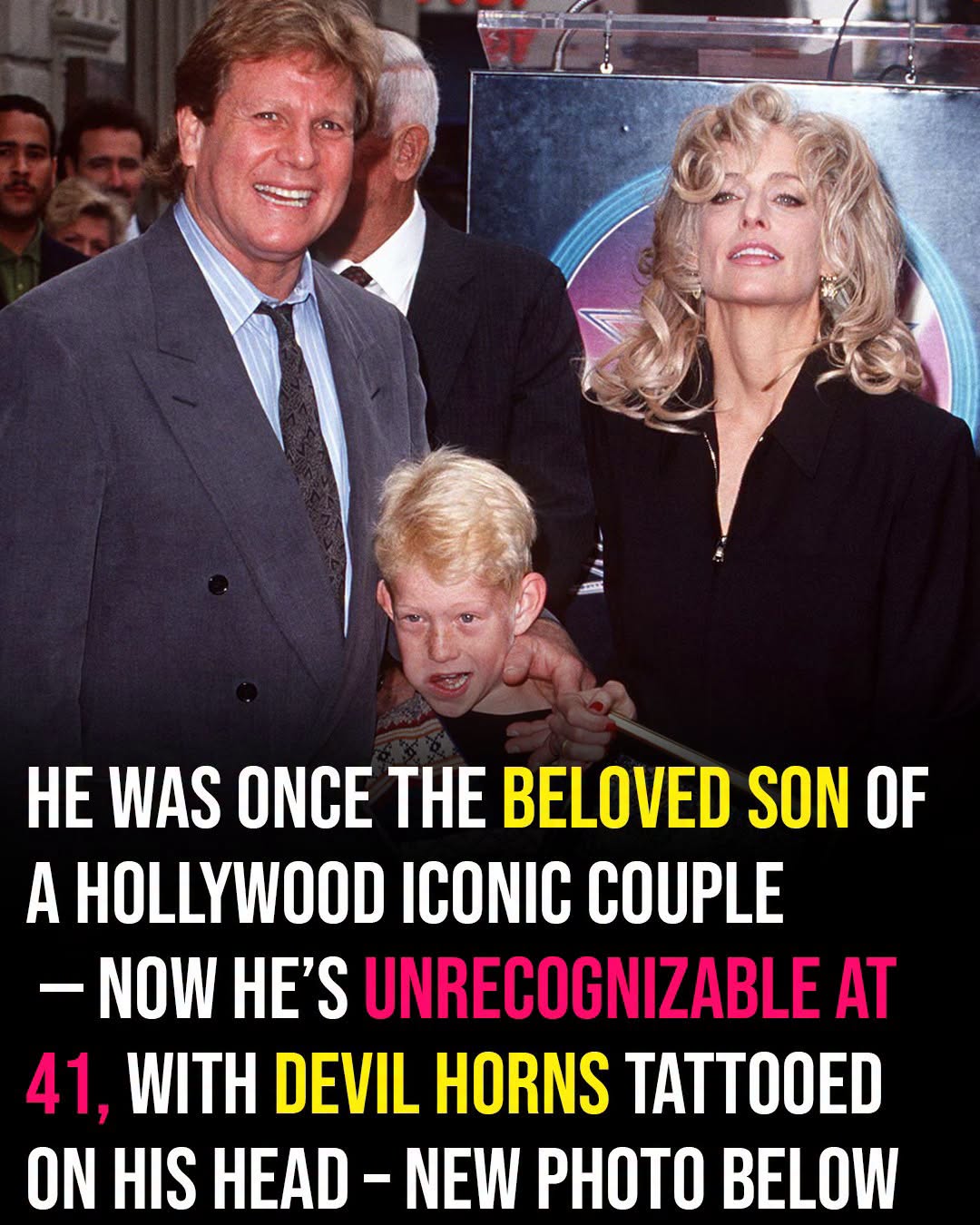
Born into extraordinary fame, Redmond grew up surrounded by people most children could only see on movie screens. His mother was an internationally recognized actress, while his father, Ryan O’Neal, was one of Hollywood’s most recognizable leading men. To the outside world, their family seemed almost impossibly glamorous.
But fame did not protect the family from personal struggles.
As Redmond grew older, his life became increasingly complicated by addiction, legal problems, mental health difficulties, and a series of painful incidents that repeatedly placed him in the public eye.
Farrah, meanwhile, remained fiercely protective of her son.
Those close to her have described a mother who never stopped worrying about Redmond and who continued trying to help him even when his problems became overwhelming. Her concern for him remained one of the most emotional threads running through the final years of her life.
Farrah’s relationship with Ryan O’Neal was itself turbulent. The two experienced periods of romance, separation, reconciliation, and conflict, with addiction affecting their family in profound ways.
For Redmond, growing up amid that instability meant living with circumstances that would have been difficult for almost anyone to navigate, let alone someone raised under constant public scrutiny.
Every mistake could become a headline.
Every arrest could become entertainment for strangers.
Every photograph could be analyzed by people who knew almost nothing about the person behind it.
That pressure followed Redmond into adulthood.
Instead of building a conventional Hollywood career, he struggled with addiction and repeatedly encountered the criminal justice system. His difficulties became increasingly public, transforming what might otherwise have been private family tragedies into stories followed by tabloids and television programs.
Yet behind every headline was still Farrah’s son.
And Farrah never seemed willing to stop fighting for him.
Her battle with cancer added another heartbreaking dimension to their story.
After being diagnosed with anal cancer in 2006, Fawcett documented much of her struggle with the disease, including the difficult treatments and setbacks she experienced. Her determination to continue fighting became another defining chapter in the life of a woman who had spent decades in the public eye.
During those final years, her concern for Redmond remained deeply important to her.
Farrah died on June 25, 2009, at the age of 62.
Her death marked the end of an extraordinary career, but for those who knew her personally, it was also the loss of a mother who had spent years worrying about her son and hoping that he would eventually find stability.
Redmond’s struggles did not end with his mother’s death.
If anything, the years that followed became even more difficult.
He faced arrests, periods of rehabilitation, psychiatric treatment, and serious legal troubles. His appearance changed dramatically over time, and photographs from later years shocked people who remembered him primarily as the child of two famous actors.
At one point, images showing him with distinctive tattoos on his face and scalp circulated widely online.
Among the most striking were tattoos depicting devil horns across his forehead.
Another phrase tattooed across his body was also widely reported, adding to the dramatic appearance that drew so much attention from the public.
For many people, the photographs created an immediate reaction.
How could the son of one of Hollywood’s most famous women end up looking so completely different from the glamorous world into which he had been born?
But appearances rarely tell the complete story.
Behind the tattoos and courtroom photographs was a person who had spent much of his life struggling with serious personal problems.
His circumstances were not simply about fame or rebellion. Addiction, mental health challenges, family instability, and repeated encounters with the law can create cycles that are extraordinarily difficult to break.
That reality makes Redmond’s story more complicated than the sensational photographs suggest.
It is easy to look at a shocking image and see only the surface.
It is much harder to consider the years of struggle that came before it.
Farrah herself understood that distinction.
She reportedly remained determined to protect her son even when doing so became increasingly difficult. Her efforts reflected the complicated reality of parental love: sometimes loving someone means celebrating their victories, but sometimes it means continuing to hope for them through their darkest periods.
Farrah’s death also left Redmond without the person who had consistently occupied the role of his strongest advocate.
Her passing could never be separated from the larger family history.
She had spent years trying to balance her career, her own health, her complicated relationship with Ryan O’Neal, and her concern for their son. By the end of her life, she had experienced extraordinary success and extraordinary heartbreak.
Her legacy, however, remains far larger than the struggles of her family.
Farrah Fawcett remains remembered for her performances, her influence on television, her distinctive style, and the cultural impact she made during the height of her career.
But her story also offers a quieter lesson about celebrity.
Fame can create the illusion that a person’s life is perfect simply because the photographs look perfect.
It can make beautiful homes, famous parents, expensive parties, and successful careers appear to guarantee happiness.
They do not.
Families with enormous wealth and public recognition can experience addiction, illness, heartbreak, conflict, and loss just like everyone else.
In Redmond’s case, the contrast between his famous childhood and troubled adulthood became particularly striking because his family was already so recognizable.
Every setback attracted attention.
Every photograph became another piece of a story that strangers believed they understood.
Yet the reality was undoubtedly more complicated than any single image could capture.
Today, Redmond’s appearance may still surprise people who remember him as Farrah Fawcett’s young son, but the most important part of his story is not the tattoos or the courtroom photographs.
It is the difficult journey that brought him there.
And perhaps most importantly, it is the reminder that behind even the most sensational celebrity headline is a human being whose struggles cannot be fully understood from a photograph.
Farrah Fawcett spent her life under the brightest possible spotlight.
Her son spent much of his life struggling beneath a very different kind of attention.
The two stories became inseparable, connected by love, fame, illness, addiction, and loss.
Farrah could not ultimately save her son from every battle he faced.
But her efforts showed something that fame could never erase: beneath the Hollywood legend was a mother who continued to care deeply about her child.
And long after the cameras stopped rolling, that may be the most enduring part of their story.