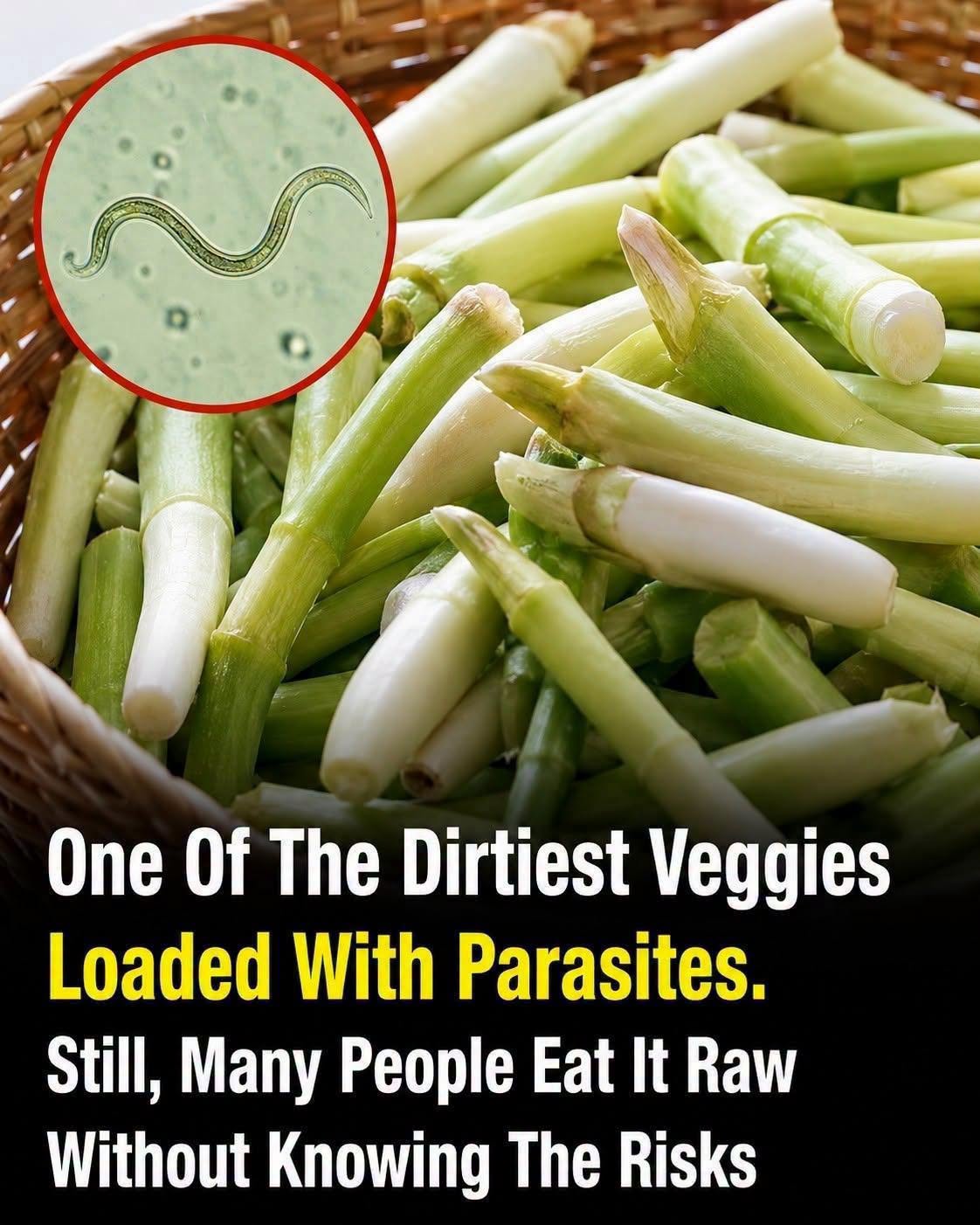
They appear in kitchens everywhere.
Thin green stalks scattered across soups.
Fresh toppings added to tacos, noodles, salads, and omelets.
A simple finishing touch that adds color, crunch, and a sharp burst of flavor.
For many people, green onions are one of those ingredients that feel completely harmless. They are small, fresh, and often associated with healthy cooking. They sit quietly in the refrigerator, waiting to be chopped and sprinkled over a favorite meal.
But experts say there is one thing many people forget: like any fresh produce, green onions can carry invisible risks if they are not handled properly.
The concern is not that green onions are dangerous by nature.
The concern is that they often go from the ground directly to your plate with very little preparation.
Unlike ingredients that are boiled, baked, or fried, green onions are frequently eaten raw. They are added at the very end of cooking, placed on top of finished dishes where they provide freshness and flavor.
That also means they may never experience the heat that destroys many harmful microorganisms.
From the farm to your kitchen, green onions pass through many stages.
They begin in soil, where they grow surrounded by natural bacteria and environmental material. During harvesting, tiny particles of dirt can become trapped between their layers. Their hollow structure and tightly packed leaves can create small spaces where moisture and microorganisms remain hidden.
After harvesting, they are cleaned, sorted, packaged, transported, displayed in stores, and handled by many different people before reaching your home.
Every step creates another opportunity for contamination.
The problem is not visible.
A green onion can look bright, fresh, and perfectly healthy while still carrying unwanted bacteria on its surface.
That is what makes food safety so important.
People often assume that if produce looks clean, it must be safe.
But appearance does not always tell the full story.
Fresh vegetables can carry microorganisms that are impossible to see, smell, or taste. Without proper washing and handling, those contaminants can move from the produce to cutting boards, knives, hands, and other foods in your kitchen.
The good news is that protecting yourself does not require eliminating green onions from your diet.
In fact, you do not need to lose the flavor, convenience, or nutritional benefits they bring to your meals.
The key is learning how to handle them correctly.
The first step begins before you even bring them home.
When choosing green onions at the store, look for stalks that appear firm and fresh. Avoid bunches with wilted leaves, excessive moisture, slimy areas, or unpleasant odors.
Fresh green onions should have a crisp texture and a clean smell.
Once you bring them into your kitchen, proper preparation makes the biggest difference.
Many people simply rinse green onions quickly under water and assume the job is done.
But because dirt and residue can hide between layers, a little more attention is helpful.
Start by trimming away any damaged, dried, or discolored sections.
Remove the outer layers if they appear dirty or worn.
Then rinse the onions thoroughly under cool running water.
While washing, gently rub the surface with your fingers, especially around the white bulb area and the lower sections where soil is more likely to remain.
A quick splash is not always enough.
The goal is to physically remove anything that may be stuck to the surface.
After washing, dry them properly.
Excess moisture can speed up spoilage, causing green onions to become slimy and unpleasant more quickly. Using a clean towel or paper towel to remove extra water can help extend their freshness.
Storage also matters.
Green onions should be kept refrigerated, preferably in a way that allows them to stay dry while maintaining freshness. A damp environment can encourage faster deterioration.
It is also important to think about cross-contamination.
Many kitchen mistakes happen not because of the food itself, but because of what happens around it.
A cutting board used for raw meat should not be used for fresh vegetables unless it has been thoroughly cleaned. Knives, countertops, and hands can transfer bacteria from one ingredient to another without anyone noticing.
Simple habits can make a major difference.
Wash your hands before preparing food.
Clean surfaces regularly.
Keep raw meats separate from fresh produce.
Do not prepare vegetables on equipment that has been exposed to uncooked animal products.
These small actions create a safer kitchen environment.
Another important warning sign is knowing when to throw green onions away.
Many people try to save produce that has started going bad because they do not want to waste food.
But when green onions become slimy, develop a strange smell, or show signs of decay, it is better to discard them.
Food safety is not the place to take unnecessary chances.
Fresh ingredients should make meals better, not create uncertainty.
Green onions have earned their place in kitchens around the world because they are versatile, affordable, and packed with flavor. They can transform a simple bowl of soup into something memorable and add freshness to countless dishes.
The solution is not fear.
It is awareness.
Understanding where food comes from and how it reaches your plate gives you more control over what you eat. A few extra seconds spent washing, trimming, and storing produce properly can prevent problems later.
The most important lesson is that even the most ordinary ingredients deserve attention.
The foods we trust every day still require care.
A small green stalk may look simple, but behind it is a journey from soil to supermarket to kitchen table.
And with the right habits, that journey can end exactly where it should with a safe, delicious meal enjoyed without worry.