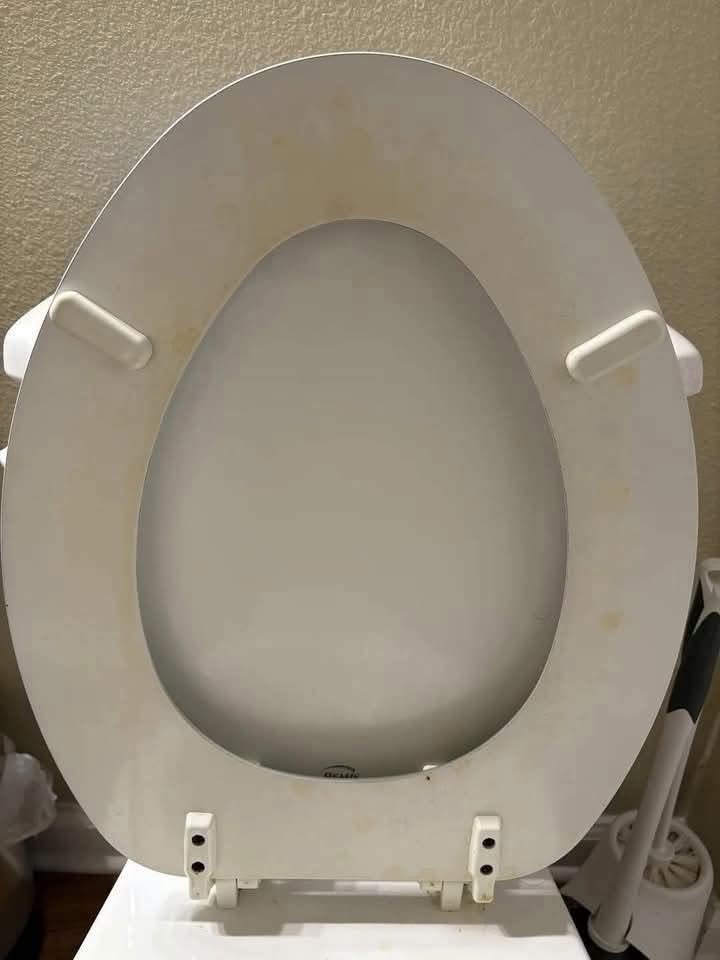
There is a certain kind of bathroom stain that seems almost impossible to defeat.
You scrub.
You spray cleaner.
You wipe until your arms hurt.
Yet somehow, that stubborn yellow ring around the toilet bowl keeps coming back, making an otherwise clean bathroom look neglected.
Many people assume it is simply a sign of an old toilet or a problem that cannot be fixed.
But the truth is much simpler.
That yellow discoloration is usually the result of several things building up over time. Hard water minerals, urine residue, soap particles, bacteria, mildew, and everyday grime can combine into a stubborn layer that becomes harder to remove the longer it sits.
The good news is that the stain is not unbeatable.
Once you understand what is causing it, cleaning becomes less about randomly trying products and more about choosing the right method for the specific problem.
One of the biggest causes of toilet stains is hard water.
Water contains minerals such as calcium and magnesium. Over time, those minerals can stick to porcelain surfaces and create a rough, cloudy buildup. As the deposits become thicker, they trap dirt and create the yellow or brown stains many homeowners recognize.
Another common contributor is residue left behind from everyday bathroom use.
Small splashes that happen around the toilet may seem insignificant, but repeated exposure can slowly create discoloration. Moisture also creates the perfect environment for mildew and bacteria, especially in areas that are overlooked during regular cleaning.
The first step toward removing the stain is knowing whether you are dealing with a fresh mark or years of buildup.
For lighter stains, simple household ingredients can often make a surprising difference.
Baking soda is one of the most popular natural cleaning options because it provides gentle scrubbing power without being overly harsh on porcelain. When combined with vinegar, it creates a reaction that helps loosen grime and mineral deposits.
The process is simple.
Sprinkle baking soda around the stained area, add vinegar, and allow the mixture to sit for several minutes. The bubbling action helps break apart some of the buildup, making it easier to scrub away.
A toilet brush or non-abrasive scrubber can then remove the loosened residue.
However, older stains often require more patience.
A yellow ring that has been sitting for months or years may have become deeply attached to the surface. In these cases, a longer treatment may work better than quick scrubbing.
Hydrogen peroxide is another option that some homeowners use for stubborn discoloration. Allowing it to sit on affected areas can help lift organic stains and brighten the surface.
For extremely difficult mineral deposits, specialized toilet cleaners designed for hard water buildup may be necessary. These products often contain ingredients that target calcium and lime deposits more effectively than general bathroom sprays.
But cleaning the bowl is only part of the battle.
Many people focus on the inside of the toilet and forget about the hidden areas surrounding it.
The hinges.
The seat attachments.
The base.
The floor around the toilet.
These are the places where dirt quietly collects.
A toilet seat may look clean from a distance, but the small spaces around the hinges can hold years of residue. Because those areas are difficult to reach, they are often ignored during quick bathroom cleanups.
A small toothbrush or cleaning brush can make a huge difference.
It can reach corners and cracks where larger tools cannot.
The area where the toilet meets the floor also deserves attention. Dust, moisture, and cleaning residue can gather around the base, creating unpleasant smells and a dirty appearance even when the rest of the bathroom looks polished.
Using an all-purpose cleaner around the outside of the toilet, wiping the handle, and cleaning the tank area can transform the entire space.
Sometimes the biggest improvement comes from cleaning the places people rarely think about.
Another common mistake is waiting until the bathroom becomes overwhelming before doing anything.
Deep cleaning a badly stained toilet can feel exhausting, which causes many people to avoid it even longer.
A small weekly routine is much easier.
A few minutes with a toilet cleaner, a quick scrub, and attention to the surrounding areas can prevent stains from becoming permanent.
Regular maintenance also reduces the need for stronger chemicals or aggressive scrubbing.
The toilet will not only look better, but it will also stay fresher and more hygienic.
There is also something psychological about a clean bathroom.
Bathrooms are one of the most frequently used spaces in any home. When the toilet looks dirty, even a beautiful bathroom can feel uncomfortable.
A clean toilet creates a feeling of order.
It makes the entire room feel more welcoming.
It is one of those small improvements that quietly changes how you experience your home.
Many people are surprised by how satisfying it feels to finally remove a stain they thought was permanent.
That yellow ring that once seemed like a symbol of endless cleaning frustration becomes proof that even stubborn problems can be solved with the right approach.
The secret is not a magical product or an expensive tool.
It is understanding what caused the stain, choosing the correct method, and giving the cleaner enough time to work.
Fresh stains may disappear with simple solutions.
Older buildup may require persistence.
Hidden areas may need extra attention.
But with the right routine, even a neglected toilet can look dramatically different.
A bathroom does not need to be perfect to feel clean.
It just needs care.
And the moment you walk in and no longer notice that embarrassing yellow ring, you realize something simple: sometimes the smallest cleaning victory can bring the biggest sense of relief.